
In Scottsdale, the best wall for a painting is rarely the obvious one. It might be the stretch of plaster that catches late-afternoon sun and then softens into shadow, or the narrow passage between a limestone console and a low linen sofa, where a canvas has to hold its own without shouting. You can feel the difference immediately: a work that is too small disappears into the room; one that is too large starts to fight the architecture. Texture matters here too—the drag of brush over canvas, the edge of a gilded frame, the quiet sheen of varnish under directional light.
That is why fine art buying in Scottsdale is less about making a quick aesthetic choice than making a series of judgments you can defend later: who handled the work before you, what condition it is in, which medium and support were used, how the scale reads from the room you actually have, where the piece will live, how the lighting will affect it, and whether the attribution or signature can be confirmed. A collector’s eye is useful, but paperwork, measurements, surface condition, and placement are what keep a beautiful object from becoming an expensive regret.
The sections below follow that logic, moving from what to verify first to what to compare before anything is framed, hung, or commissioned; if you want a bit more background on how the city’s collectors think about this market, the earlier notes are a useful companion.
Table of Contents
- Evidence and paper trail: what to verify first
- Condition, medium, and conservation implications
- Scale, placement, and how the work lives in the room
- A 90-second checklist before you buy
- Authenticity, comparison, and when the story outruns the object
- How to use Scottsdale as context without outsourcing your judgment
Evidence and paper trail: what to verify first
The first thing to ask for is not a promise of rarity; it is the paper trail that supports the story. A serious seller should be able to show a clear chain of ownership, an invoice or bill of sale, the artist’s name as it appears on the work, and any prior exhibition, publication, or collection record that can be checked. If the piece is presented as by Tony Green, a buyer can also compare the stated medium, dimensions, and surface handling against his documented practice on About and current examples in the Shop; the names, measurements, and materials should not feel improvised.
Thin proof changes the decision fast. When provenance is vague, when the seller says “from a private collection” but cannot name the source, or when the dimensions shift between listings, the object moves from acquisition candidate to negotiation problem. Ask for the exact size unframed and framed, the date of creation, the support, and any labels, stamps, or gallery marks on the reverse; those details are often more telling than the front image. A clean story with one or two verifiable documents is worth more than a dramatic story with no receipts.
For older or secondary-market work, compare what is claimed against independent records. A quick check through the Getty Proven. resource can help you understand whether the ownership trail is substantial or merely decorative, and a museum or regional collection record may confirm how a comparable work has been cataloged before. When the evidence is solid, the next question becomes sharper: whether the condition and medium can carry the value being claimed without hidden loss.
Condition, medium, and conservation implications
Once the ownership trail looks credible, the object itself has to earn the price. A canvas with stable edges, clean corners, and no visible planar distortion is a very different proposition from one that has been overcleaned, relined, or patched under old varnish. Ask for the exact medium, support, and date of any conservation treatment, then compare that against the artist’s working method; for Tony Green’s classical approach, medium and ground matter because layering, drying time, and surface finish all affect how the painting will age and how light will read it in a room. If the listing or gallery file is vague, ask one direct question: “Has this work had any cleaning, retouching, or structural repair, and can you document the date and extent?”
Measurements matter more than most buyers expect. Confirm the image size, the full framed size, and the depth from wall to outer edge, then check whether the frame is original, period-appropriate, or a later addition. A small discrepancy can change placement, shipping, and insurance. In Scottsdale homes with strong daylight, a glossy varnish or delicate paper support may behave very differently from a matte oil on panel, especially near glass and reflective finishes. If the seller can’t tell you whether the work should be kept out of direct sun or whether the frame has UV glazing, that’s a practical gap, not a minor detail.
Condition also changes the conversation around value. A painting with stable craquelure and honest age can be preferable to one that has been aggressively restored to look new, but only if the wear is consistent with the work’s period and medium. Compare what you see in person with the condition report and any high-resolution detail images; look closely at signature placement, stretcher marks, paint lift, and old repairs at the margins. If a work is being considered as a serious acquisition, ask for a written condition statement and a conservation opinion before payment, then keep it with the paperwork already reviewed, along with the shop listing if you’re comparing available pieces at the shop.
For a room-specific purchase, the final filter is physical fit: wall width, sightline, humidity, and how the surface will read at the intended distance. A piece that holds up under gallery light may still feel too reflective over a dining table or too delicate in a bright corridor.
Scale, placement, and how the work lives in the room
The first decision is usually not the purchase. It’s the standard. A canvas can be beautifully painted and still fail at home if its width swallows a sofa, or if a vertical format crowds a hallway that needs air. Before you commit, measure the wall, the furniture below it, and the distance from the main viewing point. In a Scottsdale house with strong light and open sightlines, those numbers matter more than a flattering photo on a screen.
A useful comparison is simple: a work should usually hold its own across the span it is meant to answer, not merely fill empty space. If the piece is framed, ask for the outside dimensions, not just the image size, and confirm whether the frame depth will clear nearby trim, shelves, or sconces. A collector who is weighing a painting from Tony Green’s shop against a custom idea can use the same question either way: what exact wall does this need, and what will be visible from six or ten feet back?
Here’s the part most people skip. Light changes the reading of scale. Glazing can flash under a bank of windows, a matte surface can soften too much in a dim study, and a gilded frame can pull a small work into the room or overpower it. If you are placing the piece near a dining table, lamp, or sunlit entry, ask for a straight-on photo in similar lighting, then compare that image to the actual spot at the hour you expect to see it most. That is the practical test, and it often decides whether the room feels composed or crowded.
When the fit is close but not perfect, that is the moment to ask about a commission. A room-specific format can solve an awkward wall, a low ceiling, or an unusually deep sightline without forcing the work to compromise. Tony Green’s commission page is the right place to start that conversation, especially if you already know the wall width, hanging height, and whether the piece must sit above upholstery, casework, or a fireplace. Once the space is mapped, the next question becomes simpler: does the story of the work still belong to the object itself?
A 90-second checklist before you buy
One last comparison usually decides it: does this work still hold up beside the other objects already in the room? Look at color temperature, surface depth, and how much visual air the piece needs around it. If the answer is yes, the next conversation is not about liking it more. It is about whether the object, its story, and the wall it will live on still agree.
Pro tip: Before you buy, keep three numbers in front of you: wall width, framed size, and hanging height. If those three do not make sense together, ask for a room-specific mockup or a commission conversation instead of forcing the fit.
- Bring a tape measure to the wall, not just the browser.
- Confirm framing and support before payment.
- Use the comparison set already in the room as your final test.
Authenticity, comparison, and when the story outruns the object
Ask one clean question before you commit: “What would you want me to compare this against?” A serious seller can answer with dimensions, medium, edition or uniqueness, condition notes, and a reason this piece sits at its level rather than another. If the work is being considered for a specific wall, confirm the framed size, the sightline from the room, and whether the piece needs a warmer or cooler light source to hold its tone. If the fit is still uncertain, a room-specific conversation through commission terms is more honest than forcing a near miss into a finished interior.
Pro tip: Before you buy, compare the story to the object in three passes: one for authenticity documents, one for visual consistency, and one for placement fit.
- Ask for provenance, invoice, and any restoration record in writing.
- Hold the piece against two comparable works, not just one appealing image.
- Check whether the claimed scale still works once framed
How to use Scottsdale as context without outsourcing your judgment
For buyers who are planning around a specific room, Scottsdale’s climate and interiors also reward practical judgment: strong sun, reflective finishes, and large open spaces can change how a painting reads by afternoon. Measure the wall, note the viewing distance, and ask whether the work needs a calmer frame or a more deliberate lighting plan to keep its tone intact. If the piece is being considered for a particular room, a commission can solve that fit cleanly instead of forcing the room to adapt to a near-match.
That is the useful standard here: the work should still feel convincing after the story quiets down, with the paperwork, the presentation, and the room all pulling in the same direction. When those three line up, the next conversation is no longer about whether the piece can be justified, but about how it will live once it leaves the gallery wall.
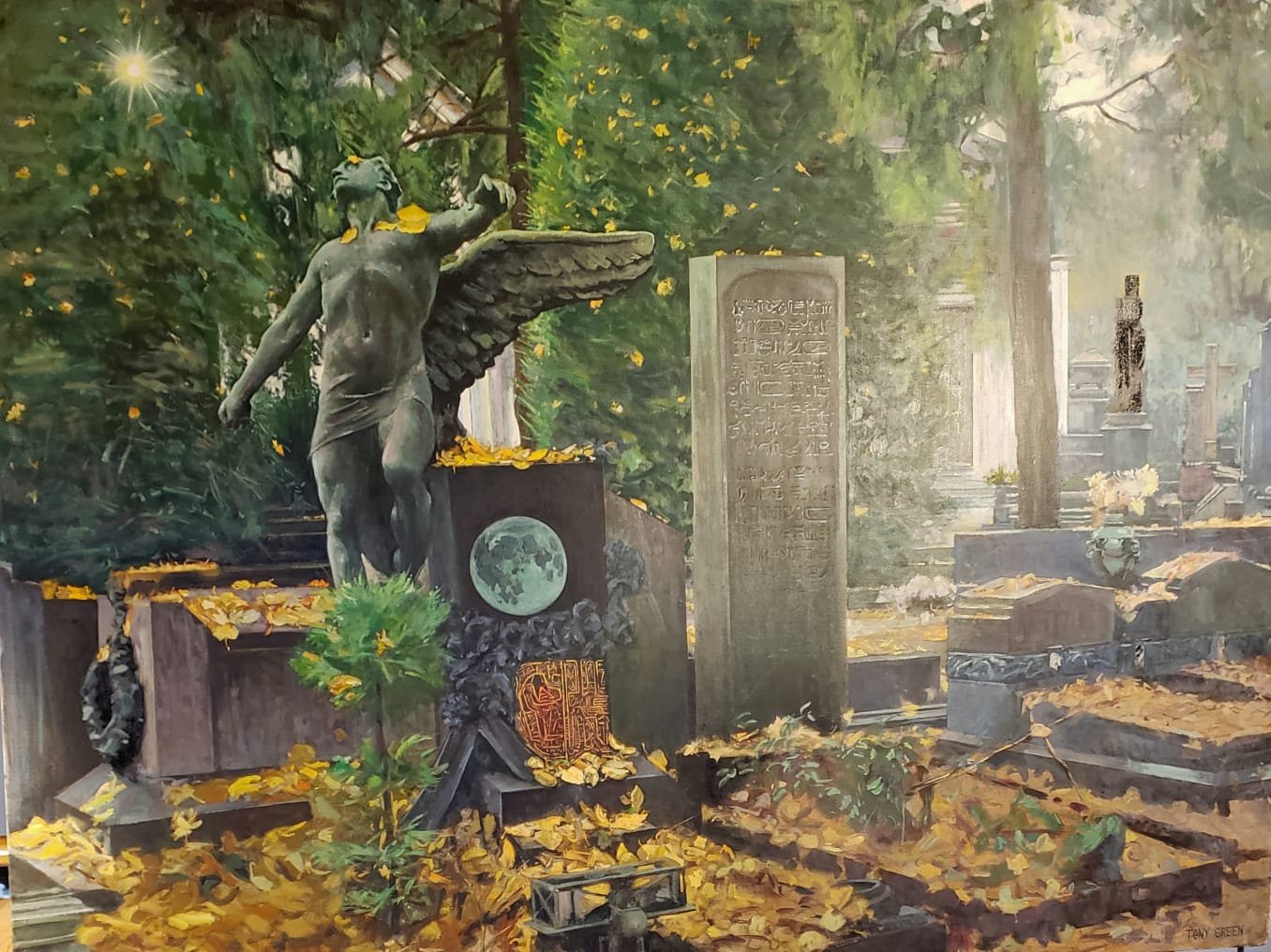
AUTUMN LEAVES (WINTER COMES)
Leave a Reply