
Late light in Santa Fe can flatten one wall and ignite another. A canvas that looked modest in the gallery suddenly throws a warm edge across the room; a bronze reads heavier than expected; a drawing that felt intimate on a white pedestal starts to disappear once it meets adobe, shadow, and the distance between couch and wall. The room changes the work, and the work changes the room. That first encounter is not about romance so much as proportion: how large the piece feels from the chair, how the surface catches light, whether the frame carries the image or quietly overstates it.
The fastest way to overpay is to let the story outrun the object. Buying original art in Santa Fe is a judgment problem, and the useful questions are practical ones: who made it, what is the medium, what is the support, what is the condition, what has been restored, how was it stored, how will it hang, and does the scale actually suit the wall you have in mind. Provenance matters because it clarifies ownership and history; condition matters because small losses, cracking, or overcleaning can change both value and longevity; medium and support matter because oil on linen, watercolor on paper, and mixed media on board age differently. Fit matters too, not as decoration but as placement, lighting, and sightline. As explored in our recent Santa Fe piece, earlier notes already hinted at how local context shapes what collectors notice first; here the task is to separate atmosphere from evidence before the purchase is final.
What follows is a practical path through the decision: what to inspect, what to compare, and what to ask before the work leaves the wall.
Table of Contents
- Evidence and paper trail: what to verify first
- Condition, medium, and conservation implications
- Scale, placement, and how the work lives in the room
- Authenticity, comparison, and when the story outruns the object
- How to use Santa Fe as context without outsourcing your judgment
Evidence and paper trail: what to verify first
The first thing to ask for is not a sales pitch, but the trail that lets the work stand on its own: invoice, prior ownership history, exhibition record, and any conservation notes. If the seller cannot produce even a basic chain of custody, the story becomes thinner, and the price should follow. A confident offer with no paper behind it deserves a slower response, because the missing document is often the thing that would have justified the number.
For a collector comparing works in Santa Fe, that distinction matters immediately. A painting with a dated bill of sale, gallery label, and a clear title history is easier to evaluate than one described only by reputation or family lore. Ask one direct question: “What document would you hand to a lender or insurer?” If the answer is vague, the object may still be appealing, but the decision shifts from acquisition to risk management.
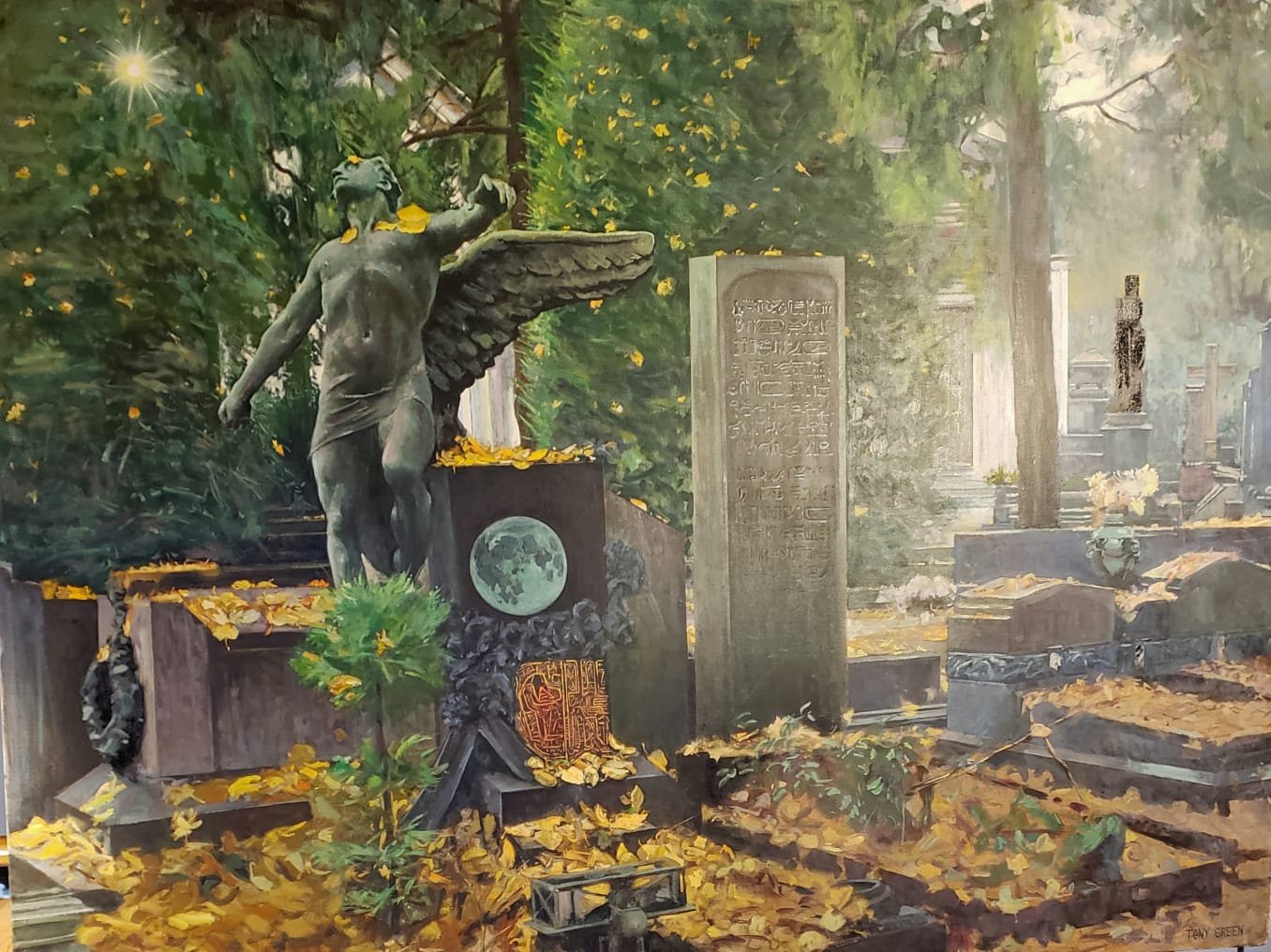
When the artist is living and the method is classical, as with Tony Green’s Renaissance-based practice at About, the paper trail can be unusually specific. Medium, support, dimensions, and date should align across the certificate, listing, and any studio records; if they do not, the discrepancy needs explanation before value hardens in your mind. A claim that sounds elegant but cannot be matched to a label, receipt, or signed statement is not ready to carry the asking price.
Thin proof changes the whole purchase. It can lower leverage, complicate resale, and make even a beautiful piece harder to place later, especially if the market will expect provenance similar to what a serious Getty Proven. search begins to establish. Once the evidence is credible, the next question becomes whether the object’s condition and medium can carry the value being claimed.
Condition, medium, and conservation implications
The first thing to inspect is not the signature but the surface. A painting can present beautifully in Santa Fe light and still carry hidden strain: craquelure that is stable versus lifting, old retouching that matches the field versus a later repair that flattens the passage, or a canvas that has relaxed enough to telegraph through the image. Ask for the exact medium and support—oil on linen, oil on panel, tempera, mixed media—and get the dimensions including frame if the frame is part of the object. That matters for placement, framing cost, and whether the work will sit comfortably in a room with strong afternoon sun or dry heating.
Medium changes the conservation outlook. Oil on panel behaves differently from oil on canvas; gilding, varnish, and glaze layers age on their own schedules; works on paper may need UV protection and careful matting. If a seller can tell you when the last varnish was applied, whether the work has been cleaned, and whether any restoration was documented, you learn far more than from a polished sales description. A useful question is simple: What exactly has been altered, stabilized, or replaced, and when? If the answer is vague, ask for condition photos in raking light and, when appropriate, a conservator’s note.
For a buyer comparing pieces on Tony Green’s site or elsewhere, the practical test is whether the material story matches the asking price. A work with sound structure, legible surface, and clean edges can justify a higher number than a similar image with abrasion, unstable varnish, or poor storage history. That is especially true when the object is intended for a prominent wall; the right piece should not only look strong at a distance, it should survive closer viewing without revealing avoidable damage. If you need a room-specific fit, the commission path is often the cleaner answer than forcing an undersized or fragile work into the wrong setting.
Keep the paper trail tied to the object’s physical life: invoices, prior ownership notes, conservation reports, and a clear record of dimensions and medium.
Scale, placement, and how the work lives in the room
The first decision is usually not the purchase. It’s the standard. A painting that looks commanding in a booth can collapse over a narrow console, while a small panel can feel exact above a reading chair if the proportions are disciplined. Measure the wall space, the furniture below it, and the sightline from the doorway; then compare those numbers to the listed dimensions and the framing depth, not just the image size. If the work is on paper, ask whether the frame adds a mat that changes the footprint, because that extra border can decide whether the piece feels airy or cramped.
Light changes the buying decision as much as size does. South-facing rooms can tolerate stronger color and denser surfaces; dim hallways ask for contrast, clean edges, and a composition that reads at a glance. If you are considering one of Tony Green’s classical paintings, the method and surface character described on the About page help you anticipate how the work will behave under raking light, while the Shop gives you a practical sense of scale and medium before you commit. A buyer should ask for one straight-on image and one angled image in the intended room, because varnish, glazing, and texture can alter the visual weight more than the catalog picture suggests.
That room test becomes especially useful when the work has to live with architecture rather than float above it. A tall corridor wants vertical energy; a low-ceilinged den usually needs something with broader lateral balance. If the piece will sit near windows, lamps, or a fireplace, ask where glare will land at noon and at night, and whether the frame finish will compete with brass, plaster, or dark wood. During the Opening Reception: Four Stories conversation around how images change as viewers move, the same point applies here: the work is not just what you see head-on, but what the room allows you to see from six feet away, ten feet away, and in passing.
Authenticity, comparison, and when the story outruns the object
In Santa Fe, where strong narratives can travel faster than careful looking, the useful question is simple: what can be verified without the seller speaking at all? Ask for the invoice trail, exhibition history, restoration notes, and a written statement of medium and dimensions. If the work is framed, confirm whether the measurements include the frame or only the image area. A difference of even a few inches can change how a piece reads in a narrow adobe wall or above a deep bench. Tony Green’s own method is rooted in classical discipline, which makes those specifics more—not less—important when comparing one work to another. When the story starts to outrun the object, the mismatch is usually visible before it is verbal. A painting described as rare should not look mechanically refreshed. A work said to be early should not present materials that read later. A piece promoted as monumental should not collapse in the actual proportions of your room. If you are comparing several candidates, line them up by support, medium, edge treatment, and scale, then ask which one holds up after the sales language is removed. For available examples with those facts already attached, the shop gives you a cleaner basis for comparison than a polished pitch does. That is also where fit becomes more exacting than taste. A strong object can still be wrong if its scale overwhelms the wall, its frame pulls attention away from the image, or its surface needs light that the room cannot give. Pro tip: Make the claim prove itself against the object and comparison set. Compare signature, surface, and handling with credible examples. If the story is stronger than the evidence, slow down. Ask what would change your decision before price enters the room. How to use Santa Fe as context without outsourcing your judgment The local market also rewards confidence in scale. In a city where many rooms are adobe-walled, textured, and visually busy, a piece can feel smaller once it leaves the white cube and meets beams, niches, furniture, and competing objects. Measure the wall, then stand back the distance you would have in the actual room and compare that span to the visible image area, not just the frame. If you are weighing a work from Tony Green’s shop , that comparison matters even more, because classical painting can carry a lot of presence without needing oversized dimensions. For a room-specific fit, a discussion through commission is often the cleaner move than forcing a near-match. What changes most after purchase is not the subject but the weather around it: the wall color, the lamp temperature, the distance from seating, the way morning sun skims across glass or leaves a matte surface alone. Before you buy, ask for a photograph of the piece in a plain interior and, if possible, one with a measuring tape in frame so you can judge margins and breathing room. If the work is framed, confirm whether the frame is part of the intended presentation or an added layer you may want to replace; in Santa Fe, where interiors often mix old wood, plaster, and contemporary furnishings, the frame can either settle a painting into the room or make it look imported from somewhere else. For background on the painter’s method and classical approach, the About page gives useful context without turning the purchase into a mystery.
Leave a Reply