Author: Heroic Scripts

  • How to choose art that lasts in Santa Fe: Questions worth asking first

    How to choose art that lasts in Santa Fe: Questions worth asking first

    Late light in Santa Fe can make a plaster wall glow softly for ten minutes, and then turn severe the next. A painting that looked calm on a gallery floor can suddenly feel too small above a long bench, or too loud beside hand-troweled texture and an old wood beam. The room is not just holding the work; it is testing it for proportion, surface, and whether the frame earns its place.

    That is why lasting art choices are less about liking a piece in the moment than about judging what will still hold up after the excitement fades: who made it, where it came from, what condition it is in, what medium and support were used, how the scale relates to the wall and furnishings, whether the placement will flatter or fight the light, and whether the work is authentic in both paperwork and presence. In a market like Santa Fe, those questions protect the purchase as much as they shape the look of the room, which is why the buying conversation should be specific: ask for provenance, compare dimensions against the actual wall, inspect edges and surface wear, and make sure the piece can live with your space rather than merely fill it.

    If you have read the earlier notes, this next pass turns those instincts into a practical checklist for choosing work that belongs now and still makes sense years from now.

    Table of Contents

    Evidence and paper trail: what to verify first

    The first decision is usually not the purchase. It’s the standard. Before you talk about price, ask for the clearest proof the work can offer: who made it, when, in what medium, and with what record behind it. A signed invoice, exhibition history, gallery label, or studio note may sound ordinary, but those details change the conversation fast; thin proof forces a buyer to discount the story, while a clean paper trail gives the work room to hold its value.

    For a collector weighing how to choose art that lasts in Santa Fe, provenance should read like a chain, not a slogan. Ask, “Can you show me the ownership history from the artist or first seller to now?” If the answer is vague, compare that hesitation against the object itself: does the signature align with the period, are the dimensions exact, is the medium described consistently across documents? A painting that arrives with contradictory titles, loose dates, or missing source notes asks you to pay for uncertainty; that is rarely the right starting point, even when the surface looks strong.

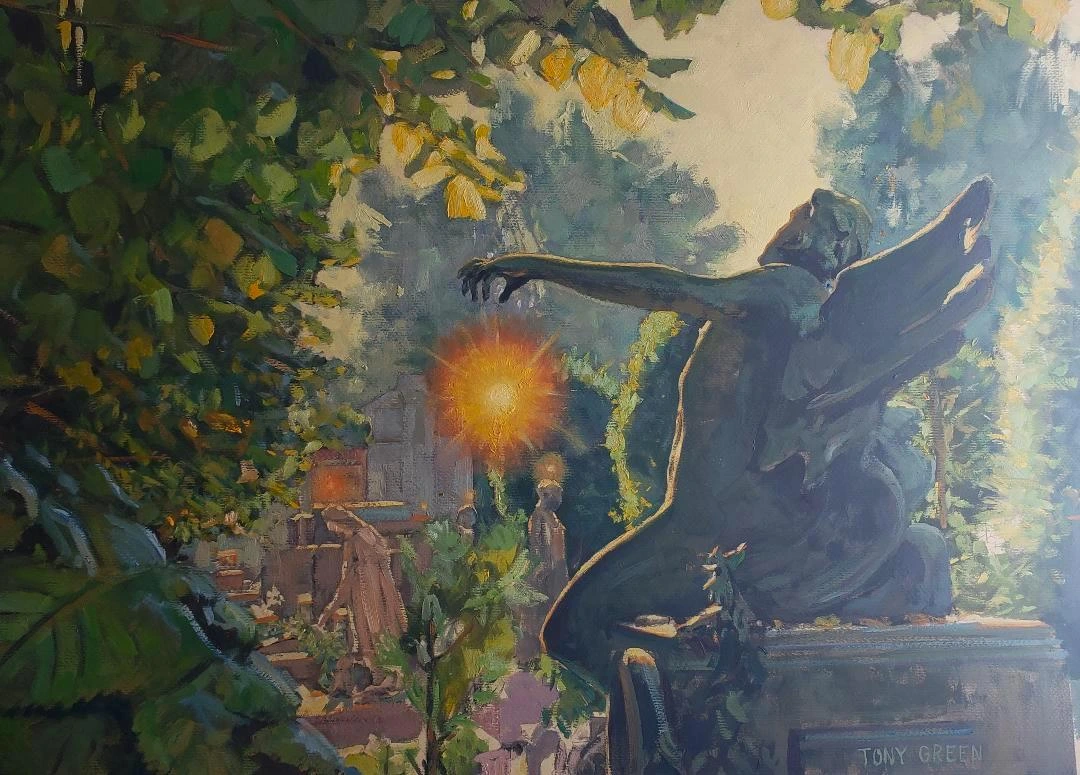
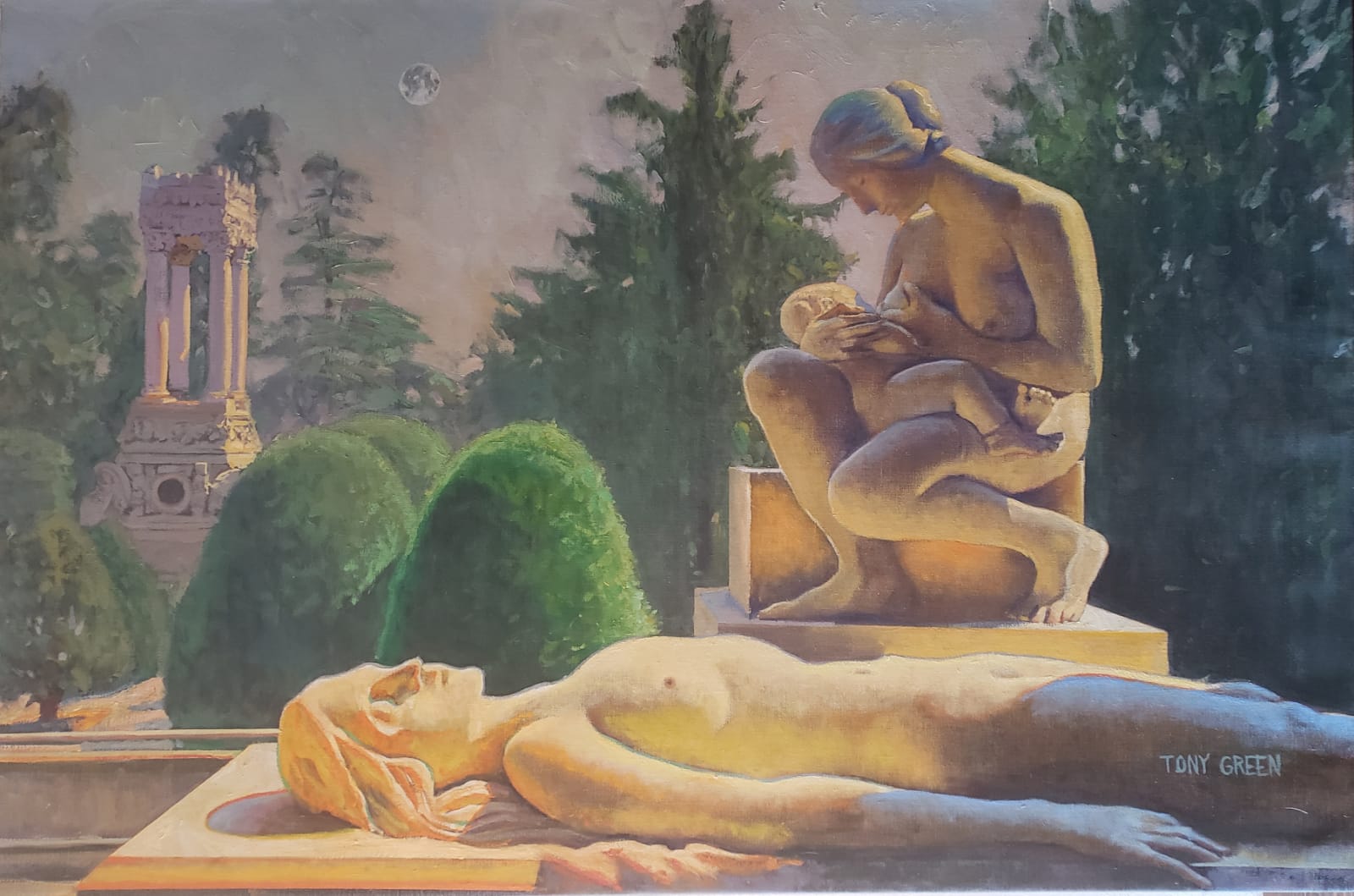
    Let’s make it practical. At a student exhibition opening such as SFCC Student Exhibition Opening, you can see how documentation begins at the wall label: medium, size, and artist name, all in plain view, and those basics are what later become the buyer’s first cross-check. The same habit applies to established work from Tony Green’s atelier background and classical method; if you are comparing available pieces through the shop or considering a room-specific commission, ask for the exact support, dimensions, and any prior exhibition or collection record before you get attached to the image.

    When the evidence is solid, the work can be judged on its own terms. When it is thin, the price should fall with it, because the next question is no longer whether the piece is beautiful; it’s whether the condition and medium can carry the value being claimed.

    Condition, medium, and conservation implications

    Once the proof is credible, the next decision is physical: whether the work is healthy enough to justify the price being asked. In Santa Fe, where collectors often compare a new purchase against pieces that have already lived through strong light, dry air, and long display cycles, surface stability matters as much as image quality. A clean frame can hide a lot, so ask for the plain facts: what is the support, what is the medium, and what has changed since the work left the studio or last entered a collection?

    The medium tells you how the piece will age. Oil on panel behaves differently from oil on canvas; tempera, gilding, and mixed media each bring their own risks; and classical methods, such as those used by Tony Green, reward careful handling but still need honest scrutiny of cracking, lifting, abrasion, and previous restoration. If a work has an older conservation report, read it against the current surface under raking light and ask whether varnish has yellowed, whether retouching is visible, and whether the support is sound. That is where a provenance file and the object itself should agree, clause for clause, without drama.

    Buyers should also pin down measurements that affect both care and placement: exact image size, framed size, depth, and weight. A painting that looks moderate in a photograph can overwhelm a narrow wall once framed, or sit too close to heat vents and direct afternoon light. Ask for a straight answer to one practical question: if this arrives in my room, what will it need in the first week to stay stable? If the answer involves UV-filtering glazing, a different hanging height, or a custom frame, that is useful information, not an inconvenience. For available work and stated medium or scale, the shop gives you a baseline; for room-specific needs, commission can be the cleaner route.

    Pro tip: Before paying, ask for three things in writing: the exact medium and support, the current condition notes with close-up images of any wear, and the framed or unframed dimensions measured to the nearest quarter inch.

    • Compare those numbers to your wall space and lighting plan.
    • Ask whether the surface has been cleaned, varn

      Scale, placement, and how the work lives in the room

      The first test is not whether the piece is beautiful under gallery light; it is whether it can live on your wall without asking the room to reorganize itself around it. A work that reads as balanced in a high-ceilinged gallery can feel unexpectedly small over a mantel, while a tightly composed panel can overpower a narrow hallway. Measure the wall, the furniture line beneath it, and the viewing distance. If a painting is likely to hang above a sofa, leave enough breathing room that the top edge does not crowd the crown or disappear into upholstery; if it is for a passage, check the sightline from both directions so the image does not collapse into a blur when seen in motion.

      Framing changes that calculation. A wide linen liner or deep profile adds presence, but it also adds inches that matter in Santa Fe homes where plaster texture, vigas, and sunlit corners already carry visual weight. Ask for the framed and unframed dimensions separately, then compare them to the actual opening you have in mind. If the work is on panel or canvas and you prefer a cleaner edge, confirm how the sides are finished and whether the object can hang flush or needs a shadow gap. When a seller can supply a mockup or a photo of the work scaled into a real interior, that image often reveals more than a description ever will.

      Light is where a piece either settles into the room or starts fighting it. North light can preserve tonal subtlety; direct afternoon sun can flatten delicate modeling and punish surfaces over time. If the work has glazing, watch for reflections from lamps, windows, and nearby brass or glass objects. If it is an unglazed surface, look at how the texture behaves under your own lighting at home, not just in the studio. Tony Green’s background in classical methods makes surface and finish especially relevant, and the same is true when you compare available pieces in the shop: the closer you get to the actual room, the easier it is to tell whether the scale is elegant or merely large.

      For a room-specific fit, the useful question is concrete: what is the exact wall width, what hangs beside it, and from what distance will you usually see it?

      Authenticity, comparison, and when the story outruns the object

      A useful buyer’s question is specific: what documentation can be shown beside the work itself, and what part of the attribution is visual rather than verbal? For a classical painter such as Tony Green, whose Venice-based practice is rooted in Renaissance methods, the object should reward close looking—layering, edges, surface decisions, and the discipline of execution should be visible even before you read the title card. If you want to compare available work by medium and scale, the shop gives a clearer baseline than a sales pitch, and the about page helps you separate method from marketing.

      In Santa Fe, that discipline matters because the market is full of pieces with strong regional stories and uneven physical claims. A work can be perfectly authentic and still be the wrong fit if the scale overwhelms the room or the surface disappears under glass glare, but the reverse is also true: a modestly sized panel with real presence can outlast a louder object that relies on lore. When a seller describes a piece, compare the language to what you can measure, photograph, and verify. If the story sounds larger than the object, ask for a straight comparison to one or two other credible examples, ideally with dimensions, medium, date, and condition side by side.

      When the room is known and the object is credible, the next decision is whether you need a finished work or a commission shaped to the wall, the light, and the viewing distance. That is where a direct conversation helps more than a vague promise, especially if you are balancing authenticity with fit and want the piece to feel inevitable rather than merely acquired.

      How to use Santa Fe as context without outsourcing your judgment

      That is why placement belongs in the conversation before purchase, not after. Ask for the work’s exact dimensions, then compare them to the wall you have in mind with painter’s tape or a paper template; if the object is meant to sit above a console, measure the furniture width as well as the clear wall span. If you are considering work from the shop, look at scale alongside medium and surface, because a classical painting with subtle value shifts needs a different amount of breathing room than a more graphic piece. A simple question helps: “Will this still read from twelve feet away, and what changes when it is framed?”

      Light is where Santa Fe teaches restraint. North light can preserve nuance, while strong afternoon sun can wash out delicate passages or create glare on varnished surfaces; even a beautiful painting can become difficult if it sits opposite a bright window. Ask where the work was viewed in the gallery and whether it was lit by spotlights, skylight, or ambient room light, then imagine the same surface under your own fixtures. If you want a room-specific solution, a direct commission conversation is often more useful than trying to force a finished piece into an awkward corner.

      That last step is where Tony Green’s practice matters.

      Pro tip: Use Santa Fe as context, not as permission to skip judgment.

      • Let local galleries sharpen your eye without outsourcing the decision.
      • Bring the same standard back to the work, the wall, and the documentation.
      • End with one action the buyer can actually take.
      how to choose art that lasts in Santa Fe – Santa Fe
      SQUERO A CANNAREGIO
  • Collecting art in Scottsdale: A practical guide for collectors

    Collecting art in Scottsdale: A practical guide for collectors

    Late afternoon in Scottsdale can flatten a room into gold and shadow at once: a linen sofa pulled a little too far from the wall, a pale plaster surface waiting for the right scale, a canvas leaning beside a doorway so you can see how its edge catches the light. In that kind of room, an artwork stops being an abstract idea and becomes a physical decision. The height of the ceiling, the texture of the wall, the distance from the nearest window, even the finish on the frame all change how the piece reads.

    This guide treats collecting as a judgment problem, not a decoration problem. Before a work belongs on your wall, you want to know what can be verified: provenance, condition, medium, support, dimensions, framing, authenticity, and whether the scale actually fits the room you have in mind. A strong purchase is usually the one where the facts line up cleanly—what the surface shows, what the paperwork supports, what the artist’s method implies, and what the piece will ask of the space once it is installed. For readers comparing options against the market here, the point is not to buy quickly; it is to buy with enough clarity to ask the next right question.

    If you want the local context that shaped this approach, the earlier notes are a useful companion before you move into the details below.

    Table of Contents

    Evidence and paper trail: what to verify first

    The first thing to ask for is not a sales pitch but the paper trail: invoice, exhibition history, prior ownership, and any conservation or framing records that travel with the work. A credible offer should let you answer a simple question without guesswork: who owned it, when did it change hands, and what documentation supports that path? If the seller can only speak in generalities, the story is thinner than the asking price suggests.

    That thinness changes the decision immediately. A work with strong visual appeal but no provenance may still be worth considering, but only at a level that reflects the risk and the work required to verify it. Ask for dated images, gallery labels, condition notes, and, where relevant, a chain of custody that can be checked against exhibition records or a catalogue entry. For historical work, a quick comparison with a source like the Getty Proven. resources can reveal whether the paper trail is complete or merely decorative.

    For a living artist, the documentation should be even cleaner: title, date, medium, support, dimensions, and a signed certificate or invoice that matches the object in front of you. If the dimensions on paper do not match what you measure on the wall, or if the medium is described loosely when the surface tells a different story, pause. Those are not minor clerical errors; they are signals that the offer has not been prepared with enough care.

    At this stage, the useful comparison is between evidence and price. A work with a clear record, stable ownership, and consistent description can support a stronger number; one with gaps should not be treated as if the gaps were invisible. That is the point at which the conversation becomes concrete again, and the next filter is whether the condition and medium can carry the value being claimed.

    Condition, medium, and conservation implications

    Once the record is credible, the surface has to earn its keep. In Scottsdale light, where strong sun and bright interiors can make flaws louder, a buyer should ask to see the work under even illumination and from an angle: are there cracks, cupping, lifting paint, foxing, stretcher marks, or a softened varnish that hides earlier restoration? If the answer comes with paperwork, fine, but the object itself should still tell the same story. A clean condition report matters most when it is specific: location of damage, size of losses, prior inpainting, and whether any treatment was reversible.

    Medium changes the risk profile. Oil on linen, oil on panel, watercolor, mixed media, and works on paper age differently, and the support is as important as the image. A collector comparing two pieces should ask, “What is the support, what are the dimensions to the nearest quarter inch, and has it been relined, mounted, or reframed?” That is not a technicality; it affects how the work behaves in heat, humidity, and transport. For buyers looking through the shop, that question also helps compare scale and material honestly, instead of assuming two similar images will live in a room the same way.

    Ask for the exact conservation history in plain language: what was done, when, by whom, and whether any intervention changed the original surface. If a seller says the work has “been restored,” ask for the conservator’s invoice or report and a close image of the affected area. A small stable repair is one thing; an overcleaned varnish or aggressive retouching is another, especially when the price claims rarity or importance. When the work is by a living artist, a note from the studio about materials and intended display conditions can be useful, and Tony Green’s background makes that kind of method conversation especially relevant to collectors weighing longevity as well as appearance.

    The practical test is simple: can the piece live where you want to place it without constant compromise? Before paying, compare the work’s medium, scale, and frame depth against the wall, glazing, and light available in the room.

    Scale, placement, and how the work lives in the room

    The real test begins where the wall meets the furniture. A work that looks elegant in a gallery can feel cramped above a sofa, float awkwardly over a console, or disappear in a long corridor. Measure the wall span, the furniture width below it, and the clear height from floor to hanging point before you commit. In Scottsdale homes, where strong light and open plans can make edges read harder, those numbers matter as much as the image itself.

    Ask for the framed dimensions, not just the image size, and compare the frame depth to the room’s sightlines. A shallow frame may sit cleanly in a narrow passage; a deeper one can project beautifully in a larger room, but only if it does not crowd door swings or catch glare from nearby windows. If the work will hang near a window or opposite a glass door, confirm whether the surface is matte, varnished, or glazed, because that finish will decide how the piece reads at different hours.

    Lighting is part of the purchase, not an afterthought. A painting under warm lamplight can feel intimate at night and flat in morning sun; a work with reflective glazing may lose its clarity entirely if it faces direct desert light. Before buying, ask for a photo of the piece in the kind of setting you intend to use, or place painter’s tape on the wall to mark the exact footprint. If the scale is close but not exact, a commission can solve the fit without forcing the room to adapt around the object.

    When the dimensions are right, the room stops arguing with the work and starts supporting it. That is the point where a collector can move from comparing size and placement to considering whether the title, subject, and maker’s intent still align with the object in front of them; Tony Green’s background and available work make that conversation easier to have with specifics rather than guesswork.

    A 90-second checklist before you buy

    One fast comparison can save you from a costly mismatch: place the candidate beside a known reference in your mind, such as the scale of an overmantel, a stair landing, or the clear wall at eye level in a room you use daily. If you are standing in front of a work after a visit to O’Keeffe Mus. or after a stop at the FREE Admission at Western Spirit Celebrating Their $12 Million Expansion! listing, the better question is not whether you like the object, but whether you can name where it will live, what will support it, and whether the frame helps or fights the image. FREE Admission at Western Spirit Celebrating Their $12 gives you a public counterpoint here: it shows how much presentation can shape first impressions before the work has to stand on its own.

    Before money changes hands, ask for the document set that lets the story and the object agree: invoice, provenance note, condition note, and a current image of the reverse. If the room is still uncertain, a commission conversation can solve the fit more cleanly than forcing a near miss; that is where Commission becomes useful, especially when the wall, the light, and the intended viewing distance all need to be coordinated.

    Authenticity, comparison, and when the story outruns the object

    Once the paperwork is in hand, the sharper test is whether the object can hold the same story without help. A work may come with a polished narrative, but if the signature style shifts under close viewing, the support feels wrong for the stated period, or the surface has been altered too aggressively, the claim weakens fast. In Scottsdale, where buyers often compare across galleries, private sales, and advisory channels, ask for one clean comparison point: a documented example by the same artist, same medium, and similar date. If the seller cannot show how this piece aligns with that reference, the story is doing more work than the object.

    The sales story outruns the object when the language gets larger than the facts. “Museum quality” is easy to say; it means little unless the dimensions, condition, and provenance support the claim. A useful question is whether the same work would still make sense if the label were removed and only the image, support, and measurements remained. If the answer is yes, the piece is probably carrying its own weight. If the answer depends on a dramatic backstory, compare it with other available work in the shop or, for a room-specific fit, a focused commission conversation; that is usually where the next decision becomes clear.

    How to use Scottsdale as context without outsourcing your judgment

    Scottsdale can sharpen a buyer’s eye without becoming the authority. In a market where polished presentation is common, the useful question is not whether a piece looks expensive in a bright gallery, but whether it still holds together when you picture it in the room you actually have. That means comparing the work against your wall height, sightlines, and the amount of visual activity already in the space, rather than letting the local gallery atmosphere do the persuading for you.

    When the room calls for something specific, custom is often the more honest route than forcing a near-fit into place. A commission conversation can settle scale, palette, and placement before the work is made, which is often the better answer for collectors who already know the wall but not yet the object. The practical test is simple: if the piece still makes sense after the sales language falls away, and you can explain why it belongs where you plan to live with it, you are ready for the next comparison.

    collecting art in Scottsdale – Scottsdale
    RIALTO FISH MARKET
  • Buying art as an investment in Scottsdale: How collectors avoid overpaying

    Buying art as an investment in Scottsdale: How collectors avoid overpaying

    In a Scottsdale living room, late sun can turn a pale wall almost metallic, making one painting read larger than it is and another seem to retreat into shadow. A canvas with a linen weave catches the light differently than a glossy panel; a bronze relief throws a narrow shadow line that changes as you move. That is often the first test of an acquisition: not how it sounds in conversation, but how it actually sits in the room, at the right height, beside the furniture, under the light you live with every day.

    The real question in buying art as an investment is not whether a work has a compelling story, but whether the object can withstand scrutiny: who owned it, what condition it is in, how the medium ages, whether the scale suits the wall you have, whether the framing is appropriate, and whether the work is authentic in the ways that matter. In Scottsdale’s market, where polished presentation can arrive before careful documentation, price only makes sense after provenance, materials, and placement are checked against one another. That is the standard this guide uses, with a practical eye on what to verify, compare, and measure before money changes hands.

    What follows picks up from the earlier notes and turns them toward the specific judgments that protect both taste and capital.

    Table of Contents

    Evidence and paper trail: what to verify first

    The first thing to ask for is the paper trail that supports the story: a signed invoice, prior sale record, exhibition history, or gallery inventory sheet that names the artist, title, medium, dimensions, and date. If those basics are missing or inconsistent, the offer is not “mysterious,” it is thin. A clean record does not guarantee value, but it tells you the seller can account for the object instead of decorating the price with a narrative.

    Thin proof changes the decision quickly. A work attributed to a known hand but lacking ownership history should be treated differently from a piece with documented transfers, catalog references, and images that match the object in front of you. Ask for the earliest available record and compare it against the physical work: does the title repeat, do the dimensions match, does the medium line up with what you can see and feel? If the seller cannot produce that alignment, the asking price should drop until the risk does.

    For collectors who want a stronger basis before moving further, Tony Green’s background and current available work show the kind of factual clarity worth expecting from any serious offer: named medium, stated scale, and a visible relationship between the object and its description. That is the standard to apply whether the piece is a finished painting or something being considered for a room-specific fit through a commission. The more precise the record, the easier it is to compare one work against another without relying on sales language.

    One useful test is simple: ask, “What document would you show a future buyer to prove this work’s history?” If the answer is vague, the chain is probably weak. If the answer includes dated correspondence, exhibition tags, conservation notes, or a provenance summary that can be checked against an outside source such as Getty Proven., you have something you can actually weigh. Once the proof is credible, the next decision is whether the object’s condition and medium can carry the value being claimed.

    Condition, medium, and conservation implications

    Once the paper trail is credible, the object still has to survive contact with a real home. A panel painting with stable joins, an oil on linen with even tension, or a work on paper with clean margins all tells a different story about risk, longevity, and upkeep. In Scottsdale, where bright interiors and strong daylight can expose weak varnish, fading pigments, or brittle supports quickly, the practical questions are plain: has the surface been cleaned, has anything been relined or reinforced, and is there any visible cracking, cupping, foxing, or retouching that changes how the work will age?

    Medium matters because it changes both care and cost. Acrylic on canvas usually tolerates more ambient variation than a tempera layer on wood; gilded surfaces, mixed media, and delicate paper works ask for more controlled placement and framing. Ask for the exact dimensions including frame depth, the substrate, the date of any conservation treatment, and whether the current presentation is original or later. If a seller can name the pigment set, ground, varnish, or support, that is useful; if they can only offer a vague medium description, compare that against the documentation and the visible surface before you go further.

    A buyer should also ask one direct question that forces specificity: What would a conservator say about this piece if they inspected it today? That answer should mention visible condition, prior repairs, and any likely future interventions, not just reassurance. A work with minor craquelure and sound structure may still be strong; a work with active flaking, overcleaning, or a compromised support is a different proposition entirely, even when the signature and history are solid. If you want to see how Tony Green’s classical approach translates across format and scale, the About page gives useful context, and the Shop helps you compare how medium and size change the physical presence of a piece.

    That is the point where the conversation becomes less about owning a name and more about whether the work can live where you plan to place it, with the light, wall width, and framing it will actually need. If the piece is close but not quite right for the room, a custom conversation can be more valuable than forcing the fit, especially when scale and finish will affect both display and preservation.

    Scale, placement, and how the work lives in the room

    The piece may satisfy the eye on paper, but the room is where the purchase succeeds or fails. A work that measures beautifully in a listing can still feel underfed above a long sofa, crowded in a narrow hall, or too visually dense for a room with low ceilings. Before you commit, compare the artwork’s width and height to the wall section it will occupy, then measure the furniture beneath it and the sightline from the main seating position. That simple comparison tells you more than a polished photograph ever will. Framing changes the math as much as the image itself. A generous frame can give a smaller work enough presence to hold a wall; a heavy one can overwhelm an already large composition. Ask for the framed and unframed dimensions separately, plus the frame depth if the work will sit near a doorway, shelf, or flush-mounted light. If the surface is especially delicate, or the work is on paper, confirm whether glazing will introduce glare in the room you actually use. For buyers comparing available work on the shop , those measurements should sit beside the medium, not after the fact. Light decides how the surface reads across the day. North light can keep color steady; warm evening lamps can deepen reds and golds; direct sun can flatten detail or create glare where none was visible in the studio. If the work will hang opposite a window, ask how the finish behaves under reflection. If it will live in a dining room or entry, check whether the strongest viewing angle is standing height or seated height. That matters in a Venice-based practice like Tony Green’s, where classical methods and layered surfaces reward careful placement. If the room asks for a different scale or orientation, a commission may solve the problem cleanly. For a Scottsdale buyer, the question is not only whether the work is desirable, but whether it can hold its place without compromise. Bring a tape measure, photograph the wall with nearby furniture in frame, and mark the proposed height before you buy. If the work already feels right in relation to the room, the last check is whether the story attached to it still matches the object, which is the kind of conversation that belongs before the next decision, not after it.

    A 90-second checklist before you buy

    A useful test is simple: what would you need to see in writing before you felt comfortable with the purchase? Ask for medium, dimensions, framing details, and any provenance or exhibition note that supports the asking price; if a work is being considered for a specific room, a commission conversation can also clarify fit before anything is finalized. A museum visit can sharpen the eye here as well—an afternoon around FREE Admission at Western Spirit can remind you how much presentation changes scale, and why the object still has to carry itself once it leaves the gallery.

    Pro tip: Before you pay, line up three things on one page: a wall photo, the exact dimensions, and the seller’s written details on medium and framing. If those three agree, you are not just liking the piece—you are checking whether it can actually live where you think it will.

    Authenticity, comparison, and when the story outruns the object

    Comparison is where buyers in Scottsdale often gain an edge. Put the piece beside two or three credible examples of the same artist or period and look for repeatable traits: how the paint sits, how edges are finished, how the support is prepared, how the scale reads in relation to surrounding work. A claim like “important” means little unless it matches something observable. When the object is being described as if it belongs to a stronger, rarer category than its materials suggest, the story is outrunning the thing itself.

    When a work is meant for a specific room, the final test is not only authenticity but whether the object and its story still align once lighting, distance, and framing enter the picture. If that alignment feels close but not quite complete, a room-specific conversation through commission can be the cleaner path than forcing a near-match. With the object tested, Scottsdale becomes context for judgment rather than a reason to reopen every earlier check.

    How to use Scottsdale as context without outsourcing your judgment

    Tony Green’s method matters here because classical training tends to reveal itself in structure: edges, proportion, and how the image resolves across distance. That is useful whether you are looking at a finished work in the shop or considering a custom scale through commission. If the piece feels right only when you imagine a different wall, different light, or a different frame, the fit is not yet settled.

    Once those variables are reduced to something you can picture clearly, the next decision becomes simpler: keep evaluating the object as a serious purchase, or move toward the version that belongs in your room from the start.

    buying art as an investment in Scottsdale – Scottsdale
    Tony’s seal
  • Buying art as an investment in Santa Fe: How collectors avoid overpaying

    Buying art as an investment in Santa Fe: How collectors avoid overpaying

    In a Santa Fe room, afternoon light can flatten one wall and wake another: plaster catching a warm edge, a linen sofa keeping its distance, a canvas quietly changing as you move past it. That is usually where the decision starts to feel real. Not in the gallery chatter, but in the way the work holds scale against a doorway, how the frame sits beside a beam, whether the surface wants glare or shadow, whether the piece still reads when the room goes still at dusk.

    Buying art as an investment here is less a romance than a sequence of judgments. Provenance should be legible, condition should be inspected with care, medium and support should be understood for how they age, and dimensions should be measured against the wall, the ceiling height, and the furniture it will live with. Authenticity matters, but so does fit: a strong work that is too large, too fragile, or poorly placed can lose force fast. The better purchase is the one that can answer the practical questions cleanly before money changes hands.

    Those earlier notes on earlier notes laid out the collector’s first filter; this guide takes the next step and turns it into a checklist of what to verify, compare, and measure before you commit.

    Table of Contents

    Evidence and paper trail: what to verify first

    The first thing worth asking for is not a sales pitch but the paper trail: invoice, prior ownership notes, exhibition history, and any conservation record that travels with the work. If the story is strong, it should survive contact with documents. A gallery-ready piece can still be a weak purchase if the seller cannot state who owned it, when it changed hands, and whether the surface has been cleaned, relined, or repaired. Thin proof does not automatically kill the deal, but it changes the price conversation immediately.

    Ask for the exact medium, support, and dimensions in writing, then compare those details against what is in front of you. A claimed oil on linen that reads like a panel, or a work whose frame hides a reduced margin, deserves a slower look. For artists with an established method, such as Tony Green’s classical practice, the documentation should make the object legible: title, date, size, medium, and any signature or inscription should line up without hand-waving. If you want a sense of the studio standard behind that language, his About page helps orient the buyer.

    Provenance is strongest when it is specific rather than decorative. “From a private collection” means little unless the seller can name the collection or provide a dated transfer, a gallery receipt, or an exhibition checklist. A buyer in Santa Fe should be especially alert to gaps between a compelling local story and actual records; the market here rewards objects with a clear chain of custody, not merely a familiar name attached to them. When a work has been shown, compare the dimensions and medium against a catalogue entry or archived listing, even if the comparison takes only a minute with a Getty Proven. search open beside you.

    When the paper trail is thin, the decision is rarely “maybe later”; it is usually “price must reflect uncertainty” or “walk away.” A missing receipt, vague attribution, or altered signature shifts risk onto the buyer, and that risk should show up in the number. If the documentation is solid and the object still feels like the right scale for the room, the next question becomes whether the condition and medium can support the value being claimed.

    Condition, medium, and conservation implications

    Once the proof is credible, the object itself has to earn the price. That means reading the surface like a conservator and a buyer at the same time: look for craquelure that is stable rather than lifting, varnish that has yellowed evenly rather than been patched, edges that match the age of the support, and any retouching that changes the way the image holds together. In a city like Santa Fe, where collectors often compare works with long horizons in mind, a clean paper trail means less if the paint layer is actively failing or the canvas has been relined poorly.

    Medium changes the conversation fast. Oil on linen, oil on panel, tempera, and mixed media each age differently, and each carries different costs if intervention is ever needed. Ask for the exact support, the date of the last conservation treatment, and whether the work has been exposed to moisture, smoke, or direct sun. If the seller says the surface is “in great shape,” ask for one concrete fact: what areas, if any, have been stabilized, cleaned, or restored, and by whom. A serious answer should fit the object, not the sales pitch; if you want to compare how a classical method behaves in finished work, Tony Green’s background is a useful reference point for technique and material discipline.

    Measure the risks in the language of use, not abstraction. A large panel with hairline movement may be manageable in a controlled interior but problematic above a fireplace or in a room with strong seasonal swings. A work on paper may be perfectly desirable and still need museum glass, UV protection, and a frame depth that clears the sheet without pressure on the mat. Ask for the exact dimensions unframed and framed, the type of glazing, and whether the current frame is archival or simply decorative. If you are comparing works, place them side by side in your mind by support, scale, and vulnerability; a smaller piece in sound condition can often carry more value than a larger one with hidden repair.

    That is where the next filter comes in: not whether the piece is attractive, but whether its physical demands fit the room you actually have.

    Scale, placement, and how the work lives in the room

    The first thing to measure is not the wall, but the sightline. A painting that reads beautifully in a gallery can feel undersized above a long sofa, or overbearing in a narrow entry where you meet it at close range. Write down the wall width, the furniture width below it, and the distance from the usual viewing point; those three numbers tell you more than a glossy photograph ever will. If the work is on the site’s shop, compare the listed dimensions against the room you actually use, not the room you wish you had.

    Framing changes the decision as much as the image itself. A deep classical frame can give a small panel authority, while a thin profile can make a larger canvas feel lighter and easier to live with. Ask whether the listed dimensions include the frame, the rabbet, and any visible liner, because an inch here and there can decide whether the piece clears a doorway or sits awkwardly under a picture light. For a collector weighing a Tony Green work, that matters especially when the surface is built with classical methods and the framing needs to respect the object rather than crowd it; his about page is useful for understanding that approach.

    Light is the other silent partner. South-facing rooms can flatten subtle modeling by noon, while warm evening light can deepen glazes and make flesh tones or gold grounds breathe differently. Before buying, ask where the work will be hung, whether the wall receives direct sun, and whether the glass or varnish will create glare from the nearest lamp. If the piece must live over a fireplace, near a hallway turn, or opposite a window, request a photo mockup at the intended scale, or discuss a room-specific solution through a commission if the fit is close but not quite right.

    In Santa Fe, that room test is sharpened by strong light, adobe textures, and walls that often carry generous scale with very little clutter. A work that holds its own in a restrained interior may still need breathing room, especially if you are placing it near other collected objects or across from a saturated textile.

    Pro tip: Measure the wall, frame, and viewing distance before comparing another work.

    • Check image size and framed size separately.
    • Test the piece against the room’s light, not only gallery light.
    • If the proportions are wrong, a commission may be cleaner than a compromise.

    A 90-second checklist before you buy

    For collectors weighing buying art as an investment in Santa Fe, this is also the moment to ask for the paper trail in one sentence: who owned it, what condition reports exist, and whether the documentation matches the object in front of you. A quick comparison set matters too, especially if you are looking at work near the range you see on Shop or comparing it with the method described on About. Even a student show such as the SFCC Student Exhibition Opening can sharpen your eye for what is finished, what is resolved, and what still needs proof.

    If the story, the object, and the comparison set all agree, you are close; if one of them drifts, pause before the purchase and let the next decision be about fit rather than persuasion.

    Authenticity, comparison, and when the story outruns the object

    When the story starts carrying more weight than the object, the warning signs are usually plain: too many gaps in provenance, a surface that looks newer than the date implies, or comparisons that rely on famous names rather than close visual matches. A prudent buyer asks for the oldest available documentation, then checks whether the title history, exhibition trail, and condition report all point in the same direction. For historical context, a reference like the Getty Proven. framework is useful because it keeps the conversation on records, not romance.

    If the work is close but the fit is not, that is not a dead end; it is a decision point. A room-specific commission can solve proportion, palette, and light in a way a finished piece cannot, and Tony Green’s classical method makes that conversation especially concrete because the medium and scale can be specified up front. When the object, the comparison set, and the paperwork finally agree, the next question is no longer whether the story is persuasive but whether the work belongs where you plan to live with it.

    How to use Santa Fe as context without outsourcing your judgment

    Santa Fe also rewards buyers who notice what a work does after the sales language fades. A painting can be expertly made and still feel overextended once it leaves the right scale of room, or too delicate for a bright south-facing wall. That is where the conversation shifts from admiration to placement: Will the glazing, varnish, and palette hold at the distance you’ll actually see it from? Will the frame support the image or swallow it? Those are the questions that keep a purchase grounded when the atmosphere of the show is gone.

    For room-specific needs, a commission can be the cleaner answer than forcing a near-fit into a space that already has a clear rhythm. If you are comparing a finished work to a custom possibility, the useful next step is not a vague preference but a measured one: wall width, viewing distance, and the visual weight you want the piece to carry.

    buying art as an investment in Santa Fe – Santa Fe
    MORI D’ORIENTE