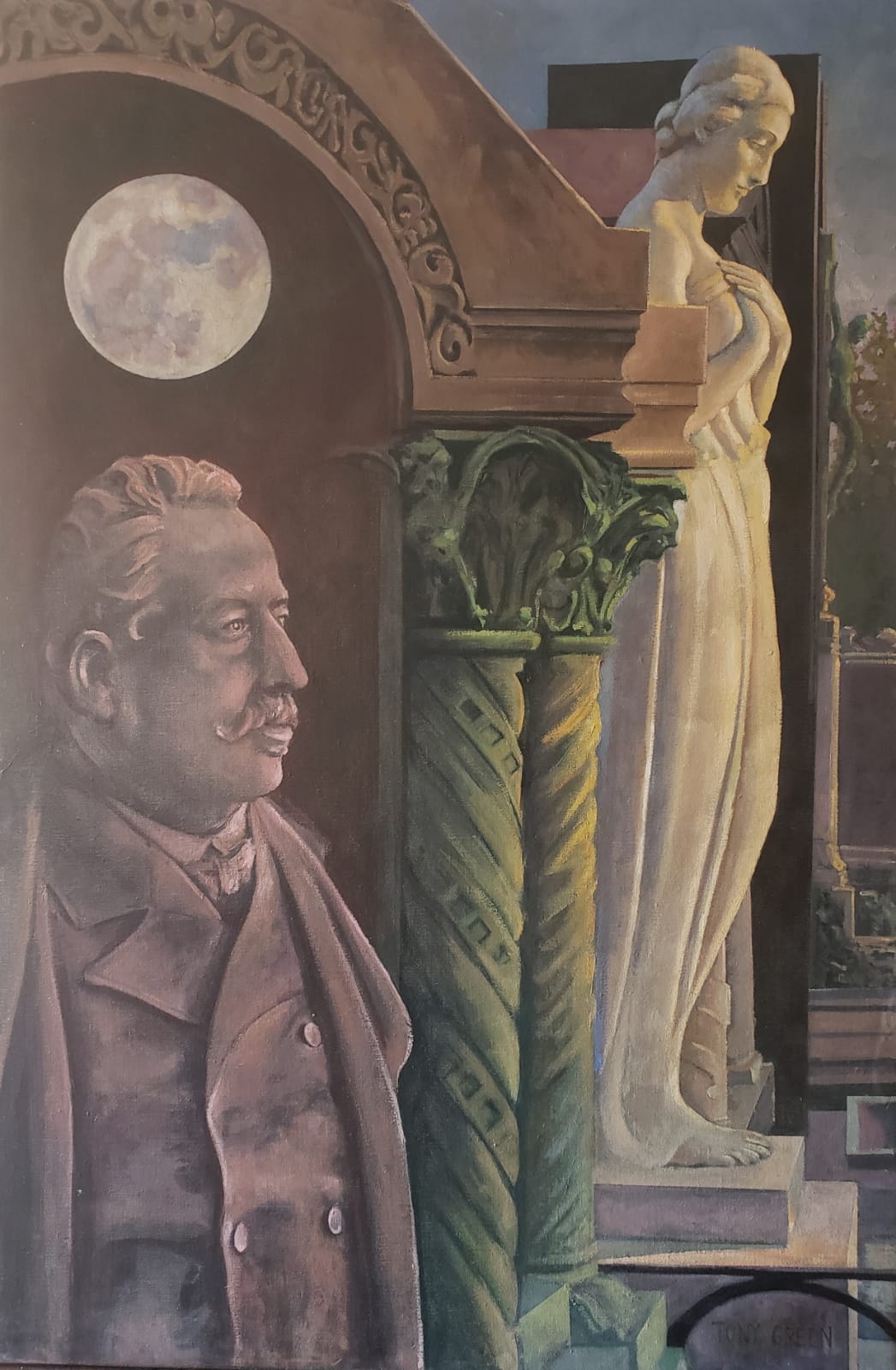
Author: Heroic Scripts

  • Collecting art in Scottsdale: What matters before you buy

    Collecting art in Scottsdale: What matters before you buy

    Late afternoon in Scottsdale has a way of revealing paintings honestly. A canvas that looked calm under gallery spots can suddenly show its true scale against a warm wall, and the frame’s edge, the weave of the support, even the shadow it throws can change the whole room. In a bright living space with pale stone, glass, and low furniture, a work either settles in cleanly or starts asking for more distance, more light, or a different wall altogether.

    This guide treats collecting as a series of buying judgments, not a mood. Before any price makes the decision for you, the useful questions are concrete: who handled the work before it reached you, what condition issues are present or hidden, what medium and support you are actually buying, how the dimensions relate to the wall and the furniture beneath it, whether the framing is appropriate, and whether the piece reads as authentic in hand and in context. That matters in Scottsdale because homes here often ask art to carry presence across open plans, deep sightlines, and strong daylight, which means fit is part of value, not an afterthought.

    If you have been following the earlier notes, the next sections narrow that same lens into what to verify, compare, and measure before a work leaves the gallery or studio.

    Table of Contents

    Evidence and paper trail: what to verify first

    The first thing worth asking for is not a story, but proof that can survive a second look. A serious offer should come with an invoice or bill of sale, the artist’s name as it appears on the work, title if there is one, date, medium, support, and dimensions; if the piece has exhibition history or publication history, that should be stated plainly rather than implied. When the paper is thin, the decision changes fast: you are no longer comparing an identified work against comparable examples, you are weighing a claim that may be difficult to substantiate later.

    For work by Tony Green, a collector should also ask how the piece is documented within the studio record and whether the details on the surface match the details on paper. A photograph of the front and back, a close view of signature or inscriptions, and a note on any prior framing, restoration, or studio handling can settle basic questions before they become expensive ones. If you want to understand the artist’s method and background before asking for that file, the About page gives a useful frame; if you are comparing available work by medium or scale, the Shop page helps anchor the conversation in actual objects rather than descriptions.

    Thin provenance does not automatically disqualify a work, but it lowers confidence in every other claim attached to it. A piece with a clean chain of ownership, dated documentation, and consistent measurements is easier to value, insure, and resell; a piece that arrives with only a verbal account asks the buyer to absorb more risk than the price usually admits. In practical terms, ask: who owned it before, when did the work change hands, and can those facts be supported by a receipt, gallery record, exhibition label, or conservation note? If the answer is vague, the offer should be treated as provisional until the paper catches up.

    That same discipline helps when a work is being considered for a specific space. A custom commission may be the cleaner route when the story is strong but the available proof or proportions are not yet aligned, and the Commission page is the place to discuss what can be made to measure rather than what must be defended after the fact.

    Pro tip: Verify the paper trail before you let the story set the price.

    • Ask for invoice, certificate, or studio documentation.
    • Write down what is missing before you compare alternatives.
    • Use the next section for materials and condition, not as a repeat of the proof check.

    Condition, medium, and conservation implications

    The paper trail may settle who made the work, but the surface tells you how the work has lived. In Scottsdale, where strong light and dry air can make a room look ideal until a piece starts to age in it, condition is not an abstract category; it is the difference between a painting that can be placed confidently and one that will need immediate intervention. Look closely at the support, the paint layer, and any varnish. On canvas, ask whether there is slack, cupping, prior patching, or an old relining. On panel, check for warping, cracks at the joins, and edge wear. If the work is on paper, note mat stains, foxing, and whether the framing has ever been opened. Those details should match the object’s date, medium, and the seller’s description.

    Medium changes the conversation about care and value. A classical oil painting by Tony Green, for example, will behave differently from a work in mixed media or on paper, and the buyer should ask what layer is doing the visual work: oil glazes, tempera passages, gilding, or graphite underdrawing. That answer matters because each material ages differently and asks for different handling, glazing, and lighting. If the piece comes with conservation treatment, ask for the conservator’s report and the date of intervention; if not, ask whether the surface has been cleaned, revarnished, or inpainted. A seller who can name the material build-up precisely usually knows the object well enough to price it honestly, alongside the evidence already reviewed.

    Before payment, the useful questions are concrete: “Has this work been restored, and if so, by whom?” “What is the exact support size without frame?” “Are there any losses, retouching, or replaced elements?” “Can I see the back, the edges, and the hanging hardware?” If you are comparing pieces, line up the dimensions, medium, and condition notes side by side; a slightly smaller work in better condition may be the stronger buy.

    Scale, placement, and how the work lives in the room

    Once the facts are on the table, the real question is simpler and more demanding: can the piece live comfortably where you plan to see it every day? A work that looks commanding in a gallery can feel cramped above a low sofa, while something modest on paper may become the most exacting object in a quiet hallway. Measure the wall, the furniture beneath it, and the viewing distance before you buy; a 36-inch image over an 84-inch sofa reads very differently from the same image above a narrow console. In Scottsdale homes with strong light and clean lines, that proportion matters as much as the image itself.

    Framing changes the conversation almost as much as size. Ask whether the dimensions you were given include the frame or only the support, and compare the frame depth to the wall it will occupy. A heavier frame can make a small painting feel finished, but it can also push the work too far into the room or clash with the architecture. If you are weighing a classical painting by Tony Green against another work in your collection, use the frame to test the object’s authority: does it sharpen the image, or does it compete with it? His about page gives useful context on the method behind that finish, while the shop can help you compare available scale and support types.

    Light is the other part of the room test. Natural light can reveal surface nuance in oil, drawing attention to glaze, brushwork, and edges, but direct sun can flatten color and punish fragile materials over time. Before committing, picture the work at morning, noon, and evening; if the intended wall sits opposite a bright window, ask whether glare will force you to change the placement or the glazing. For a commission, that is where a room photo and wall measurement become useful rather than ceremonial: they tell the artist whether the composition should open wider, sit lower, or carry more visual weight. If the fit is close but not quite right, a commission can solve the mismatch without compromising the room.

    A 90-second checklist before you buy

    Then check whether the story attached to the work still matches the object in front of you: artist background, medium, and any provenance note should agree without strain. If you want that context in fuller form, Tony Green’s About page is the useful reference point, and for collectors who like to cross-check names and history, Getty Proven. is the kind of external record that sharpens the conversation. A recent read like The Life and Loves of an Artist can be a reminder that the narrative around a work should illuminate the object, not float away from it.

    If the scale, support, and paperwork all line up, the next question is whether the piece will actually sit well in the room it is meant for. That is where a room photo, a tape measure, and a clear wall target are enough to decide whether you are buying a solved placement or a problem you will have to solve later.

    Authenticity, comparison, and when the story outruns the object

    If the paperwork is tidy, the real test is whether the object itself keeps the same story under close viewing. Hold the claims next to the surface: does the signature sit where that hand would place it, does the support match the stated date, and do the proportions feel consistent with comparable work by the artist? In a market like Scottsdale, where polished presentation can move quickly, a buyer should ask for one clean comparison point: a dated image, a catalogue entry, or another work with the same medium and period. If the seller cannot explain why this piece belongs in that group, the narrative is already pulling ahead of the object.

    The story outruns the object when the language grows more elaborate than what the piece can verify. That happens when a seller leans on rarity, a grand lineage, or an imagined future value while skipping the simplest comparison: does the work read as coherent from six inches away and from across the room? A buyer can press this point with one sentence: “Show me the closest comparable work, and show me what is different here.” If the answer is clear, the purchase gets easier; if it wanders, the next conversation belongs in a commission or a narrower search, not in a rushed sale.

    How to use Scottsdale as context without outsourcing your judgment

    Scottsdale can sharpen a buyer’s eye because the rooms are often bright, the architecture is open, and the competition for wall space is unforgiving. A painting that feels generous in a quiet gallery can flatten against limestone, glass, and long sightlines; a smaller work can suddenly carry more authority than a large one if the scale is disciplined. That is useful context, not a verdict. The question is whether the piece still holds its line when the room changes, because a work that survives a sunlit interior usually has a stronger internal structure than one that only performs under sales lighting.

    When the sales language fades, the object should still answer a simple test: would this piece remain convincing if it were moved tomorrow? That is the moment where provenance, condition, and presentation stop being abstract categories and become part of daily living with the work. If you want to compare available scale and medium against what is on the market, the shop gives a cleaner baseline than a styled room, and the next decision becomes less about persuasion than about placement, light, and whether the painting can carry the room without asking for excuses.

    collecting art in Scottsdale – Scottsdale
    LIGHT BEINGS
  • Collecting art in Scottsdale: Questions worth asking first

    Collecting art in Scottsdale: Questions worth asking first

    By late afternoon, Scottsdale light can flatten a room if the wall is too pale and the frame is too thin, or suddenly sharpen it if the surface has enough texture to catch the glow. A painting that felt calm in the gallery can come home and start speaking too loudly from across the sofa, while a smaller work can disappear once it meets a long corridor or a high ceiling. In that first hour after unpacking, the whole room tells you whether the piece belongs there.

    That is the real test of collecting art in Scottsdale: not whether a work is admired in the abstract, but whether its provenance holds up, its condition is honest, its medium and support suit the environment, and its scale, placement, and framing make sense in the room where it will live. A good purchase can still be the wrong purchase if the signature is unverified, the varnish has yellowed, the canvas is overstretched, or the dimensions overpower the architecture. The best buyers ask what can be confirmed, what can be compared, and what will still matter after the novelty fades.

    What follows builds from those earlier notes into a practical way to weigh each decision before money changes hands.

    Table of Contents

    Evidence and paper trail: what to verify first

    The first question is not whether the work looks convincing; it is whether the offer can be supported. Ask for the earliest document the seller can produce: invoice, gallery receipt, certificate of authenticity, exhibition label, or a dated letter from the artist. If the story begins with “it came from a private collection” and stops there, the burden has shifted to you. Thin proof does not automatically make a work false, but it does change the deal from acquisition to investigation.

    A solid paper trail should let you connect the object to a person, a place, and a date. Compare the title on the paperwork with the title being used now, then check the listed medium and dimensions against the piece in front of you; even a half-inch discrepancy matters when you are evaluating Getty Proven. or a comparable record. For artists with a studio practice that includes classical methods, ask what exactly was painted on—panel, linen, canvas—and whether the support has been relined, restretched, or reframed. Those details are not decorative; they tell you whether the object has stayed intact or been substantially altered.

    Provenance that reads like a chain of custody is stronger than provenance that reads like a story. If a seller names prior owners, ask for one confirming document from each stage: a gallery sticker, a consignment record, a published exhibition checklist, or a shipment note. In the Scottsdale market, where buyers often compare gallery work with studio work, that difference can determine whether the price belongs to the art itself or to the narrative attached to it. Tony Green’s background and the available works give you a useful model for asking for medium, scale, and authorship in plain terms before you commit.

    If the proof is incomplete, do not let the conversation drift into aesthetics to compensate. A work with sparse documentation may still be worth considering, but only after the missing pieces are named: who owned it, when it changed hands, and whether there is any exhibition or publication history that can be checked against the object.

    Condition, medium, and conservation implications

    The first thing to inspect is not the signature but the surface. Under raking light, look for lifting varnish, unstable craquelure, repaired tears, overpaint, abrasions at the corners, and stretcher marks that suggest stress from a poor environment. Those details matter because they tell you whether the work can age gracefully in a Scottsdale home with strong light and dry air, or whether it will demand a more controlled setting. If the seller has paperwork, compare the condition notes against the object itself and ask for the date of the last conservation review.

    Medium changes the conversation as much as condition does. Oil on linen behaves differently from acrylic on panel; works on paper need glazing, UV protection, and careful framing; mixed media may include adhesives or pigments that are more vulnerable than they first appear. Ask for the support, the ground, the varnish history, and the exact dimensions with frame and without frame, because a half-inch can decide whether a piece sits cleanly over a mantel or feels crowded on a narrow wall. Tony Green’s method is rooted in classical practice, so when you compare one of his works with pieces from the shop, you can ask directly how the materials were selected and what kind of longevity they are meant to support.

    Here’s the part most people skip. A buyer should ask, in plain language, “Has this work been cleaned, relined, stabilized, or revarnished, and by whom?” That one question often opens the real conservation history. If a work has been restored, request the treatment report and the before-and-after photos; if it has not, ask what the artist or dealer recommends for framing, hanging height, and lighting. A piece shown in conversation with the ideas behind Artists & Writers in Conversation might invite a poetic reading, but the purchase still rises or falls on whether its materials are stable enough to live where you intend to place it.

    When the object is meant for a specific room, the next question is practical: will the medium tolerate heat, sun, and traffic, or should it be placed elsewhere? That is where condition meets use.

    Scale, placement, and how the work lives in the room

    The first test is not whether the image is compelling from across a gallery, but whether its dimensions answer the wall you actually have. Measure the wall width, the furniture below it, and the viewing distance from the nearest seat; then compare that to the framed size, not just the image area. A work that reads elegantly in a white room can feel stranded above a low console or crowded between two strong architectural lines.

    Framing changes that equation fast. Deep mats, heavy gilded profiles, and shadow-box construction all add visual weight, and that weight matters in a Scottsdale home where light is often strong and surfaces are clean-edged. If the piece will hang near windows, ask whether the glazing is UV-protective and whether the finish can handle glare; if it cannot, move it to a wall with softer light or choose a different format. For a classical painting, the frame should support the image without overpowering it, especially if the work already has a strong tonal presence.

    Placement is really a question of sightline. Stand where you will see the work most often: from the dining table, at the end of a hallway, or above a sofa. Does the composition hold at that distance, or does it collapse into detail that only rewards close viewing? Tony Green’s method and his available work make this easier to judge because the medium, support, and scale are part of the object’s identity, not an afterthought. If the piece is being considered for a room with specific proportions, a commission can solve the fit before the final brushwork is even set.

    The useful comparison is simple: photograph the wall, tape out the outer dimensions, and check whether the work leaves enough breathing room on each side. If the answer is yes, the next question is whether the light, frame, and viewing angle preserve that calm once the piece is installed.

    Authenticity, comparison, and when the story outruns the object

    Here’s the part most people skip. If the story leans harder than the object, slow down and ask for one concrete comparison: another work by the same artist, same period, or same process. When you can place Tony Green’s classical method beside a comparable example in his shop or review his background on the About page, you can judge whether the surface handling, scale, and finish match the claim being made. If they don’t, the narrative is doing work the painting should be doing itself.

    What you want is alignment: object, documentation, and use. If one of those three is carrying the rest, the purchase is still unfinished. The next decision is whether the work’s character holds when you look at it as a candidate for your collection rather than as a persuasive description.

    How to use Scottsdale as context without outsourcing your judgment

    Scottsdale can sharpen the eye without becoming the decision-maker. In a market where rooms are bright, walls are often generous, and buyers move between polished galleries and private homes with very different light, the useful question is not whether a work looks impressive under perfect gallery lamps. It is whether it still feels balanced when it meets your actual wall, your distance, and the hours of sun that fall across the room.

    That same lens makes the next conversation easier: if the work is close but not quite right for the wall you have, ask whether a commissioned format would solve the placement problem without compromising the painting’s character. A room-specific adjustment is often the cleaner answer than forcing the wrong size into a good collection.

    If you want to test these judgments against real options, browse the available works with an eye on medium, dimensions, and wall presence; if the room, scale, or subject needs to be solved more precisely, start with a commission.

    collecting art in Scottsdale – Scottsdale
    CALYPSO
  • How to buy original art in Santa Fe: A practical guide for collectors

    How to buy original art in Santa Fe: A practical guide for collectors

    In Santa Fe, the first honest test of a work is often the room around it: winter light cutting across adobe walls, a painting holding its own above a low sofa, a bronze catching just enough shadow to reveal the edge of a form. You can tell quickly when scale is wrong. A canvas that felt intimate in a gallery can suddenly crowd a hallway; a small panel can disappear once it leaves the white cube and meets textured plaster, wood beams, and a lived-in floor plan.

    That is why buying original art here is less about falling for a single image than making a careful judgment across a few visible facts: who made it, where it came from, what condition it is in, what medium and support were used, and whether its dimensions, framing, and surface will actually work in the place you mean to live with it. Provenance and authenticity matter, but so do hairline cracks, varnish issues, unstable paper, awkward scale, and the practical question of how the piece will read in your light. A collector in Santa Fe is not just choosing a work; they are deciding whether the object can survive scrutiny, fit the wall, and keep its presence over time.

    As a continuation of the earlier notes, the sections below move from first impressions to the checks that make a purchase feel settled rather than hopeful.

    Table of Contents

    Evidence and paper trail: what to verify first

    The first thing worth asking for is not a discount; it is proof. A serious seller should be able to show a clean chain of ownership, a dated invoice, or a gallery record that ties the work to a specific artist, title, medium, and dimensions. When that trail is thin, the story of the piece becomes a claim instead of a fact, and the price should move accordingly. If the work is presented as original, ask for the document that supports that claim in writing, not just a verbal assurance across a room.

    This is where the purchase either firms up or begins to wobble. A painting with solid provenance and a clear exhibition or sales history can justify a different level of confidence than a beautiful object with no paper trail beyond a handwritten note. For a collector comparing works in Santa Fe, that difference matters as much as surface appeal. If you want a useful benchmark for the artist’s practice and working method, Tony Green’s About page gives the kind of background that helps you match the document trail to the maker’s stated process.

    Ask for specifics you can verify: who owned it before, when it changed hands, whether any restoration was done, and whether the measurements include the frame. A title, date, support, and exact size should line up across the invoice, label, and any certificate. If one source says oil on panel and another says mixed media on canvas, that is not a minor typo; it is a signal to pause and compare what is being sold with what is actually in front of you.

    When the evidence is credible, the conversation can move toward fit and value with less friction. If the paper trail is vague but the work is still compelling, ask for a tighter record before you proceed, or compare it with documented pieces in the Shop to see how medium and scale are described when the details are being handled carefully. That is the point where the next question becomes whether the object’s condition and medium can carry the value being claimed.

    Condition, medium, and conservation implications

    Once the record is credible, the work itself has to hold up under inspection. A painted surface should tell you, without drama, whether the artist used oil, acrylic, tempera, or a mixed approach, because each one ages differently and asks something different of the room. With a Tony Green painting, for example, his classical method and layered handling matter because the surface is part of the value; compare the listed medium, support, and dimensions against what you can actually see, and ask for a close image of any craquelure, abrasion, or prior restoration before you commit.

    Condition is not just about damage; it is about future care. A slight warp in a panel, foxing on paper, or a brittle varnish can change where the piece should hang and how much light it can tolerate. Ask one precise question: what conservation work, if any, has been done, and is there a written report with dates, materials, and the conservator’s name? If the answer is vague, compare it with the cleaner documentation you would expect from a serious listing in the Getty Proven. framework, then decide whether the price reflects the risk.

    In a market shaped by gallery visits and opening nights, that conversation often happens while the work is still on the wall, which is why a show like Opening Reception: Four Stories can be useful even if you are there to buy painting rather than photography: you see how scale, finish, and presentation behave in real light, not just in a file. Measure the actual image area, not only the frame, and ask whether the frame is archival, whether glazing is UV-protective, and whether the support can be rehung without stress. Those details tell you more about longevity than a polished sales pitch ever will.

    If the medium and condition line up, the last check is fit: can the work live where you want it to live, or will it need conservation, reframing, or a different wall? That is where the next question starts to matter, because a piece may be structurally sound and still fail in the room if the scale, light, or placement is wrong.

    Scale, placement, and how the work lives in the room

    That last check is where many Santa Fe buyers slow down in a useful way: not because the work is uncertain, but because the room is. A painting can be beautifully made and still feel strained if it has to fight a low ceiling, a narrow corridor, or a wall that catches afternoon glare. Before you commit, ask for exact dimensions of the image, the framed size, and the depth off the wall; those three numbers tell you more than a polished photograph ever will. If the piece is being considered for a specific wall, tape the footprint there first and stand back from the usual viewing distance. The question is simple: does the work breathe, or does it crowd the space?

    Framing changes that answer faster than most people expect. A slim linen liner can make a classical panel feel quiet and deliberate; a heavy ornate frame can turn the same image into something formal enough for a gallery wall, or too dense for a small room. In a bright Santa Fe interior, glazing and finish matter as much as the frame profile, especially if the wall faces strong light or reflects from polished floors. Ask whether the work has matte paint, varnish, or any surface texture that will read differently under direct sun, track lighting, or a shaded adobe niche. If you are comparing options on the shop, look at the medium and scale together, not as separate facts.

    Placement also changes the emotional register. A portrait hung too high becomes a sign; hung at eye level, it becomes a presence. A larger composition may need a wider span of wall than buyers first estimate, while a smaller panel can disappear unless it has the right frame, lamp, or neighboring works to support it. If you are buying for a room with an odd corner, deep sill, or strong architectural trim, ask whether the artist can recommend a hanging height or a framing direction that suits the object rather than forcing the object to adapt. Tony Green’s method matters here because classical construction tends to reward careful viewing distance and controlled light; that is useful information, not marketing language.

    When the fit is close but not perfect, that is the point to consider a commission instead of compromising the room. A custom size, altered edge treatment, or different format can solve problems that no amount of persuasion will fix after the fact.

    Authenticity, comparison, and when the story outruns the object

    Here’s the part most people skip. Authenticity is rarely one dramatic clue; it is a stack of small correspondences. Ask for the invoice, any certificate, prior ownership notes, and the exact dimensions in inches or centimeters, then compare those figures with the frame and the wall you actually have. A work can be genuine and still be the wrong object if the scale, format, or support pushes it into the wrong register for the room. In Santa Fe, where buyers often move between historic interiors and contemporary walls, that mismatch shows up fast: a piece may be respected, but if it cannot breathe in the space, it starts to feel borrowed rather than settled.

    Comparison matters because the market teaches the eye as much as it tests the wallet. Stand a candidate work beside two credible alternatives and look for the things that do not photograph well: edge finish, paint buildup, stretcher quality, varnish behavior, and whether the composition holds from six feet away as well as from arm’s length. If you are weighing a custom fit, a room-specific piece, or a scaled variation, a commission can solve the gap cleanly; Tony Green’s Commission page is the place to clarify what can be adjusted without losing the character of the work. That is usually where the sales story either tightens into fact or gets louder than the object.

    How to use Santa Fe as context without outsourcing your judgment

    That matters even more with classical work, where surface, shadow, and gilded or painted edges change with the room. Tony Green’s About page gives the clearest sense of the method behind that kind of painting, and the same discipline applies when you compare a finished work to the place it will actually hang. If you are weighing a canvas or panel from the Shop, ask for the framed depth, the exact dimensions with frame, and a straight-on image taken outside the gallery lights. Those details tell you more about fit than any sales language can.

    Pro tip: Before purchase, request one photo of the piece in neutral light and one note on how it was intended to be viewed—close, across a room, or under strong daylight.

    • Compare the work at the distance you will actually see it.
    • Confirm whether framing changes the final size by more than an inch or two.
    • If the room is specific, use Commission to discuss scale before the piece is made or
      how to buy original art in Santa Fe – Santa Fe
      FLAMBEAUX CARRIERS
  • How to assess value in art in Scottsdale

    How to assess value in art in Scottsdale

    By late afternoon, the light in a Scottsdale living room can turn a painting into a different object entirely: a warm wall, a low sofa, linen catching glare, the frame throwing a thin shadow that makes the work seem to hover or sink. At that hour, size stops being an abstract number and starts becoming a decision about balance. A canvas that feels commanding in a gallery can look overconfident above a console; a quieter work can suddenly carry the room because the texture holds the light and the edges breathe.

    That is where value starts to show itself. Not in the story attached to the piece, but in whether the story survives scrutiny: provenance that can be traced, condition that matches the asking price, medium and support that are what the seller says they are, dimensions that suit the wall you actually have, and a scale that makes sense once the frame, lighting, and placement are considered. If you are buying in Scottsdale, the question is less “Do I like it?” than “What exactly am I paying for, and can the work justify that number when I compare it against authenticity, fit, and the cost of living with it?” As noted in earlier notes, the best purchases are rarely the loudest ones; they are the works whose facts hold up when the room goes quiet.

    From here, the guide moves through the checks that keep judgment sharp before money changes hands.

    Table of Contents

    Evidence and paper trail: what to verify first

    The first thing to ask for is not the story around the work, but the proof that the story can stand up. A clean invoice, a dated certificate of authenticity, exhibition history, and prior ownership notes should line up with the object in front of you. If the seller cannot explain where the work has been, who handled it, and why the attribution is secure, the asking price stops being a market signal and starts becoming a hope.

    Thin paperwork changes the decision fast. A painting with a strong visual presence but no provenance trail may still be worth considering, but only at a level that reflects the uncertainty. Ask one direct question: “What document can I rely on if I need to resell this in two years?” If the answer is vague, or if the answer is only a verbal account, the premium should fall. For collectors comparing options, a documented work from a known source often beats a more dramatic piece with no paper trail, even before condition enters the picture.

    When the artist’s method is part of the value, the documentation should say more than the title and dimensions. Medium, support, date, and any restoration or framing history matter because they affect how the work is understood and how it can be compared later. On Tony Green’s About page, the classical method and Venetian training give useful context; the market still needs the paper to match the practice. If you are looking at available work, the listing in the Shop should let you verify scale and medium against the room you actually have in mind.

    For a buyer in Scottsdale weighing investment, the practical move is to separate romance from record. If the provenance is strong, the object can justify a firmer price and a longer hold. If the evidence is incomplete, ask for the missing documents before you discuss placement, framing, or display. Once the proof is credible, the next decision is whether the object’s condition and medium can carry the value being claimed.

    Condition, medium, and conservation implications

    Once the paper trail stops wobbling, the surface starts telling the louder story. A painting can look healthy from across a room and still carry losses at the edge, a brittle varnish, or earlier retouching that changes how the color reads under Scottsdale light. Ask for a condition report that names the support, medium, and any repairs in plain language: oil on linen, tempera on panel, mixed media on paper, relined canvas, replaced stretcher, inpainting under ultraviolet. Those details affect not only value, but how the work will age if it hangs in a bright living room or a controlled office.

    Medium matters because each material asks for a different kind of care. A classical oil painting by Tony Green, for example, has a different vulnerability profile than a work on paper or a more layered contemporary surface; if you want a concise sense of his process, the About page is useful background. Before you pay, ask one direct question: “What part of this surface is original, and what part has been conserved or restored?” Then ask for measurements including image size, support size, and framed size, so you can judge whether the object you are buying is the same object that will arrive at your wall.

    For buyers comparing works across galleries or private sales, the useful comparison is not only price per inch; it is price per condition. A smaller piece in stable condition with clean edges, secure pigments, and a sound frame can outperform a larger work that needs lining, re-framing, or climate-sensitive handling. If the seller mentions exhibition history or prior ownership, keep that in the same conversation as the material facts, and if the piece is older or more complex, a quick review through Getty Proven. can sharpen the questions you bring to the table.

    That is also where the room comes back into the picture. A work that needs low light, limited humidity swings, or specialty framing may still be the right acquisition, but only if the intended setting can support it.

    Scale, placement, and how the work lives in the room

    The room is the final filter, and in Scottsdale that matters because light can be unforgiving and generous in the same afternoon. A canvas may look commanding in a gallery wall and feel oversized above a fireplace, or it may vanish once it meets a high ceiling and a broad expanse of plaster. Before you commit, measure the wall width, the sightline from the main seating area, and the distance from floor to the intended center point; those numbers tell you more than a polished listing image. If a work is framed, include the frame in the measurement, not just the image area, because an inch of molding can change the whole read.

    A buyer should ask for the exact dimensions of the image, the frame, and the depth from wall to outer edge, then compare them to the room’s furniture scale. Over a sofa, for example, a piece that spans roughly two-thirds to three-quarters of the furniture width usually settles the composition instead of fighting it. In a hallway or entry, a narrower vertical may carry more authority than a wide horizontal that forces the eye to stop too soon. If you are weighing a work from the shop, look at how the stated scale behaves against your own wall measurements, not just against a phone screen.

    Lighting changes the buying decision as much as size does. Classical surfaces, gilding, and dark passages can flatten under direct sun, while textured paint can wake up under side light and lose clarity under glare. Ask where the work will sit relative to windows, lamps, and track lights, and whether the glazing or varnish will create reflections at your usual viewing height. If the room is bright all day, a piece that reads beautifully in diffused light may still need a different wall, a different frame, or a different commission path entirely; Tony Green’s commission page is the cleaner route when the site-specific fit matters more than the existing inventory.

    That last check is practical, not fussy: stand where you will actually live with the piece and ask whether the composition holds at that distance, in that light, with that furniture around it. If the answer is yes, the object has passed from attractive to inhabitable. The next question is whether the story attached to it still feels as precise as the room it will enter.

    A 90-second checklist before you buy

    One quick comparison can save a long regret: place the candidate beside one work you already own or one you have seriously considered, and ask which one carries the stronger visual weight at the same distance. If the answer changes when the light changes, note that too. For collectors who want the fit resolved before the cart is even open, a room-specific conversation through Commission is often the cleanest path, especially when scale, framing, and placement need to be calibrated together rather than guessed one by one. Artists & Writers in Conversation on Tender Alchemy gives the paragraph a concrete local reference point around Scottsdale, so the question becomes what still holds your attention once the surrounding presentation falls away.

    That final pass should feel like a test of agreement: the object, the measurements, and the narrative all pointing in the same direction. If one of them slips, slow down; if they still line up, you are no longer imagining the purchase, you are confirming it.

    Authenticity, comparison, and when the story outruns the object

    Comparison is where inflated stories usually lose altitude. Put the piece beside two or three credible examples from the same hand, period, or medium and compare the things that do not flatter a brochure: brush handling, surface quality, signatures, edge treatment, and how the work behaves at its actual dimensions. A work on paper may be sold with the gravity of a large canvas, but the value question changes if the image area is modest, the framing is recent, or the support shows handling. That is where scale, medium, and condition stop being checklist items and start becoming pricing facts.

    When the narrative sounds stronger than the object, ask for the one document that would make the claim testable. For a contemporary work, that might be a certificate, studio receipt, or a direct statement from the artist; for a more established work, it may be a gallery invoice, catalog reference, or prior sale record. If you are comparing a Tony Green painting, his About page helps anchor the method, while the Shop shows how medium and scale are presented in a live market setting. The point is not to chase a perfect paper trail; it is to see whether the paperwork, the handling, and the work itself agree.

    That agreement matters even more when the piece has to live in a specific room. A painting that reads as commanding in a gallery can feel overstated above a low sofa, and a smaller work can carry more authority than its dimensions suggest if the light, framing, and surface are right.

    Pro tip: Make the claim prove itself against the object and comparison set.

    • Compare signature, surface, and handling with credible examples.
    • If the story is stronger than the evidence, slow down.
    • Ask what would change your decision before price enters the room.

    How to use Scottsdale as context without outsourcing your judgment

    A practical next question is simple: where would this live, and what would it have to clear in that spot? Measure the wall width, the viewing distance, and the dominant light source before you commit. Then compare the piece against a second option in the same price range, looking for differences in surface, restraint, and how the frame resolves the image. If you want the work to solve for a specific room rather than a hypothetical one, a commission may be the cleaner path, because fit becomes part of the object instead of an afterthought.

    That is the point where Scottsdale stops being a backdrop and becomes a filter: the work either keeps its authority under scrutiny or it doesn’t. When you are ready to narrow the field, the next step is to separate pieces that merely photograph well from the one that still feels composed when you stand in front of it.

    how to assess value in art in Scottsdale – Scottsdale
    VIEW OF ISEO