Category: Blog

  • How to choose art that lasts in Santa Fe

    How to choose art that lasts in Santa Fe

    Late afternoon in a Santa Fe room can make a painting look finished before you’ve even stood in front of it. The light comes in low, catches the weave of a linen canvas, and throws a shadow along the edge of a frame that suddenly looks too thin, too ornate, or just right. A work that seemed modest online can claim a wall once you measure it against the sofa, the doorway, the ceiling height, and the quiet in the space around it.

    That is the real problem this guide addresses: not whether a piece is attractive for a moment, but whether it will hold up as an object you live with and eventually want to keep. In Santa Fe, where collectors compare galleries, studios, and private holdings with a sharp eye, lasting value usually comes down to a few concrete checks—provenance you can verify, condition you can inspect, medium and support you understand, scale that fits the wall and the room, placement and lighting that won’t punish the surface, and authenticity that can be traced rather than assumed. Those are the details that separate a passing purchase from a work that still feels sound years later.

    As the earlier notes on buying original work in Santa Fe suggest, the smartest next step is not to broaden the search, but to narrow the questions: what exactly is being sold, what has happened to it, where will it live, and what will you be able to prove if you ever need to. The sections ahead turn those questions into a practical checklist.

    Table of Contents

    Evidence and paper trail: what to verify first

    The first thing to ask for is not a story, but the paper trail behind it: a signed invoice, a certificate of authenticity if one exists, prior sale records, exhibition history, and any condition notes tied to the work. A clean file does not guarantee value, but it tells you the object can be traced, and that matters more than a polished sales pitch when the asking price starts to climb.

    If the documentation is thin, the decision changes immediately. An unsigned receipt, a vague title, or a chain of ownership that jumps from “private collection” to “estate” without names should push you toward a lower offer, a longer hold, or no purchase at all. In Santa Fe galleries, where serious buyers compare notes quickly, the difference between “documented” and “described” can be the difference between confidence and a future dispute.

    Ask one concrete question: “Can you show me the work’s provenance from the artist forward?” Then compare the answer against the object itself—title, dimensions, medium, date, and any edition number should match across the paperwork and the label. If the seller can’t produce consistent measurements or the medium changes from one document to another, the story is already weakening.

    For older work, a quick check against institutional or scholarly records can save you from buying a gap disguised as a history; the provenance tools at Getty Proven. are useful for seeing how careful that trail can be. When the evidence is solid, you can move on with more confidence to what the object is made of, how it has aged, and whether its condition supports the value being claimed.

    Condition, medium, and conservation implications

    A clean paper trail only gets you to the threshold. The real test is whether the object itself can support the price being asked. A Santa Fe buyer sees this clearly in the gallery light: a linen canvas may present beautifully from six feet away, but under closer inspection a lifted corner, old inpainting, or a brittle varnish can change both the risk and the value. Ask for the condition report, then compare it to the work in hand: where are the repairs, what was stabilized, and has any restoration altered the surface texture or the artist’s original handling?

    Medium matters because different materials age in different ways. Oil on panel, for example, can remain remarkably crisp but may show panel movement or edge wear; oil on canvas can be stable yet vulnerable to slackening, denting, or past relining; works on paper ask a different set of questions entirely, from foxing to mat burn to light sensitivity. If the seller says “excellent condition,” ask for the measurement of every noted issue and a close image of each one, ideally with scale. That lets you compare condition against the same class of work rather than against a vague promise.

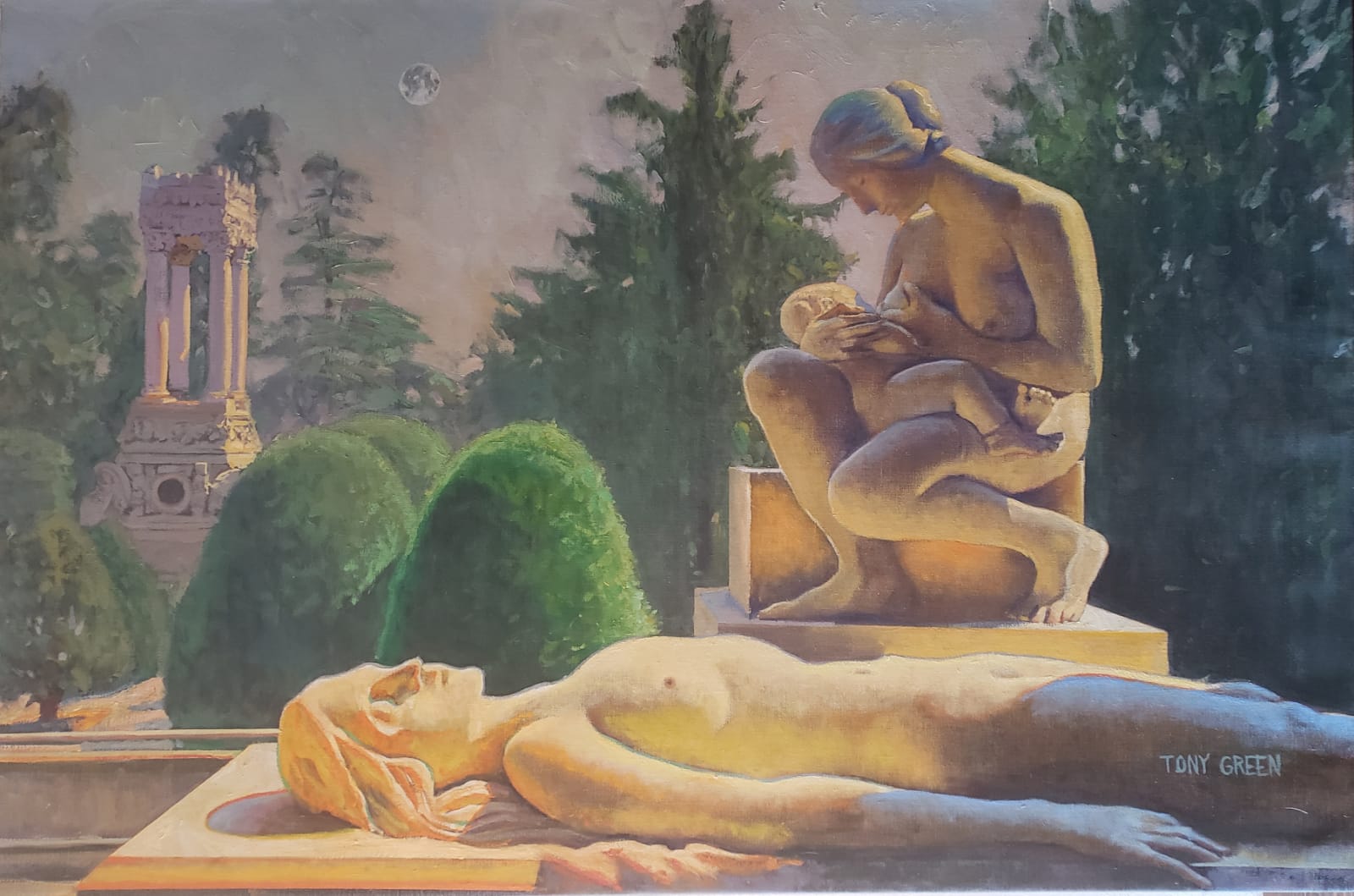
    This is where the commercial judgment becomes practical. A painting with strong provenance and modest restoration may still be a sound purchase if the intervention is documented and consistent with the medium. A piece with a dramatic story but unclear conservation history is harder to defend later, especially if you plan to insure it, loan it, or place it in strong light. Tony Green’s work, for example, is built with classical methods that reward scrutiny of support, ground, and finish; if you want to compare available work by scale and medium, the shop gives you a useful reference point, while a room-specific commission can be discussed through commission when placement and conservation concerns need to be resolved together.

    Before you pay, ask three direct questions: Has the work been cleaned, lined, relined, or re-stretched; what exactly was original versus restored; and can the seller supply the dimensions of the image, the support, and the framed object separately? Those numbers matter in Santa Fe, where wall scale, light, and climate can expose weak spots quickly. Once the material facts are clear, the next step is to test whether the piece can physically live in the intended room.

    Scale, placement, and how the work lives in the room

    Those numbers matter because a painting that reads well in a booth can go strangely flat over a sofa or feel overpowering in a narrow hall. In Santa Fe, where rooms often carry strong light, thick plaster, and deep shadows, the first question is not whether the work is beautiful but whether its size, frame depth, and visual weight can hold a wall without crowding the furniture around it. Ask for the image dimensions, the framed dimensions, and the wall space you actually have, then compare them to the sightline from the doorway and the main seating position.

    Framing changes the buying decision more than many collectors expect. A narrow gilded profile can sharpen a classical painting and make it read cleanly in a low-lit room; a heavy, dark frame can pull the eye inward and make a smaller work feel compressed. If you are looking at a piece on Tony Green’s shop, check whether the listed size is the painted surface or the full framed object, and if the work is unframed, ask what frame treatment the artist intended. A work with a generous border may need breathing room, while a tightly cropped image can sit closer to other objects without losing force.

    Placement is also a lighting decision. Direct sun can wash out subtle glazes, but a dim corner can flatten the edges and mute the structure of the paint. Stand where the work would hang and notice what time of day the wall actually receives light; in a room with strong afternoon sun, ask whether the finish and varnish will hold their depth without glare. If the piece is meant for a specific wall or a difficult alcove, a room-specific conversation through commission can solve proportion and lighting at once, especially when the support, scale, and framing need to be planned together.

    Pro tip: Measure the wall, the furniture below it, and the viewing distance before you buy. Then ask for a photo of the work mocked up at approximate scale, plus the framed and unframed dimensions, so you can see whether it will read as a focal point or a visual afterthought.

    • Compare the image size to the frame width, not just the title listing.
    • Check

      A 90-second checklist before you buy

      Framing deserves the same discipline. Ask what is included, what the frame is made of, and whether the glazing or backing changes the depth of the piece enough to affect hanging hardware. A work can be beautiful and still land badly if the frame is too heavy for the wall or too shallow for the lighting. When you are checking how to choose art that lasts in Santa Fe, this is the point where the object either feels settled or starts asking for compromise.

      If the story, object, and room still agree after that check, you are close. A quick conversation about authenticity, provenance, and whether the wall can physically support the piece is enough to separate a promising purchase from a decorative mistake; that is why a reading like the Santa Fe Literary Review Annual Reading can be a useful reminder that presentation shapes perception, even before you step into the gallery. If the fit still feels unresolved, a room-specific commission is the cleaner next move than forcing the wrong scale into place.

      Authenticity, comparison, and when the story outruns the object

      A good comparison set helps strip away romance. Look at two or three credible examples of the same medium or period and ask what is genuinely consistent: palette, handling, edge treatment, framing, and price relative to size. If a seller says the piece belongs to a particular body of work, the closest parallel should not only resemble it visually but also share the same materials and format. When the comparison breaks, the story is doing more work than the object.

      When the object and the story agree, the next question is fit: not just whether it will hang, but whether it will belong. A work that is honest in provenance and exact in measurements can still be wrong for the wall if the framing, light, or visual weight fights the room. If you already know the piece needs a different proportion or a custom approach, a Commission discussion is usually the more disciplined path. That is the point where Santa Fe stops being a backdrop and becomes a sharper lens for judgment.

      How to use Santa Fe as context without outsourcing your judgment

      In Santa Fe, the room is never just a room. Adobe walls, strong daylight, and gallery-honed expectations can make a painting look more resolved than it is, or expose a weakness that a softer setting would hide. That is useful pressure, but only if you treat it as context instead of verdict. A work that feels calm under high, clean light still has to hold up when you ask the harder question: does it keep its presence when the sales language falls away?

      One concrete test is simple: ask for the exact dimensions, then mark them out on the wall with painter’s tape and stand where you will actually live with it. In Santa Fe, where collectors often care about a piece’s dialogue with architecture as much as its surface, that taped rectangle can tell you more than a polished listing. If the work is intended for a specific niche, stair landing, or sunlit wall, a room-specific conversation through Commission is often the cleaner move than forcing a near-fit into the wrong place. The decision that matters now is whether the piece still feels inevitable when you remove the surrounding noise.

      how to choose art that lasts in Santa Fe – Santa Fe
      STUDY FOR THE NEW WORLD ORDER
  • Fine art buying in Scottsdale: What matters before you buy

    Fine art buying in Scottsdale: What matters before you buy

    Late afternoon in Scottsdale has a way of turning a wall into a test. The light comes in low, catches the weave of linen, the sheen on varnish, the edge of a frame that is either quietly right or slightly too large for the room. A canvas can feel generous in one house and overwhelming in another; a bronze can read crisp and deliberate until it lands beside a rug, a console, and a window that throws hard desert brightness across every surface. Before anyone talks about style, the room has already asked its first question: will this work hold its own here?

    That is the real subject of buying well. Provenance, condition, medium, scale, placement, authenticity, and fit are not separate boxes to tick; they are the terms that decide whether a piece belongs in your collection or only looked convincing across a gallery floor. In a market where polished presentation can hide shallow paperwork, small repairs, or a mismatch in scale, the buyer’s job is to compare what is visible with what is documented, measure what the wall can actually take, and ask what the work will need over time, not just what it offers in the moment.

    The guide that follows turns those judgments into a practical sequence, building on earlier notes and moving from first glance to the details that matter before you commit.

    Table of Contents

    Evidence and paper trail: what to verify first

    The first thing to ask for is not the backstory, but the proof that supports it: a dated invoice, gallery label, certificate of authenticity, exhibition record, or a clean ownership chain. If the work is being offered with confidence, the seller should be able to show where it has been, who handled it, and whether any attribution has changed over time. Thin paperwork does not always mean a weak object, but it does change the terms of the decision because the price is then carrying more uncertainty than the market usually rewards.

    A buyer in Scottsdale looking at a serious piece should compare the story against the documents line by line. Does the artist name match across the invoice, label, and signature? Do the dimensions on paper match what a tape measure says on the wall? Is the medium described precisely enough to explain the surface you are seeing—oil on panel is not the same proposition as mixed media on paper, and that difference affects both handling and value. If provenance is claimed through an estate or private collection, ask for one document that places the work there, not just a verbal reference to a name.

    When the paper trail has gaps, the burden shifts to what can be independently verified. A seller who can produce conservation notes, exhibition images, or a reference in a reputable archive gives you something to compare against, and a useful place to start is the artist’s background on About if you want to understand the method behind the work. For older or more heavily traded pieces, cross-check the claim against a museum or archive source such as Getty Proven.; even one confirmed reference can tell you whether the story is anchored or inflated.

    Thin proof changes the purchase in practical ways: it usually means a lower offer, a request for written warranties, or a pause until the seller fills the gaps. If the documentation is solid, you can move on with more confidence to the parts that shape long-term value most directly: whether the condition supports the asking price and whether the medium is stable enough for how you plan to live with it.

    Condition, medium, and conservation implications

    Once the paper trail feels credible, the real question becomes physical: what is this thing made of, what has it already endured, and what will it ask of you over time? A well-kept oil on linen behaves very differently from acrylic on panel, and both behave differently again from a work on paper with fragile pigments or uneven matting. In Scottsdale homes, that difference matters because light is unforgiving, interiors can be bright, and a piece that looks strong under gallery lighting may react badly near a sunlit wall or an HVAC register.

    Ask for the exact medium, support, and dimensions before you talk price. “Mixed media” is too vague to price intelligently; “oil and charcoal on primed linen, 36 x 48 inches, unframed” tells you much more. Then look for the small signs that determine conservation cost: craquelure, lifting edges, warping, abrasion, yellowed varnish, hinge stains, or a repaired tear. If the work has already been conserved, request the conservator’s report, the date of treatment, and any materials added. That is where condition becomes a market issue, not just a care issue.

    The practical buyer’s question is simple: does the current state of the object support the asking price, or are you being asked to pay full value for future restoration risk? A clean, stable surface with minor age appropriate wear may be perfectly acceptable; active flaking, poor relining, or brittle paper usually changes the conversation. If the seller cannot explain what has been done to the work, or cannot distinguish between original surface and later intervention, pause. That is the moment to compare it against other available work, including the scale and medium notes you can review in the shop, or to ask whether a room-specific commission would solve the fit more cleanly than forcing a compromised object into place.

    For a collector in Scottsdale, this is also where placement enters the valuation discussion. A work that needs low light, stable humidity, or specialized framing may still be the right purchase, but only if the intended room can support it without improvisation. One useful question is: “What framing, glazing, or environmental limits would you put in writing if this were your collection?” That answer usually reveals whether the piece is robust enough for daily living or better suited to a more controlled setting.

    Scale, placement, and how the work lives in the room

    The earlier questions about condition and medium clear away a lot of noise; the remaining test is physical. A work can be sound and still fail the room if its dimensions fight the wall, the ceiling height, or the distance from the primary seat. In Scottsdale homes, where open plans and strong light are common, that mismatch shows up quickly. A piece that looks elegant in a gallery can feel undersized over a long console or overly dominant in a narrow passage, so ask for exact height and width, then compare them against the wall span, nearby furniture, and the viewing distance from where people actually sit.

    Framing changes that calculation more than many buyers expect. A generous frame can give a small painting presence; a heavy one can make an already large work feel theatrical. If the work is on paper, ask whether the glazing is UV-protective and whether the mat and frame depth keep the surface from touching the glass. For a canvas, confirm whether it arrives ready to hang or needs additional hardware, and measure the wall projection if the piece will sit near a walkway. Those details affect not only appearance but whether the work can live comfortably in the room without constant adjustment.

    Light is the other silent negotiator. Morning sun, reflected pool glare, and strong desert brightness can flatten color or punish delicate surfaces, especially if the work sits opposite a window. Before buying, take a phone photo of the intended wall at the time of day you usually use the room, then compare it with the work’s finish and palette. Matte surfaces read differently from glossy ones; a darker painting may anchor a bright space, while a luminous surface can become a hotspot if the lamping is wrong. If you want a piece tailored to a specific wall, Tony Green’s commission page is the more practical next step than forcing a near-fit into the wrong scale.

    When a work clears those room-fit tests, the decision becomes easier to discuss with the gallery or artist in concrete terms: what are the exact dimensions, what framing is included, how will it be lit, and where will it hang?

    Authenticity, comparison, and when the story outruns the object

    For a collector comparing options, the useful question is not “Is this impressive?” but “What makes this version better than the next credible example?” If you are looking at Tony Green’s work, his background clarifies the classical method behind the surface, while the shop lets you compare available pieces by medium and scale without relying on a sales pitch. When the fit is room-specific or the dimensions need to solve a particular wall, a commission conversation is cleaner than forcing the story to carry the purchase on its own. The Life and Loves of an Artist gives you a public counterpoint here: it shows how much presentation can shape first impressions before the work has to stand on its own.

    That is where comparison becomes discipline: the object, the documents, and the market examples all need to point in the same direction before the purchase feels complete. Once they do, Scottsdale stops being a backdrop and becomes a useful standard for judgment, which is the point at which the next choice is usually about placement, light, and whether the work still reads as strongly the day after it arrives.

    How to use Scottsdale as context without outsourcing your judgment

    Scottsdale can sharpen a collector’s eye without taking over the decision. In a market where polished presentation is common, the useful question is not whether a work looks strong under gallery lights, but whether it still carries that force in a room with warmer lamps, lower ceilings, and the visual noise of real life. That is the point where placement starts to matter as much as the piece itself. Consider where the work will actually live: over a console that catches afternoon glare, beside a dark wood case piece, or in a hallway that never gets direct sun. Ask for a quick viewing under different lighting if possible, or compare a photo taken in the gallery to one made near the intended wall. A painting that depends on a very cool wash of light can flatten at home; a drawing with softer tonal shifts may gain presence once it leaves the controlled setting. If you are weighing several options, request the framed dimensions and the image area separately so you can judge the visual breathing room, not just the outer size.

    fine art buying in Scottsdale – Scottsdale
    SAMANTHA I
  • Fine art buying in Santa Fe: What matters before you buy

    Fine art buying in Santa Fe: What matters before you buy

    Late afternoon in Santa Fe can turn a white wall into a measuring device. The light comes in low, brushes the plaster, and suddenly a painting either holds the room or recedes into it. A small canvas can feel decisive above a console if the scale is right; an oversize work can flatten a quiet space if the frame, texture, or color temperature fights the architecture. In that kind of light, you notice surface first: the drag of a brush, the matte of gesso, the way an old varnish has softened the edges.

    That is the real buying problem this guide addresses: not whether a work is attractive, but whether the object earns its price when you test provenance, condition, medium, scale, placement, authenticity, and fit against the room you actually live in. In a market shaped by strong stories and strong opinions, the useful questions are concrete ones: who handled the piece before you, what has been restored, how was it made, how will it read at ten feet, and what will it need from lighting and framing once it is home. Tony Green’s earlier notes on the city’s art context make that plain, but the purchase still comes down to the object in front of you.

    What follows breaks that judgment into the checks that matter before money changes hands.

    Table of Contents

    Evidence and paper trail: what to verify first

    The first thing to ask for is not a price drop; it is the proof behind the offer. A clean invoice, the artist’s name, title, date, medium, dimensions, and a signed statement of origin tell you far more than a polished sales pitch. If the work is being discussed in the same breath as a major presentation such as the Star Liana York – 50th Retrospective, that context can help, but only if the paper trail matches the story being told.

    Ask for provenance in writing: previous owners, exhibition history, gallery representation, and any restoration record. Thin proof changes the decision immediately. A work with no dated documentation, no gallery invoice, and no exhibition references should be treated as a different proposition from one with a traceable chain, even when the surface is appealing. For buyers comparing pieces on Getty Proven. or through a dealer on Canyon Road, the question is simple: what can be verified without interpretation?

    One practical test is to compare the object against its documents. Do the listed dimensions match the actual stretcher, frame, or panel? Does the medium on paper align with what you see under light—oil, tempera, bronze, mixed media? If the description says one thing and the work suggests another, pause before you negotiate. Tony Green’s background in classical methods makes this especially relevant for collectors who want to understand how an artist’s stated process should read in the finished surface.

    When the paperwork is complete, the story gets stronger; when it is vague, the price needs stronger justification, not softer questions. That is the point where the discussion naturally moves from proof to whether the condition and medium can actually carry the value being claimed.

    Condition, medium, and conservation implications

    The first thing to inspect is not the label on the back but the surface in front of you. In a Santa Fe gallery, the light can flatter a lot of things, so lean in and look for craquelure, lifting paint, abrasions at the edges, yellowed varnish, and any retouching that changes the way the surface catches light. If the work is offered with condition notes, compare them to what you can actually see, and ask for a close image of the signature, any repairs, and the reverse. For a classical-method painting by Tony Green, the medium and support should be easy to name precisely; if they are not, that missing specificity matters as much as the price.

    Medium tells you how the object will age and what kind of care it will demand. Oil on panel usually behaves differently from oil on canvas, and a gilded or heavily layered surface asks for different framing, handling, and lighting than a flatter paint film. Ask: “What is the support, what are the dimensions unframed and framed, and has any conservation work been done?” Then compare those answers with the physical cues: stretcher lines, panel movement, backing board, and whether the frame is original or a later addition. If you are weighing one piece against another, the Shop pages are useful because you can compare medium, scale, and finish without guessing from a title alone.

    Paperwork still matters here, but only as one clause in a larger material check. A clean invoice, exhibition note, or a credible record of ownership should line up with the object’s current condition and stated materials; when those three disagree, the buyer should pause. If the work is older, or if the surface shows earlier intervention, a conservation report or a brief written statement from the artist or seller can clarify whether the piece has been stabilized, revarnished, or relined. That is also the moment to ask what kind of light the work can tolerate, because a painting destined for a bright room in Santa Fe will need different placement than one meant for a dim hallway or study.

    Before money changes hands, use one exact question that forces clarity: “What would you want me to know about how this piece should be cared for over the next ten years?”

    Scale, placement, and how the work lives in the room

    Once the facts are in order, the real test is physical: will the piece hold its own where you actually live with it? In Santa Fe, that question gets sharper because rooms often carry strong light, deep shadows, thick plaster, vigas, adobe texture, and furniture that sits low to the ground. A work that looks elegant in a gallery can feel either grand or lost once it meets a wall, a window line, and the distance from the sofa.

    Measure the wall, then measure the sightline. A painting that hangs above a console usually needs a different proportion than one placed over a fireplace or across from a dining table. If you are comparing works, bring the dimensions into the conversation in plain terms: image size, framed size, and the amount of breathing room on each side. A 24-by-30-inch canvas in a narrow hallway has one effect; the same size in a tall room with generous negative space can read as restrained rather than small. Framing changes that balance too, sometimes by several inches, and those inches matter when the object has to live beside a door swing or under a beam.

    Light is the other deciding factor. Ask where the piece will sit relative to direct sun, skylight, lamp light, and evening glare, then check whether the surface finish will help or fight that setting. A varnished oil may flash under a strong window; a matte surface may disappear if the room is underlit. If you want a cleaner comparison, photograph the wall in daylight and at night, then hold the image beside the artwork’s dimensions. That simple check often reveals whether the work needs a different wall, a different frame, or a different scale entirely. For artists working in classical methods, Tony Green’s About page is useful background on process, while the Shop gives a clearer sense of available sizes and medium.

    When the fit is close but not perfect, the next question is whether the piece can be adjusted without compromising the object itself. A custom frame, a wider mat, or a commissioned size can solve a room problem that a finished work cannot.

    Pro tip: Measure the wall, frame, and viewing distance before comparing another work.

    • Check image size and framed size separately.
    • Test the piece against the room’s light, not only gallery light.
    • If the proportions are wrong, a commission may be cleaner than a compromise.

    Authenticity, comparison, and when the story outruns the object

    Comparison is where the story either settles down or starts to drift. Put the work beside two or three credible examples and look for repeatable traits rather than sales language: how the paint is handled, how the support behaves, whether the framing is original, and whether the scale feels consistent with the stated period. A piece that is described as museum-worthy should not require a chain of excuses to explain a weak signature, replaced stretcher, or mismatched finish. If the object is solid but the narrative keeps widening—celebrity ownership, unnamed collections, vague exhibition references—ask for the specific document or let the claim sit outside the price.

    Santa Fe is useful here because the market rewards connoisseurship, not just atmosphere. A buyer walking a place like Canyon Road can see how quickly a polished backstory loses force when compared against the actual object: scale against the wall, pigment against the light, and the discipline of the hand against the language on the tag. That same discipline applies if you are comparing a finished painting to the available work at Shop; the question is whether the medium, size, and making process are the same kind of decision you want to live with, not whether the pitch sounds elevated.

    When the room is fixed and the story is still doing too much work, a commission can be the cleaner move, especially if you need a specific scale, palette, or placement to hold the space.

    How to use Santa Fe as context without outsourcing your judgment

    A collector standing in a gallery on Canyon Road often sees a piece at its best: controlled light, generous wall space, and a frame chosen to flatter the work. The move is to compare that experience with the one you can predict at home. If the room is narrower, take the width of the wall and the viewing distance with you; if the ceiling is lower, note whether the composition still reads without crowding the furniture line. A piece that feels expansive in the gallery can compress quickly once it leaves that setting.

    Lighting is where the decision gets real. Ask whether the surface is matte, reflective, or layered enough to catch hotspots, and request a quick look with the gallery lights dimmed if possible. For Tony Green’s classical approach, the surface and handling matter as much as the image itself; if you want to understand his method and working language before you compare pieces, his About page is the cleanest place to start. Then ask yourself a practical question: will the work still hold its structure from the sofa, or only at arm’s length?

    If you want to test these judgments against real options, browse the available works with an eye on medium, dimensions, and wall presence; if the room, scale, or subject needs to be solved more precisely, start with a commission.

    fine art buying in Santa Fe – Santa Fe
    GABRIELLA
  • Collecting art in Santa Fe

    Collecting art in Santa Fe

    The room looked almost finished before the art went up: winter light on a plaster wall, a low bench throwing a clean shadow, one empty span above it waiting for the right scale. In Santa Fe, that kind of quiet can be deceptive. A painting that feels generous in a gallery can suddenly read small at home; a textured surface can catch the afternoon glare beautifully or disappear into it; a frame that seemed restrained in one space can look thin once it meets adobe, wood, and deeper color.

    That is why collecting here is less about finding something attractive than making a series of careful buying judgments. Before a work changes hands, a collector should know what can be verified about provenance, what condition issues are visible now, how the medium behaves over time, whether the dimensions suit the wall and the sightline, and how the piece will live with the room’s light and architecture. Authenticity matters, but so does fit: the best purchase is the one whose history, surface, scale, and placement all hold together when you ask the harder questions.

    As explored in our earlier notes, the strongest decisions usually come from comparison, not impulse; the guide below follows the same path, starting with what to check first and ending with what to measure before you commit.

    Table of Contents

    Evidence and paper trail: what to verify first

    The first thing to ask for is the story in writing. A clean invoice, prior sale record, exhibition label, gallery certificate, or estate note does more than add comfort; it tells you whether the work can be traced without guesswork. If the seller can name the artist, date, medium, and source of acquisition, then the conversation starts with facts. If the answer stays vague, the offer has already changed shape.

    Thin proof changes the decision fast. A work with no documented history may still be attractive, but the price should reflect that gap, and the burden moves to the buyer to verify more before proceeding. Ask for the chain of ownership as a simple list: who owned it, when, and how it changed hands. For a serious painting, compare the stated dimensions against the framed size and the visible image area; mismatches there are often the first sign that the paper trail and the object do not match cleanly.

    When provenance is claimed, ask one concrete question: “What document supports each transfer?” That forces the seller to separate memory from evidence. If the piece is presented as an original, request close images of the signature, verso, labels, stretcher, or support, plus any restoration notes. If the seller cannot produce those, the title may still be fine, but the story is too thin to support a confident price. For readers comparing work on About with available pieces in Shop, the useful habit is the same: check what is actually documented, not just what is described.

    That standard is especially important around attribution and authorship. Tony Green is a Venice-based Italian/American Renaissance painter working with classical methods, so the useful question is whether the work on offer is directly tied to that practice through documentation, not just style language. When the paper trail is solid, you can move on with more confidence; when it is weak, the next step is to slow down and ask whether the condition and medium can still carry the value being claimed.

    Condition, medium, and conservation implications

    The object itself now takes over from the paperwork. A clean provenance file can still hide a bad varnish, a lifted edge, a warped panel, or a later overpaint that changes the reading of the surface. For collecting art in Santa Fe, where strong light and dry air can be unforgiving, the practical question is not only what the work is, but how it has aged and what it will ask of you once it leaves the gallery wall. Star Liana York – 50th Retrospective Show & Reception gives you a public counterpoint here: it shows how much presentation can shape first impressions before the work has to stand on its own.

    Ask for the medium in plain language, then test the condition against it. If the work is oil on panel, ask whether the support is stable, whether the panel has cupped, and whether any cracks follow the grain. If it is watercolor, pastel, or mixed media, ask what glazing is in place and whether the pigments are light-sensitive. If the surface is textured or heavily built up, ask how much relief is original and whether any areas have been consolidated. A serious seller should be able to tell you the support, approximate dimensions, frame depth, and any conservation history without hesitation; if the answer shifts, that is a signal to pause. Tony Green’s own practice, which you can see in the context of his background and available works, is a useful reminder that medium and method are not decorative labels—they determine how the piece behaves over time.

    One useful comparison is to ask how the work will age under your intended placement, not just under gallery lighting. A painting that looks crisp in a controlled room may need UV-filtering glass, more breathing space, or a different wall entirely once it is home. This is where conservation implications become part of value: a work that needs costly intervention, a custom frame, or a specialist mount should be priced with that reality in view.

    Pro tip: Ask how the medium and support have aged before you judge the surface.

    • Request close photos in normal and raking light.
    • Separate material facts from the seller’s description.
    • Treat restoration history as value context, not trivia.

    Scale, placement, and how the work lives in the room

    The last questions were about what the object is made of and what shape its history has taken; this section is about whether it can actually live with you. A painting can be beautiful and still fail in a room if the scale swallows the wall, the frame throws glare across the seating area, or the sightline cuts the image at an awkward height. Before you buy, measure the wall width, ceiling height, and the distance from the main viewing point, then compare those numbers to the work’s dimensions and frame depth. In Santa Fe homes with strong light and textured walls, that comparison matters as much as the image itself.

    Ask for the full framed size, not just the image size, and confirm whether the frame is original, later, or temporary. A narrow panel that feels intimate in a gallery can disappear above a long sofa; a large canvas can feel assertive in a low room but overpower a hallway. If you are comparing options on the shop, note how the listed scale relates to your wall clearance and furniture line. For a work by Tony Green, whose classical approach often rewards close looking, the piece should still hold from the room’s main entry point, not only from a foot away.

    Light decides a lot. North light reads differently from afternoon sun, and glazing can help or hurt depending on the medium and the room’s brightness. Ask where the work has been photographed and whether the seller can show it in both normal and raking light; that reveals surface texture, surface sheen, and any waviness that a front-on image hides. If the work needs a specific placement to avoid reflection, write that down before the purchase. A collector who is considering a commission can use the same room measurements and lighting notes to shape the brief through this page.

    The room test is simple: imagine the piece at eye level, with its frame edges, shadow line, and surrounding furniture already in place, then ask whether the work still reads as itself. If the answer is yes, the next question is whether the object’s story, scale, and surface all match the claim being made about it. That is where the conversation becomes more precise.

    Authenticity, comparison, and when the story outruns the object

    Santa Fe rewards buyers who separate atmosphere from evidence. A work may arrive with a persuasive gallery narrative, a familiar regional reference, or the easy authority of a Canyon Road setting, yet the object still needs to stand on its own terms. Ask for one comparison point that is specific and checkable: an earlier sale, a catalogue entry, a studio photograph, or a conservation report. If the seller cannot point to anything concrete, the story is doing too much work.

    When the object is sound and the claim is modest, the final judgment turns practical again: does it belong where you plan to live with it, and does the artist’s method support that placement? If the answer is close but not quite settled, a room-specific conversation through Commission can clarify the fit before the commitment hardens. That is usually the moment to stop admiring the narrative and decide what the work itself is asking for next.

    How to use Santa Fe as context without outsourcing your judgment

    The useful comparison is not “does it look good here,” but “what will it do in my space at noon, at dusk, and under the lamps I already use?” Measure the wall segment, note the ceiling height, and ask for the framed size or the exact stretched dimensions before you commit. If you are looking at a work from Tony Green’s shop, compare that scale to the distance from seating to wall; if the piece will hang above furniture, leave enough air so the frame is not fighting the line of the back or shelf beneath it.

    Light changes the reading more than most buyers expect. Classical methods, especially careful layering and surface control, can reward raking light and punish glare, so it helps to ask where highlights collect and whether varnish, glazing, or frame finish will catch reflections in your intended spot. A practical question to ask in the gallery is: “Can I see this under brighter light and then from an angle?” That small test often reveals whether the work will feel clear in a morning room, a hallway, or a quieter study. If you want to understand the artist’s approach before you place the piece, the About page gives useful background on Tony Green’s classical method and Venice-based practice.

    Then let the city become a comparison point, not a verdict. Santa Fe galleries can be excellent at staging atmosphere, but a collector still needs to know how the work behaves once it is unpacked, reframed, and lived with for a season.

    collecting art in Santa Fe – Santa Fe
    MELISSA