Category: Blog

  • Buying art as an investment in Santa Fe: What protects value before you buy

    Buying art as an investment in Santa Fe: What protects value before you buy

    Late afternoon in Santa Fe has a way of exposing everything at once: the pale wall, the shadow line at the baseboard, the weave of a rug that suddenly feels busy, the painting that looked settled in the gallery but now hangs a little too high, or too small, or too loud for the room. In that light, scale stops being an abstraction. A picture either sits with the furniture and the plaster, or it starts to argue with them.

    That is why buying art here is less a question of taste than of judgment. The better purchase is the one you can explain in plain terms: where it came from, what condition it is in, how it was made, how it will age, and whether its size and presence actually belong in the space you have for it. Provenance, medium, support, frame, surface wear, authenticity, and placement all affect value, and they affect it in different ways. A work on paper asks for different scrutiny than a panel, a painting with old restoration needs different comparison than one that has never been touched, and a strong image in the wrong scale can still be the wrong buy.

    This guide builds on the earlier notes and moves straight into the questions that matter before money changes hands.

    Table of Contents

    Evidence and paper trail: what to verify first

    If the image is strong, the first thing I want is not a flattering story but the paperwork that can support it. Ask for the oldest available invoice, gallery receipt, exhibition history, and any conservation or framing records; if the work has changed hands through an auction, request the lot details as well. A clean chain of ownership matters more than a polished sales pitch, and a thin file should change the price conversation immediately.

    For a buyer in Santa Fe, the useful question is simple: what can be proven without interpretation? Who owned it, when was it shown, and is there a document that ties this exact object to the artist or estate? If the seller can only offer a verbal account, the offer should be treated as unverified. I would also ask for one comparison point—a catalog image, a past exhibition label, or an archive entry—so the title, dimensions, and medium can be checked against something external, not just the current listing.

    Provenance is not just a prestige word; it is the difference between a confident purchase and an expensive assumption. A work with gaps in ownership, missing dates, or vague attributions needs a harder discount or a slower answer. When the evidence is solid, the next step is much cleaner: compare the object in front of you with the documented record, then move to the physical questions that the paper trail cannot answer. If you want background on the artist’s method and standards, the About page is the right place to start before you evaluate the work itself.

    That sequence also keeps later judgments honest.

    Condition, medium, and conservation implications

    Once the record feels credible, the object has to earn the number in the room. A painting with strong provenance can still be a weak purchase if the surface has been overcleaned, the varnish has yellowed unevenly, or the support has begun to move. In a market shaped by serious collectors and cautious capital, those are not cosmetic details; they change how long the work can be displayed, how often it will need attention, and whether the asking price still makes sense against comparable material. If the piece is by Tony Green or another classically trained painter, ask for the medium, support, and date of execution in writing, then compare that to the visible finish and handling. A seller who can answer those points cleanly usually understands the object well enough to discuss its care history, not just its story. Opening Reception | Lucid Perturbations: The Sewn gives you a public counterpoint here: it shows how much presentation can shape first impressions before the work has to stand on its own.

    Medium drives the conservation outlook. Oil on linen behaves differently from oil on panel; egg tempera, mixed media, and gold leaf each carry their own risks around cracking, abrasion, and light sensitivity. A buyer should ask, “Has the surface been conserved, stabilized, or relined, and by whom?” and “What is the recommended light level for display?” Those questions are practical because they tell you whether the work belongs in a bright living space, a controlled hallway, or a room that will need UV-filtered glazing and careful hanging hardware. If the piece is framed, measure the framed depth, the visible image size, and the full outer dimensions before you commit; those numbers matter for transport, placement, and insurance, especially when a work is being compared to available pieces on the shop or to a custom fit discussed through commission.

    Condition should be read in layers. Look first for planar issues—warped panel, slack canvas, lifted gilding, bent stretcher bars—then for surface issues such as craquelure, abrasion at the edges, retouching, or pigment loss in high-touch zones. Ask for close photographs under raking light and, when the value warrants it, a condition report that notes prior repairs and any unstable areas.

    Scale, placement, and how the work lives in the room

    Once the surface questions are settled, the real test is physical: can the work hold its own where you intend to live with it? In Santa Fe, buyers often picture a piece against plaster, adobe, or a long gallery wall, but the room sets the terms. A painting that feels commanding in a dealer’s space can collapse over a narrow console, while a smaller panel can become the sharpest thing in the house if it sits at the right height and clears the furniture line. Measure the wall, the furniture beneath it, and the viewing distance before you commit; those numbers tell you more than a polished sales pitch.

    For a work above a sofa or sideboard, compare the image width to the furniture width, not just the wall. A useful check is whether the art spans roughly two-thirds to three-quarters of the piece below it, with enough breathing room on each side that it does not look pinned in place. If you are considering one of Tony Green’s classical works, the shop makes it easier to compare dimensions and format side by side, which matters when you are deciding between a vertical portrait, a horizontal landscape, or a more intimate panel. Framing changes that calculation too: a deep frame can add presence, but it also adds projection and weight, so confirm the outer dimensions, not just the image size.

    Light is the other silent coauthor. North light is forgiving; direct sun will punish varnish, gilding, and delicate pigments, and even a bright lamp can flatten a work if it sits too close or at the wrong angle. Ask where the piece will be seen at noon, at dusk, and at night, because those are three different purchases in practice. If you need a room-specific fit, a commission can solve proportion, palette, and placement in one step; Tony Green’s commission page is the right place to start that conversation, especially when the wall is fixed but the composition still needs to be tailored.

    Pro tip: Before buying, tape the exact outer dimensions on the wall and stand in the room from the farthest seat and the main entry.

    Authenticity, comparison, and when the story outruns the object

    Comparison is the quickest antidote to romantic language. Place the work beside two or three credible examples from the same hand or period and look for repeatable traits: how the edges behave, whether the palette holds in shadow, how the brushwork resolves around the focal point. Tony Green’s About page is useful here because it frames method and classical approach without the fog of sales copy; that gives you a baseline to test against. If the piece is being priced as especially rare, ask what makes it distinct in medium, size, or state of completion, not just in story.

    When the object passes those tests, the remaining decision is practical: is this the right work for the space, or the right commission to complete it? That is where a collector can move from comparison to placement with confidence, and if the answer is still uncertain, the next conversation should be about dimensions, finish, and how the light will strike it in the room.

    How to use Santa Fe as context without outsourcing your judgment

    In Santa Fe, the market can make a piece feel more persuasive than it really is: adobe walls flatten glare, high desert light sharpens color by midday, and a work that looks restrained under gallery track lighting may come home and suddenly feel louder, cooler, or more reflective than expected. That is useful context, not a verdict. The collector’s job is to ask how the work behaves in the actual room, not how well it performed in a polished white cube on Canyon Road or beside a museum-caliber installation at the O’Keeffe Mus.

    Pro tip: Before you commit, ask for one simple comparison: “Can I see this work in a room-size photo with the intended frame and lighting temperature?” That single image will tell you more about placement than a polished install shot.

    • Confirm the exact outer dimensions, not just the image size.
    • Ask how the surface reads in warm light and in daylight.
    • <

      buying art as an investment in Santa Fe – Santa Fe
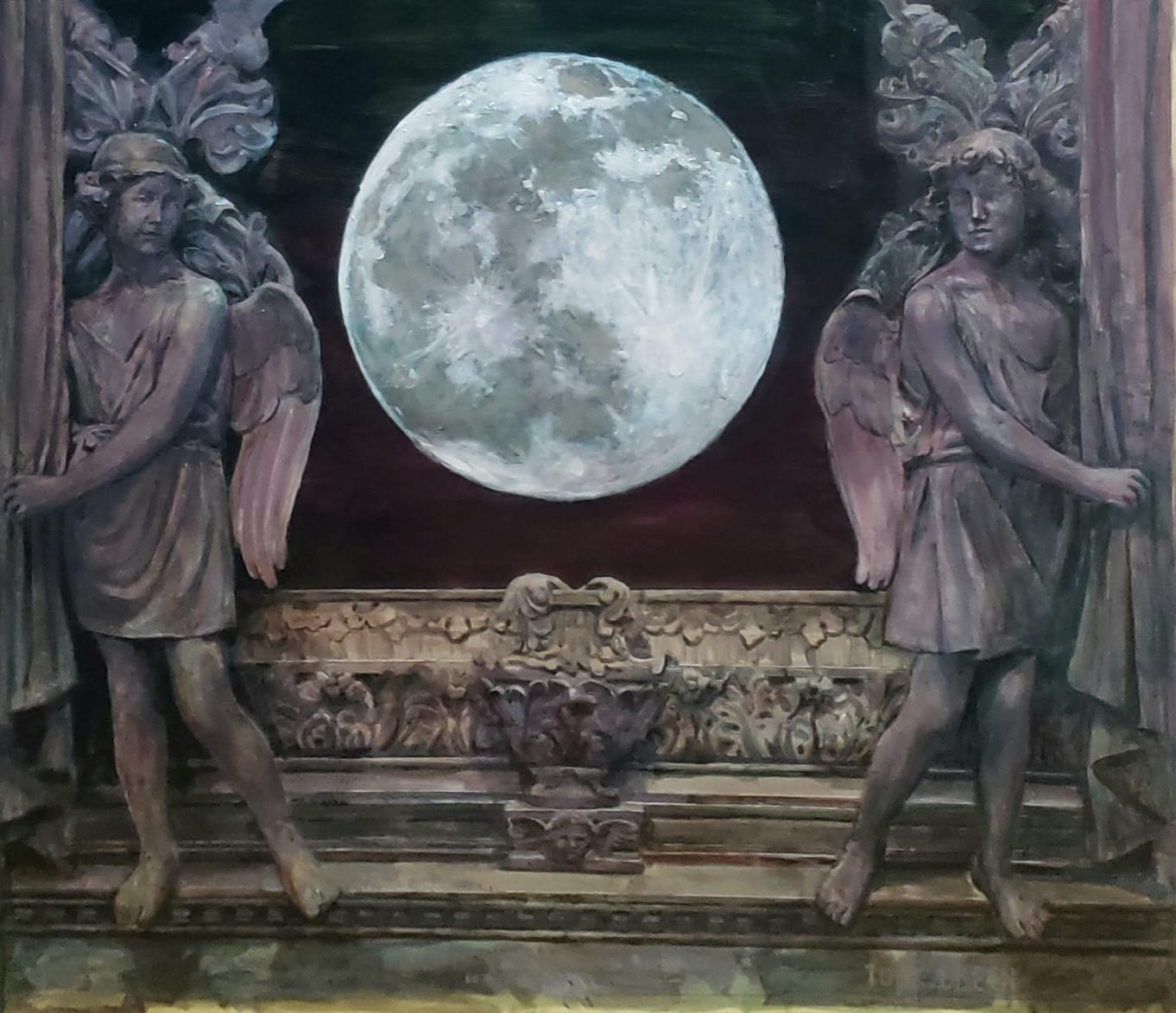
      LUX MUNDI- LIGHT OF THE WORLD
  • How to choose art that lasts in Santa Fe: A practical guide for collectors

    How to choose art that lasts in Santa Fe: A practical guide for collectors

    Late afternoon in Santa Fe has a way of revealing what a wall is really asking for. The light slides low across plaster, catches the grain of wood, and turns a room into a set of measurements you can feel rather than just read: the span over a sofa, the narrow rise beside a doorway, the quiet corner that needs one strong vertical instead of a cluster of small things. A painting that looked generous in a gallery can feel flimsy at home; a bronze that seemed restrained can suddenly anchor everything. Scale, surface, and the way a frame throws a shadow matter as much as color.

    Choosing art that lasts is less about falling for the first beautiful piece and more about making a clean buying judgment. In this market, that means asking who made it, what carries the image, how the surface has aged, whether the condition report matches what your eye sees, and whether the dimensions actually suit the room you have. Provenance and authenticity protect the story; medium, support, and framing tell you how well the work may hold up; placement and lighting decide whether it will still read well after the novelty fades. The useful question is not only “Do I like it?” but “Can I verify it, live with it, and still want it ten years from now?” As noted in our earlier notes, the strongest purchases usually survive both closer inspection and longer ownership.

    The sections that follow break that judgment into practical steps: what to measure, what to compare, and what to ask before the work leaves the studio or gallery.

    Table of Contents

    Evidence and paper trail: what to verify first

    The strongest offers usually arrive with something you can hold up to the light: a signed invoice, a dated certificate, exhibition history, or a clean chain of ownership. If the story is only spoken and never written, the story is still unfinished. A buyer in Santa Fe looking at a serious work should ask for the earliest document available, then compare the artist name, title, medium, dimensions, and date across every page so the object in front of you matches the record attached to it.

    Thin proof changes the decision fast. A gap in provenance does not always kill a purchase, but it lowers the ceiling on confidence, resale, and insurance. Ask one direct question: “What document would a future appraiser use to identify this work without your help?” If the answer is a gallery receipt, prior-owner note, or exhibition label, request a copy. If the answer is only memory, the price should move with that weakness, not against it. For a reference point on method and studio practice, the artist’s background helps, but background is not proof of a specific object.

    Here’s the part most people skip. Compare the paperwork to the object itself: measure the image area and the outer dimensions, note the support, and check whether the listed medium matches the surface you can see. A work described as oil on panel should not read like canvas at the edge; a framed size should not mysteriously expand once you unpack it. If the piece is being considered alongside other available work, the shop can help you compare scale and medium without relying on a memory test. When provenance reaches back through multiple owners or an exhibition, a useful next step is to ask for the most recent transfer document and, if needed, a provenance search through the Getty Proven.

    For a collector, the real question is not whether the paper looks polished; it is whether the paper and the object tell the same story. If they do, you can move on to condition and medium with less doubt. If they do not, the offer has already told you something important, and the next decision becomes whether the work can still justify the claim being made for it.

    Condition, medium, and conservation implications

    Once the paperwork feels coherent, the object itself has to earn the price. A surface can look calm from across a room and still hide abrasion, overpainting, old moisture, or a later varnish that has shifted the color temperature. Ask for dimensions, medium, support, and date in writing, then compare those details with what you can actually see: canvas weave, panel edges, stretcher marks, craquelure, losses at the corners, or a paper sheet that has been trimmed close to the image. Those are the kinds of facts that tell you whether the work is stable, fragile, or already compromised.

    Medium changes the conversation fast. Oil on linen, oil on panel, tempera, watercolor, and mixed media age in different ways, and each one asks for different lighting, humidity, and framing. If you are looking at a classical method piece from Tony Green, or comparing similar work through the About page and the Shop, check whether the surface has the depth and finish you expect from the stated technique. A buyer should ask, “Has the work been cleaned, relined, restored, or revarnished?” and “Is there a conservator’s note for any prior treatment?” One clause about paperwork is enough; the rest is about what the material is doing today.

    In Santa Fe, where collectors often place work in bright rooms with strong daylight and adobe-toned walls, conservation implications are part of the purchase, not an afterthought. A pastel or watercolor may need UV glazing and careful placement away from direct sun, while a large oil may be more forgiving but still sensitive to heat and reflective glare. If the scale is right but the medium is not, the room will expose that mismatch quickly. That is why a room-specific question matters: “What height, glazing, and lighting conditions does this piece need to stay stable and legible?” If the answer is vague, a custom conversation through Commission may be the cleaner path.

    Pro tip: Before you pay, ask for three things in one message: a close photo of the signature and worst condition area, a written medium/support/dimensions line, and one sentence on any restoration history.

    Scale, placement, and how the work lives in the room

    The last section dealt with what the work is; this one asks what the work can do once it leaves the wall in the studio. A painting that reads beautifully at arm’s length can disappear over a sofa, while a smaller panel can feel almost architectural when it sits in the right niche. Before you buy, compare the listed dimensions against the wall width, the furniture below it, and the distance from the main seat. If the work is framed, measure the outer frame, not just the image, because that extra inch or two changes the whole rhythm of the room. Placement is where a Santa Fe buyer can be especially exacting. Warm plaster, deep shadow, and strong afternoon light expose weak framing and awkward scale fast, so ask for a photo of the work in a simple interior or mock it up on your own wall with painter’s tape. If the piece will face a bright opening, confirm whether the surface is matte enough to hold detail without glare; if it will sit in a dimmer corridor, check whether the contrast and edge work still carry from across the room. A recent conversation around Opening Reception | Lucid Perturbations underscored how much placement changes when material surface and light are part of the viewing experience, which is exactly why scale and finish should be tested together. Framing is not decoration after the fact; it is part of the object’s presence. Ask what the frame adds in depth, whether glazing is present, and whether the package is ready to hang without extra hardware. For works on paper, the mat width should protect the image without swallowing it, and for paintings on panel or canvas, the edge treatment should look intentional from the side, not improvised. If you are comparing pieces on the site, use the Shop listings to stack dimensions against your room notes, and if the fit is close but not exact, a room-specific conversation through Commission is often cleaner than forcing a near miss into a finished space.

    Authenticity, comparison, and when the story outruns the object

    Comparison is where weak stories usually give themselves away. Put the piece beside one or two credible examples from the same maker or period and look for consistency in brush handling, palette, ground, and scale; if you are considering Tony Green’s work, his method background and the available work in the Shop give you a clean reference for what the objects themselves are doing. If a sales pitch leans hard on rarity but the dimensions, medium, or finish look unlike the rest of the body of work, ask why. The best answer is specific: a commission, a study, a later revision, a special support. The worst answer is a cloud of adjectives.

    Here’s the part most people skip: ask for one comparison that the seller would be willing to stand behind. “What other work should I place this beside, and what should I see that makes this one stronger?” is a better question than “Is it valuable?” It forces the conversation back onto observable differences instead of reputation. If the room is the real constraint, especially for a larger or more formal piece, that conversation can move into a commission instead of a compromise purchase, which is often the cleaner path when the story is larger than the wall.

    How to use Santa Fe as context without outsourcing your judgment

    In Santa Fe, the room is rarely neutral. Adobe walls, high light, deep shadows, and a mix of old plaster and newer interiors will make the same painting feel more intimate at one address and more declarative at another. That is useful context, not a verdict. A work that looks calm under gallery lighting may read sharper, warmer, or more physically present once it leaves the white cube and meets the texture of your own wall.

    The local market also rewards a certain discipline. Around Canyon Road, presentation can be seductive, but the better purchase is the one that still feels right after the opening-hour glow fades. If you are looking at a classical work from Tony Green, the question is not whether the setting flatters the painting; it is whether the painting holds its authority once it is out of that setting. His Venice-based practice and classical methods matter here because they produce objects with enough structure to survive a move from one environment to another without losing coherence.

    how to choose art that lasts in Santa Fe – Santa Fe
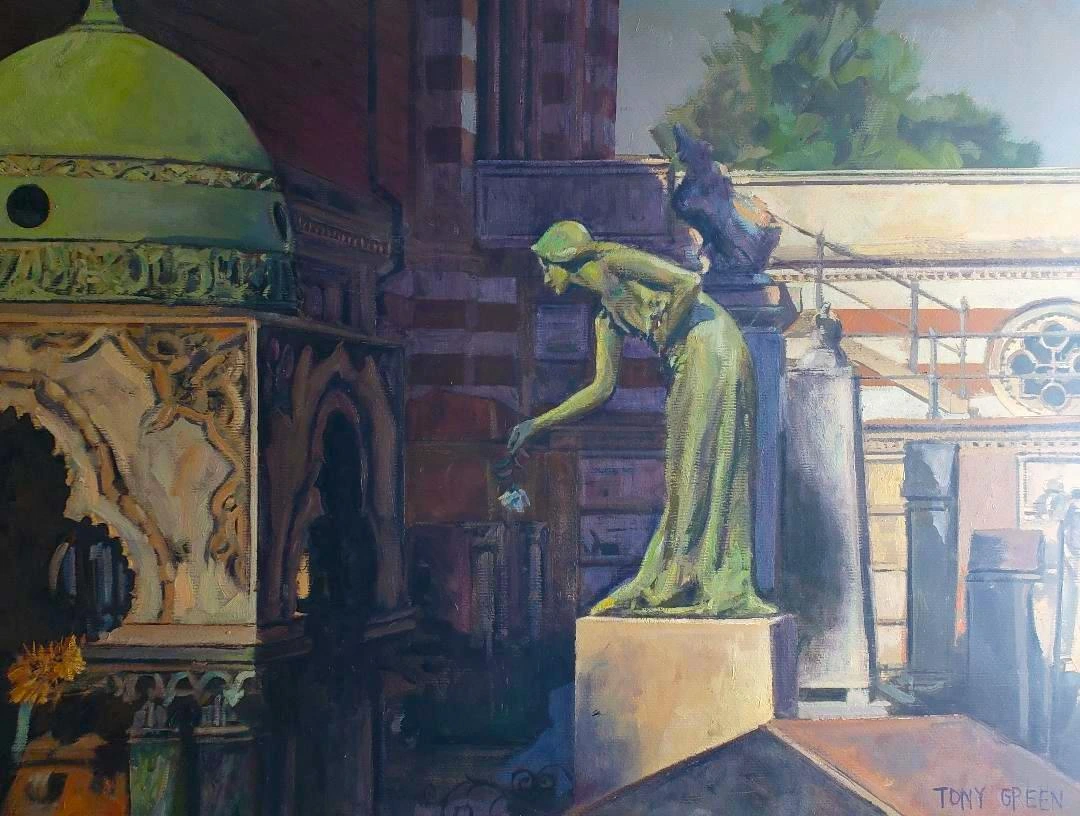
    NIKE EMERGES
  • Collecting art in Santa Fe: A practical guide for collectors

    Collecting art in Santa Fe: A practical guide for collectors

    Late afternoon in Santa Fe can make a room feel edited. A pale wall goes amber near the window, a woven rug holds its color in the shade, and a canvas that seemed modest in the gallery suddenly claims the whole field of view. That is the moment collectors remember later: not the tag, but the way scale settles against the furniture, how a frame catches light, how texture changes when the sun drops and the adobe tones deepen.

    The better buying decision starts there, but it cannot end there. In this market, the useful questions are practical: who handled the work before you, what condition report exists, whether the medium is stable in your climate, how the dimensions will read once it is installed, and whether the piece belongs in the room you actually have rather than the one you imagine. Provenance, authenticity, framing, placement, and fit are not separate chores; they are the terms that tell you whether the work belongs on your wall or only in your shortlist.

    This guide takes that standard seriously, building on earlier notes and turning it toward the checks that matter before a purchase is final.

    Table of Contents

    Evidence and paper trail: what to verify first

    The first thing to ask for is not a sales pitch but a record: who owned the work, when it changed hands, and what documents support that trail. A clean invoice, a dated certificate, exhibition history, and any old labels on the back tell a buyer more than a polished story ever will. If a seller can produce only a verbal account, the asking price should drop in your mind immediately; the burden of proof has shifted to you, and thin proof weakens the case before you even reach condition or medium.

    Ask a direct question: “What document would you hand to a future buyer to support attribution and ownership?” Then compare the answer against what is actually in the file. A gallery receipt with title, dimensions, medium, and signature is stronger than a generic note; a conservation report is stronger still if the surface has been touched. For older work, I look for correspondence, exhibition checklists, or a published reference that can be cross-checked against the object itself, and I will often use the Getty Proven. database as a sanity check rather than a finish line.

    Thin proof changes the decision because it changes your exit. Without documentation, resale becomes harder, insurance becomes fussier, and any future question about attribution lands back on you. That matters even in a market with strong taste and active galleries: a work can be beautiful and still be poorly supported. If you are comparing a documented piece with one that arrives as a story, the documented piece usually deserves the premium, especially when the seller cannot explain gaps in ownership or identify where the work was shown.

    For artists whose process matters to the value, ask for one concrete comparison: a photograph of the front and back, plus the exact dimensions measured edge to edge, not rounded estimates. If the work is one of Tony Green’s, his About page gives you the background to compare method and authorship, while the Shop page helps you match listed medium and scale against the object in front of you. Once the paper trail feels solid, the next question is whether the object itself can carry the value being claimed.

    Condition, medium, and conservation implications

    The first thing to inspect is not the signature line or the label on the back; it is how the surface behaves under light. In Santa Fe, where collectors often compare works across adobe-shadowed rooms and bright, high-dry interiors, condition can change the economics fast. A panel with stable joins, a canvas with even tension, and paint layers that sit cleanly on the support are easier to live with than a work showing lifting, cupping, abrasion, or old overpaint. If the piece is by Tony Green, use the About page for method and authorship context, then ask for a straight condition report: what was repaired, when, by whom, and with what materials. Medium matters because it predicts both care and risk. Oil on panel, oil on linen, tempera, gilded surface, or mixed technique each asks for a different conversation about humidity, glazing, and framing depth. A buyer should ask for the exact support dimensions, the image size, and whether the frame is original, later, or purely protective; those details affect shipping, placement, and future conservation. If the work is listed among current examples on the Shop page, compare the stated medium and scale against the actual object, then confirm whether the finish is matte, varnished, or intentionally burnished, because that determines how it will read under gallery lights and in a home. Small discrepancies deserve direct questions before money changes hands. Ask, “Has the work been cleaned, relined, consolidated, or revarnished?” and “Are there active cracks, flaking, or retouching visible under raking light?” If paperwork is available, keep the conversation narrow: one clause on provenance, one clause on condition, then move back to the object itself. A collector in Santa Fe who is weighing a wall piece against a room with strong afternoon sun should also ask for a photograph in natural light and one under the intended lighting temperature, because conservation risk is often a placement problem disguised as a taste problem. For room-specific fit, a commission can be the cleaner answer when scale or finish needs to be controlled from the start, which is where Commission becomes useful.

    Scale, placement, and how the work lives in the room

    The first decision is usually not the purchase. It’s the standard. A painting that looks composed in a gallery can go flat, or feel domineering, once it meets a low ceiling, a narrow wall, or a seating area that forces the eye to travel across the image from six feet away. In Santa Fe, where adobe surfaces and warm light can soften edges fast, ask for the exact dimensions of the work, the framed dimensions if it is framed, and a photo with a known object beside it. That gives you a usable scale check before you ever imagine it on your wall.

    Measure the wall, then measure the sightline. If the piece will hang above a sofa, console, or fireplace, compare the width of the work to the furniture below it and leave enough breathing room so the edges do not crowd the room. A common mistake is buying for the image and forgetting the frame; a deep frame or a wide float can add several inches and change how the work lands. If you are comparing two works from the shop, ask which one keeps the better proportion from the primary seating position, not just from close viewing. That question tells you more than a title ever will.

    Light is part of the object’s life, not a finishing touch. Natural light can reveal brushwork and surface, but it can also flatten contrast by afternoon; warm bulbs can enrich earth tones while pushing whites yellow. Ask for one image in daylight and one under the lighting temperature you actually use, then check whether the paint surface, varnish, or gilding reads cleanly without glare. If the work is a strong fit in size but the room is tricky, a conversation with Tony Green through the commission page is often the more precise move, especially when the goal is a specific scale, orientation, or placement above a mantle or in a stair landing.

    Framing deserves the same discipline. Frame profile, glazing, and mounting can either steady the image or make it feel overbuilt for the room. A simple frame may suit a quieter interior; a more assertive one can help a smaller painting hold its own on a large wall. Before you commit, ask for the artwork’s full depth, how it will ship, and whether the hanging hardware is centered for the intended orientation.

    A 90-second checklist before you buy

    For collecting art in Santa Fe, that quick pass matters because rooms here often ask for a strong presence without visual clutter. A smaller work can still command a wall if the framing is disciplined; a larger canvas can feel awkward if the margins are wrong or the support is too heavy for the location. Ask for a straight-on photo with a tape measure visible, then compare it to the wall opening you actually have, not the wall you imagine. If the work is from Tony Green’s shop, use the listed medium and size to test whether the piece reads as intimate, transitional, or architectural in your space.

    When the fit is close, one comparison usually settles the question: does the object feel consistent with the story attached to it? That means the medium, the condition, and the proposed placement all need to agree. A classical painting on panel, for example, should be presented with the kind of care that protects edges, surface, and light; a room-specific request may be better handled through commission work than by forcing a near-match into a difficult wall. Even at an event such as Opening Reception | Lucid Perturbations, the useful questions are the same: what exactly is it, how will it live on the wall, and does the scale justify the space it will occupy?

    That last check is where the sale becomes clearer.

    Authenticity, comparison, and when the story outruns the object

    A useful comparison is never only internal. Set the work beside two or three credible examples from the same hand or period, not just by image but by measurement and material behavior. If a painting is described as a large Renaissance-method oil, check whether the paint layers, panel or linen support, and finish actually behave that way; if the seller is using language that sounds more ambitious than the object, the gap will show. Tony Green’s About page is a straightforward place to verify method and working background, while the Shop gives a cleaner read on available scale and medium than a polished sales pitch ever will.

    This is also where the story can outrun the object. A work may arrive with a handsome chain of ownership, yet still fail the simplest comparison: the frame overwhelms the image, the dimensions do not suit the wall, or the surface asks for lighting that the room cannot provide. If the piece is being considered for a specific interior, a room-specific conversation through Commission is often more useful than forcing a near-fit into a difficult space. And if you want a broader provenance lens, the Getty Proven. guide is a better benchmark than casual reassurance.

    Pro tip: Before you commit, put three things side by side: the claim, the object, and one credible comparison.

    How to use Santa Fe as context without outsourcing your judgment

    In Santa Fe, the room is often doing half the talking. High light, adobe tones, deep portals, and a market that prizes quiet confidence can make a piece look finished before you’ve asked whether it still holds up in ordinary daylight. That is useful pressure, but only if you keep it in its place: the city can sharpen your eye for fit and presence, not replace the questions that matter when the sale language fades.

    For work by Tony Green, the most useful conversation is not whether the style “fits Santa Fe,” but whether the method, surface, and dimensions fit the room you have. His About page is the right place to understand the classical approach behind the work, while the Shop helps you compare available scale and medium against a specific wall, stair landing, or study. If the question is more exacting—a niche, a difficult alcove, a dining room that needs restraint rather than spectacle—then a commission can solve the mismatch cleanly instead of forcing a near-fit.

    That same discipline keeps the purchase honest in a market with strong taste and strong opinions. A piece should still work when you step back from the story and ask, “What exactly am I getting, where will it live, and what will I want to verify again if I resell or insure it?”

    collecting art in Santa Fe – Santa Fe
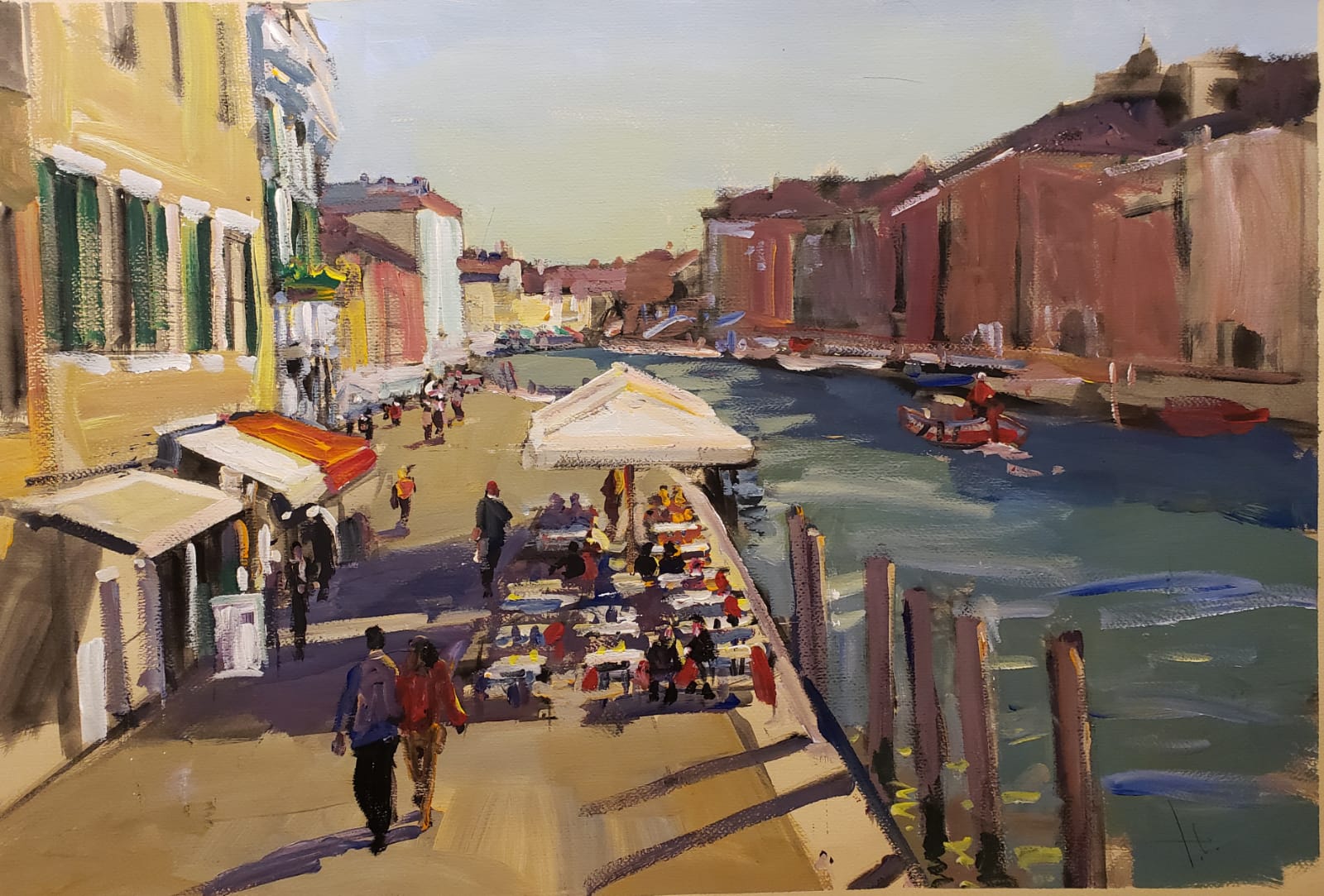
    ENTRANCE TO DUE ROCCOLI
  • Collecting art in Scottsdale

    Collecting art in Scottsdale

    Late afternoon in Scottsdale has a way of flattening the room into something exact: one wall taking the last clean band of light, one canvas holding its color without glare, one frame throwing a thin shadow that tells you more about the work than the label beside it. A painting can feel generous at six feet across and awkward at thirty inches if the wall around it is already busy. Texture matters too. A thickly worked surface, a quiet glaze, a restrained drawing line—each changes how the piece behaves once it leaves the gallery and lands in a home.

    That is why collecting here is less a hunt for a name than a set of buying judgments. The real questions are practical: who owned it before, what condition reports actually say, whether the medium is stable, how the scale reads from the sofa or the entry, what the lighting will do to pigments, and whether the work feels authentic to the artist’s hand and period. If you are comparing pieces, compare the evidence as carefully as the image. The best purchase is usually the one whose provenance is clear, whose condition matches its price, and whose placement can be imagined without compromise.

    In the sections below, we’ll turn those decisions into a simple checklist, drawing from earlier notes and the questions collectors ask right before they commit.

    Table of Contents

    Evidence and paper trail: what to verify first

    The first thing worth asking for is the oldest document that ties the work to the seller: a gallery invoice, a prior bill of sale, a certificate with the artist’s signature, or an exhibition record that names the piece. If the story begins and ends with “it came from a private collection,” the price should move with that uncertainty. A clean paper trail does not guarantee value, but it does tell you whether the offer is anchored in something you can verify rather than in memory.

    For a buyer in Scottsdale, that means pressing for specifics instead of accepting a polished summary. Ask who owned it last, when it changed hands, and whether the dimensions, medium, and title match across every document. A mismatch in any one of those details can mean a clerical slip, or it can mean the work has been relabeled somewhere along the way. When the paperwork is thin, the asking price should be thinner too.

    Provenance is stronger when it can be checked against independent records: an exhibition catalog, a gallery archive, a museum mention, or a reputable provenance database such as Getty Proven. If the seller cannot produce images of the back, stretcher, signature, labels, or frame stamps, request them before you talk numbers. For a work by Tony Green, whose classical method and material choices matter to collectors, the paper trail should support the object’s authorship, not merely repeat the seller’s description; his background gives useful context for what to expect from the hand and the finish.

    Thin proof changes the decision fast: a gap in ownership history, a missing receipt, or a description that keeps shifting from one medium to another is not a detail to ignore, it is a reason to slow down. If the documentation is solid but the work is being offered in a size or format that differs from comparable pieces, that is the moment to compare it against available examples in the shop or discuss a custom fit through a commission. Once the evidence is credible, the next question is whether the object’s condition and medium can carry the value being claimed.

    Condition, medium, and conservation implications

    Once the proof is credible, the real test is physical: what the work is made of, how it has aged, and what that means for the price. A canvas in stable oil paint, for example, behaves differently from mixed media on paper or a heavily varnished surface, and those differences should be visible in the asking price. If the seller cannot tell you the support, surface treatment, and any prior restoration, pause and ask for a written condition report before you move further.

    Look closely for the kinds of issues that alter both display and longevity: lifting paint, craquelure that is stable versus actively opening, discoloration in varnish, warping in panels, foxing on paper, or abrasion at the edges from past framing. Ask for the exact dimensions of the image and the support, not just the frame, and compare those measurements against the wall space you actually have. In Scottsdale homes with strong light and open rooms, that matters more than most people expect, because a piece that reads beautifully in a gallery can become hard to live with if the finish is too reflective or the scale overwhelms the sightline.

    The medium should also tell you something about care. Classical methods, such as those used by Tony Green in his Venice-based Italian/American practice, often reward close attention to varnish, surface depth, and framing choices; that is where you verify whether the work is ready to hang or still needs conservation-minded handling. If you are comparing one piece against another, ask a simple question: which of these would need less intervention over the next ten years, and what would that intervention cost? That is where condition and medium stop being abstract and start affecting value. For background on his method and materials, the About page is the cleanest place to start.

    If the work is being acquired for a specific room, ask for a photo in daylight and one under the kind of lighting you expect at home, then compare that to the frame depth, hanging hardware, and any glazing. A buyer who wants something that can live comfortably in a bright Scottsdale interior should know whether the piece is vulnerable to UV, whether the pigment is stable, and whether the frame is archival or decorative only.

    Pro tip: Ask how the medium and support have aged before you judge the surface.

    • Request close photos in normal and raking light.
    • Separate material facts from the seller’s description.
    • Treat restoration history as value context, not trivia.

    Scale, placement, and how the work lives in the room

    Once the surface questions are settled, the real test is physical: can the piece live where you intend to see it every day? In Scottsdale homes, where light can be sharp and rooms often open into one another, a work that looks perfect in a listing may land too small over a long console or too large for a narrow hall. Ask for exact dimensions of the image, the frame, and the overall outside measurement, then compare them to the wall or niche with painter’s tape before you buy. That simple outline tells you more than a screen ever will.

    Framing changes the read of a piece as much as the image itself. A deep, museum-style frame can give a classical painting breathing room, while a thin decorative frame may make the same work feel busier or less substantial. If the work is on paper, confirm whether the mat is archival and whether the glazing is standard glass or UV-protective; if it is on canvas or panel, ask how the edges are finished and whether the work is intended to be hung with or without a frame. Those details affect both scale and the way the piece sits in the room.

    Light is where many purchases quietly succeed or fail. Afternoon sun in a bright Scottsdale living room can flatten a subtle surface, while a dim corridor can swallow detail altogether. Before committing, picture the work at the hour you will actually see it: morning over breakfast, late-day near a seating area, or under a lamp in the evening. If you are considering a painting from Tony Green’s shop, look closely at the listed dimensions and medium, then ask whether the finish, frame depth, and color temperature will hold their presence under your room’s lighting. For custom placement or a work built to a specific wall, the commission path is often the cleaner fit.

    A useful comparison is to measure the intended wall zone and then mark the visual center, not just the edges. A work placed a little too high can feel detached; one hung too low can crowd furniture and interrupt traffic flow.

    A 90-second checklist before you buy

    One clean question often settles the last uncertainty: can this piece be documented, handled, and rehung without guesswork? A seller should be able to provide provenance notes, a condition report, and a clear statement of medium and support; for a deeper background on the making side, Tony Green’s about page outlines the classical approach behind the work. On mornings when collectors are already thinking about the city’s own visual history, even something like Breakfast with a Side of… Scottsdale History can sharpen the same habit: look for the facts that hold up when the room, not the listing, gets the final say.

    If the answer is still yes after those checks, compare it once more against the wall it is meant for and the next one you might own. That final comparison is where a room-specific commission can become smarter than forcing a near-fit, especially when the scale is right but the format is not. When the story, object, and measurements all stay aligned, you are no longer shopping by impulse; you are choosing the work that can actually live where you plan to place it.

    Authenticity, comparison, and when the story outruns the object

    In Scottsdale, where rooms are often measured, bright, and unforgiving of weak proportion, story can outrun the object when the scale or format is wrong for the wall. A painting that feels impressive in a listing may become awkward once you compare its actual dimensions to your sightline, ceiling height, and adjacent furniture. Before you commit, ask for exact framed and unframed measurements, then compare them to the space where it will live; if the work is meant to anchor a long wall, the balance should hold from across the room, not only in a close photograph. When the fit is uncertain but the work is promising, a room-specific commission can be the more disciplined choice.

    That last comparison is the one that protects both taste and budget: the object in front of you, the nearest honest examples, and the room waiting for it. If those three agree, the purchase is probably sound; if the story needs more weight than the work can carry, the next step is not persuasion but another look at the available pieces in the shop.

    How to use Scottsdale as context without outsourcing your judgment

    The practical move is comparison. Ask what the work is being compared against in this market and in your own space. If you are looking at a classical painting, compare the surface handling, framing, and finish against a few honest examples, not against the sales copy. If a seller is vague, ask for the title, date, medium, support, and exact dimensions in writing, then compare those details with what you can see from a few feet away. That is where a collector in Scottsdale keeps control: by letting the room, the light, and the nearest credible alternatives test the claim instead of accepting the first polished narrative.

    Tony Green’s classical method makes that kind of scrutiny easier, because the work has a visible discipline you can examine up close. You can see whether the scale supports the wall, whether the framing suits the image rather than overpowering it, and whether the surface still feels coherent once the sales language falls away. If you want to understand his approach more directly, the About page gives useful background, while the Shop helps you compare medium and scale without guessing. For a room that needs a specific size or finish, a commission is often the cleaner route than forcing a near-miss into place.

    That is the point where Scottsdale stops being a backdrop and starts acting like a filter. The light here will expose weak framing, awkward proportion, and any mismatch between the work and the architecture faster than a softer room will.

    collecting art in Scottsdale – Scottsdale
    Tony at work