
By late afternoon, Scottsdale light can flatten a room into something almost clinical, which is why a painting that looked generous in the gallery can suddenly feel too small, too glossy, or too crowded once it meets your wall. The frame catches the sun, the linen texture goes quiet, and the whole arrangement starts to reveal what was missing in the first place: not color, but proportion. A piece either settles into the architecture or it pushes back.
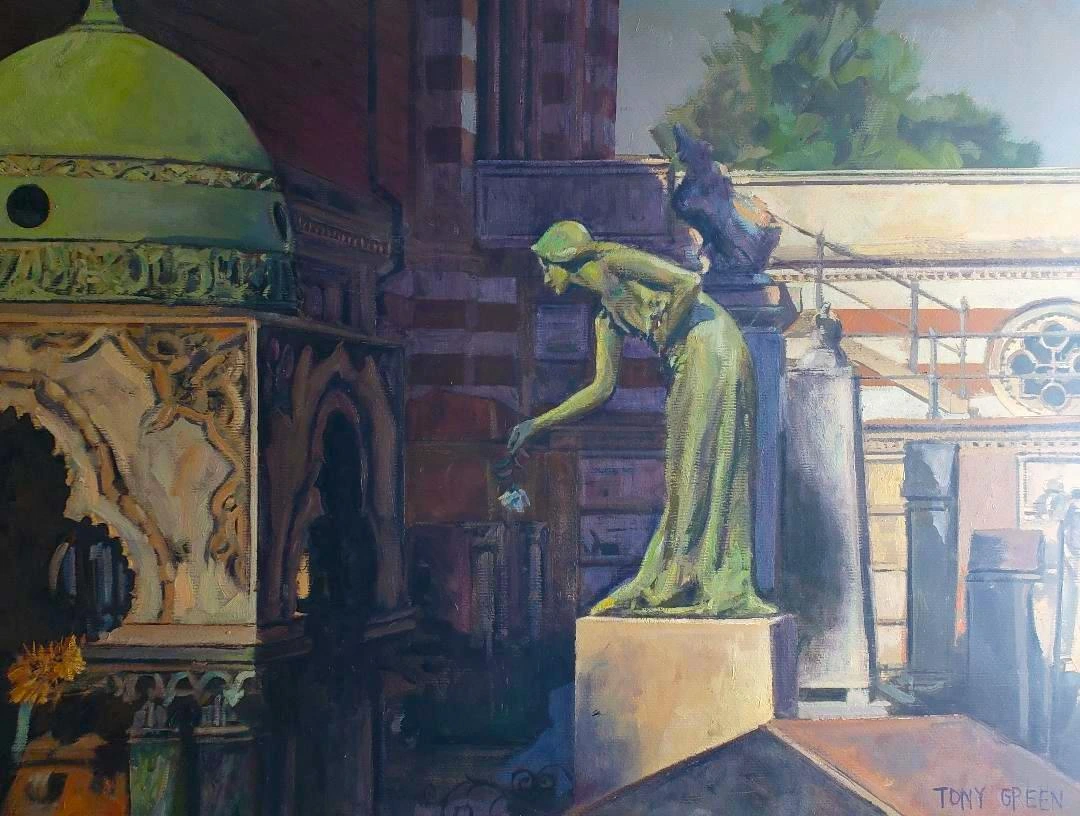
That is the real test in fine art buying in Scottsdale: not whether a work is attractive for a minute, but whether it earns its place after you verify the facts around it. Provenance, condition, medium, scale, placement, authenticity, and fit all change the value of what you are seeing, and they should change the questions you ask before you buy. A strong purchase can survive close inspection; a weak one usually depends on distance, mood, or a polished story. For a useful comparison point, Tony Green’s background makes clear how classical method and material discipline shape the kind of scrutiny collectors should bring to any work.
If you want the rest of the checklist in order, the next sections move from surface to structure, starting with what to measure before the art ever leaves the wall.
Table of Contents
- Evidence and paper trail: what to verify first
- Condition, medium, and conservation implications
- Scale, placement, and how the work lives in the room
- A 90-second checklist before you buy
- Authenticity, comparison, and when the story outruns the object
- How to use Scottsdale as context without outsourcing your judgment
Evidence and paper trail: what to verify first
The first thing to ask for is not a price reduction. It is the paper trail that supports the story: invoice, certificate of authenticity, prior sales record, exhibition history, and any conservation notes tied to the object. In Scottsdale, where serious buyers often compare works across galleries, private sales, and online listings, thin documentation changes the conversation immediately. A work can still be compelling, but without a credible record you are no longer evaluating an acquisition; you are evaluating a claim.
Ask one direct question: “What document ties this specific work to this maker, date, and ownership history?” If the answer is vague, or if the only evidence is a verbal explanation, slow down. A clean trail should identify the artist, title, medium, support, dimensions, and date, and those details should match the object exactly. Even a small mismatch in size, signature placement, or medium description can signal a later alteration, an incomplete record, or a listing that has been copied without verification.
Thin proof changes the decision because it shifts risk onto the buyer. If provenance is partial, you should compare the work against known examples, request high-resolution images of the front, back, signature, and any labels, and ask whether the piece has been published or exhibited. For a useful benchmark on what stronger ownership records look like, Getty Proven. is a practical reference point. When the documentation is solid, the discussion can move to condition and medium with real confidence; when it is not, those next questions carry a different weight.
That is also where a working artist’s background matters. Tony Green’s classical method and material discipline, outlined on the About page, give collectors a clearer standard for what should be documented before a sale, and the Shop is useful for comparing how medium and scale are presented in a cleaner record. Once the proof is credible, the next decision is whether the object’s condition and medium can carry the value being claimed.
Condition, medium, and conservation implications
Once the proof is credible, the object has to earn its place on material terms. A canvas with stable edges, even tension, and a restrained surface tells a very different story from one with lifting paint, old overpainting, or a repaired tear hidden under fresh varnish. In Scottsdale, where light can be unforgiving in bright interiors, that matters quickly: a work that looks excellent under gallery lighting may still reveal blanching, abrasion, or cracking once it is carried into a home with strong sun and reflective walls.
Ask for the exact medium, support, and finish before you discuss price. Oil on linen, oil on panel, and mixed media on paper do not age the same way, and they do not ask for the same care. A sensible question is: “Has this been cleaned, relined, conserved, or revarnished, and if so, when?” If the seller can answer with a condition report, close-up photos, and dimensions that include frame depth, you can compare the piece against what is already in your room and against similar work in Tony Green’s shop without guessing at scale or surface.
Medium also shapes where the work should live. A polished surface may flare under track lighting; a matte ground can disappear if it is hung opposite a bright window; works on paper usually need glazing and a framing plan that controls humidity and glare. If you are considering a commissioned piece for a specific wall, the discussion belongs in the room itself, which is why a custom conversation through the commission page can be more useful than forcing a near-fit. The practical question is simple: will this object remain visually legible, and physically safe, in the environment where it is supposed to live?
That is where provenance comes back into the room as a supporting detail rather than the whole argument. A clean chain of ownership does not cure a poor surface, and a beautiful surface does not excuse a missing treatment history. When both are in order, the buyer can move to the last test: whether the piece’s size, framing, and light sensitivity actually suit the wall, the viewing distance, and the way the room is used.
Scale, placement, and how the work lives in the room
Framing changes the read more than most people expect. A narrow panel in a deep frame can hold its own in a formal room; a large canvas with no frame may feel quieter and more contemporary. Ask for the exact framed dimensions, not just the image size, and check whether the frame adds visual weight that will crowd nearby furniture. If the work is on paper, confirm the glazing, mat depth, and whether the artist or gallery has used UV protection, especially if the room gets strong afternoon light.
Zoom out for a second. In a bright Scottsdale interior, the angle of sun matters as much as the size of the painting. A work placed opposite a window may need anti-reflective glazing or a different wall altogether; a painting with delicate pigments or mixed media may be better suited to indirect light. Walk the room at the hour you’ll see it most, and note where glare lands, where shadows cut across the surface, and how far the nearest seat sits from the wall. If the viewing distance is twelve feet, a very intricate small work may disappear; if it is four feet, a large, assertive composition can feel uncomfortably close.
For buyers comparing a finished room to a future one, the practical question is simple: will this piece still feel balanced after the furniture, lamp light, and frame are all in place? That is the point where a conversation with the artist becomes useful, especially if you are deciding between an available work at the shop and a custom fit through commission .
Pro tip: Measure the wall, frame, and viewing distance before comparing another work.
- Check image size and framed size separately.
- Test the piece against the room’s light, not only gallery light.
- If the proportions are wrong, a commission may be cleaner than a compromise.
A 90-second checklist before you buy
Then compare the object against the story attached to it. Ask for the medium, support, and framing notes in writing, and keep the question simple: does this work still make sense if I remove the sales language and look only at the object in front of me? If you want a broader sense of the artist’s method and background, the About page is the cleanest place to start.
When the numbers, the framing, and the object all agree, the last check is practical: can the work live in the light it will actually receive, not just the light it looked good in at the moment you saw it? If that answer is yes, you are no longer guessing—you are choosing the piece that belongs to the wall, and the next decision is whether the comparison set still confirms it.
Authenticity, comparison, and when the story outruns the object
Zoom out for a second. A strong sales narrative can make a competent object sound indispensable, but comparison brings the room back into focus. Ask to see two or three neighboring works of similar size or date, then compare what is actually different: edge treatment, density of paint, proportion, and whether the composition holds up when you stand six or eight feet away. If you’re choosing between available pieces on the shop page and something offered privately, line up the dimensions and ask yourself which one solves the wall you actually have, not the wall you imagined in the gallery light. A good comparison set should make the object feel more specific, not more mysterious.
When the story outruns the object, the mismatch is usually visible in one of two places: the documentation is broader than the work, or the work is more modest than the language around it. A buyer can cut through that by asking one simple question: “What would someone verify if they had to confirm this piece without hearing the sales pitch?” That answer should point to something concrete—provenance records, a dated image in a studio archive, a conservation note, or a measurable feature like stretcher depth and overall scale. If the piece is meant for a particular wall, a custom commission can be the cleaner answer, because the fit is designed rather than hoped for.
That is also where a little external context helps.
How to use Scottsdale as context without outsourcing your judgment
Scottsdale can sharpen a buyer’s eye without making the decision for you. The market here often rewards polished presentation, but polished is not the same as resolved; a piece can look effortless under gallery lights and still feel thin once it reaches a quieter room. That is why the local context should function like a filter, not a verdict. If a work is being shown near the design-heavy orbit of Canyon Road-style presentation, ask yourself whether the appeal comes from the object itself or from the surrounding theater.
When the piece is close but not quite right for the space, a commission can be the cleaner decision because the final object is shaped around placement instead of adapted after the fact. That matters in Scottsdale, where sunlight, architecture, and finish can change how a painting behaves by midafternoon. The next question is simple: what would you need to see, in writing or in person, before you would feel comfortable bringing it home?
Leave a Reply