
In Santa Fe, the first honest test of a work is often the room around it: winter light cutting across adobe walls, a painting holding its own above a low sofa, a bronze catching just enough shadow to reveal the edge of a form. You can tell quickly when scale is wrong. A canvas that felt intimate in a gallery can suddenly crowd a hallway; a small panel can disappear once it leaves the white cube and meets textured plaster, wood beams, and a lived-in floor plan.
That is why buying original art here is less about falling for a single image than making a careful judgment across a few visible facts: who made it, where it came from, what condition it is in, what medium and support were used, and whether its dimensions, framing, and surface will actually work in the place you mean to live with it. Provenance and authenticity matter, but so do hairline cracks, varnish issues, unstable paper, awkward scale, and the practical question of how the piece will read in your light. A collector in Santa Fe is not just choosing a work; they are deciding whether the object can survive scrutiny, fit the wall, and keep its presence over time.
As a continuation of the earlier notes, the sections below move from first impressions to the checks that make a purchase feel settled rather than hopeful.
Table of Contents
- Evidence and paper trail: what to verify first
- Condition, medium, and conservation implications
- Scale, placement, and how the work lives in the room
- Authenticity, comparison, and when the story outruns the object
- How to use Santa Fe as context without outsourcing your judgment
Evidence and paper trail: what to verify first
The first thing worth asking for is not a discount; it is proof. A serious seller should be able to show a clean chain of ownership, a dated invoice, or a gallery record that ties the work to a specific artist, title, medium, and dimensions. When that trail is thin, the story of the piece becomes a claim instead of a fact, and the price should move accordingly. If the work is presented as original, ask for the document that supports that claim in writing, not just a verbal assurance across a room.
This is where the purchase either firms up or begins to wobble. A painting with solid provenance and a clear exhibition or sales history can justify a different level of confidence than a beautiful object with no paper trail beyond a handwritten note. For a collector comparing works in Santa Fe, that difference matters as much as surface appeal. If you want a useful benchmark for the artist’s practice and working method, Tony Green’s About page gives the kind of background that helps you match the document trail to the maker’s stated process.
Ask for specifics you can verify: who owned it before, when it changed hands, whether any restoration was done, and whether the measurements include the frame. A title, date, support, and exact size should line up across the invoice, label, and any certificate. If one source says oil on panel and another says mixed media on canvas, that is not a minor typo; it is a signal to pause and compare what is being sold with what is actually in front of you.
When the evidence is credible, the conversation can move toward fit and value with less friction. If the paper trail is vague but the work is still compelling, ask for a tighter record before you proceed, or compare it with documented pieces in the Shop to see how medium and scale are described when the details are being handled carefully. That is the point where the next question becomes whether the object’s condition and medium can carry the value being claimed.
Condition, medium, and conservation implications
Once the record is credible, the work itself has to hold up under inspection. A painted surface should tell you, without drama, whether the artist used oil, acrylic, tempera, or a mixed approach, because each one ages differently and asks something different of the room. With a Tony Green painting, for example, his classical method and layered handling matter because the surface is part of the value; compare the listed medium, support, and dimensions against what you can actually see, and ask for a close image of any craquelure, abrasion, or prior restoration before you commit.
Condition is not just about damage; it is about future care. A slight warp in a panel, foxing on paper, or a brittle varnish can change where the piece should hang and how much light it can tolerate. Ask one precise question: what conservation work, if any, has been done, and is there a written report with dates, materials, and the conservator’s name? If the answer is vague, compare it with the cleaner documentation you would expect from a serious listing in the Getty Proven. framework, then decide whether the price reflects the risk.
In a market shaped by gallery visits and opening nights, that conversation often happens while the work is still on the wall, which is why a show like Opening Reception: Four Stories can be useful even if you are there to buy painting rather than photography: you see how scale, finish, and presentation behave in real light, not just in a file. Measure the actual image area, not only the frame, and ask whether the frame is archival, whether glazing is UV-protective, and whether the support can be rehung without stress. Those details tell you more about longevity than a polished sales pitch ever will.
If the medium and condition line up, the last check is fit: can the work live where you want it to live, or will it need conservation, reframing, or a different wall? That is where the next question starts to matter, because a piece may be structurally sound and still fail in the room if the scale, light, or placement is wrong.
Scale, placement, and how the work lives in the room
That last check is where many Santa Fe buyers slow down in a useful way: not because the work is uncertain, but because the room is. A painting can be beautifully made and still feel strained if it has to fight a low ceiling, a narrow corridor, or a wall that catches afternoon glare. Before you commit, ask for exact dimensions of the image, the framed size, and the depth off the wall; those three numbers tell you more than a polished photograph ever will. If the piece is being considered for a specific wall, tape the footprint there first and stand back from the usual viewing distance. The question is simple: does the work breathe, or does it crowd the space?
Framing changes that answer faster than most people expect. A slim linen liner can make a classical panel feel quiet and deliberate; a heavy ornate frame can turn the same image into something formal enough for a gallery wall, or too dense for a small room. In a bright Santa Fe interior, glazing and finish matter as much as the frame profile, especially if the wall faces strong light or reflects from polished floors. Ask whether the work has matte paint, varnish, or any surface texture that will read differently under direct sun, track lighting, or a shaded adobe niche. If you are comparing options on the shop, look at the medium and scale together, not as separate facts.
Placement also changes the emotional register. A portrait hung too high becomes a sign; hung at eye level, it becomes a presence. A larger composition may need a wider span of wall than buyers first estimate, while a smaller panel can disappear unless it has the right frame, lamp, or neighboring works to support it. If you are buying for a room with an odd corner, deep sill, or strong architectural trim, ask whether the artist can recommend a hanging height or a framing direction that suits the object rather than forcing the object to adapt. Tony Green’s method matters here because classical construction tends to reward careful viewing distance and controlled light; that is useful information, not marketing language.
When the fit is close but not perfect, that is the point to consider a commission instead of compromising the room. A custom size, altered edge treatment, or different format can solve problems that no amount of persuasion will fix after the fact.
Authenticity, comparison, and when the story outruns the object
Here’s the part most people skip. Authenticity is rarely one dramatic clue; it is a stack of small correspondences. Ask for the invoice, any certificate, prior ownership notes, and the exact dimensions in inches or centimeters, then compare those figures with the frame and the wall you actually have. A work can be genuine and still be the wrong object if the scale, format, or support pushes it into the wrong register for the room. In Santa Fe, where buyers often move between historic interiors and contemporary walls, that mismatch shows up fast: a piece may be respected, but if it cannot breathe in the space, it starts to feel borrowed rather than settled.
Comparison matters because the market teaches the eye as much as it tests the wallet. Stand a candidate work beside two credible alternatives and look for the things that do not photograph well: edge finish, paint buildup, stretcher quality, varnish behavior, and whether the composition holds from six feet away as well as from arm’s length. If you are weighing a custom fit, a room-specific piece, or a scaled variation, a commission can solve the gap cleanly; Tony Green’s Commission page is the place to clarify what can be adjusted without losing the character of the work. That is usually where the sales story either tightens into fact or gets louder than the object.
How to use Santa Fe as context without outsourcing your judgment
That matters even more with classical work, where surface, shadow, and gilded or painted edges change with the room. Tony Green’s About page gives the clearest sense of the method behind that kind of painting, and the same discipline applies when you compare a finished work to the place it will actually hang. If you are weighing a canvas or panel from the Shop, ask for the framed depth, the exact dimensions with frame, and a straight-on image taken outside the gallery lights. Those details tell you more about fit than any sales language can.
Pro tip: Before purchase, request one photo of the piece in neutral light and one note on how it was intended to be viewed—close, across a room, or under strong daylight.
- Compare the work at the distance you will actually see it.
- Confirm whether framing changes the final size by more than an inch or two.
- If the room is specific, use Commission to discuss scale before the piece is made or
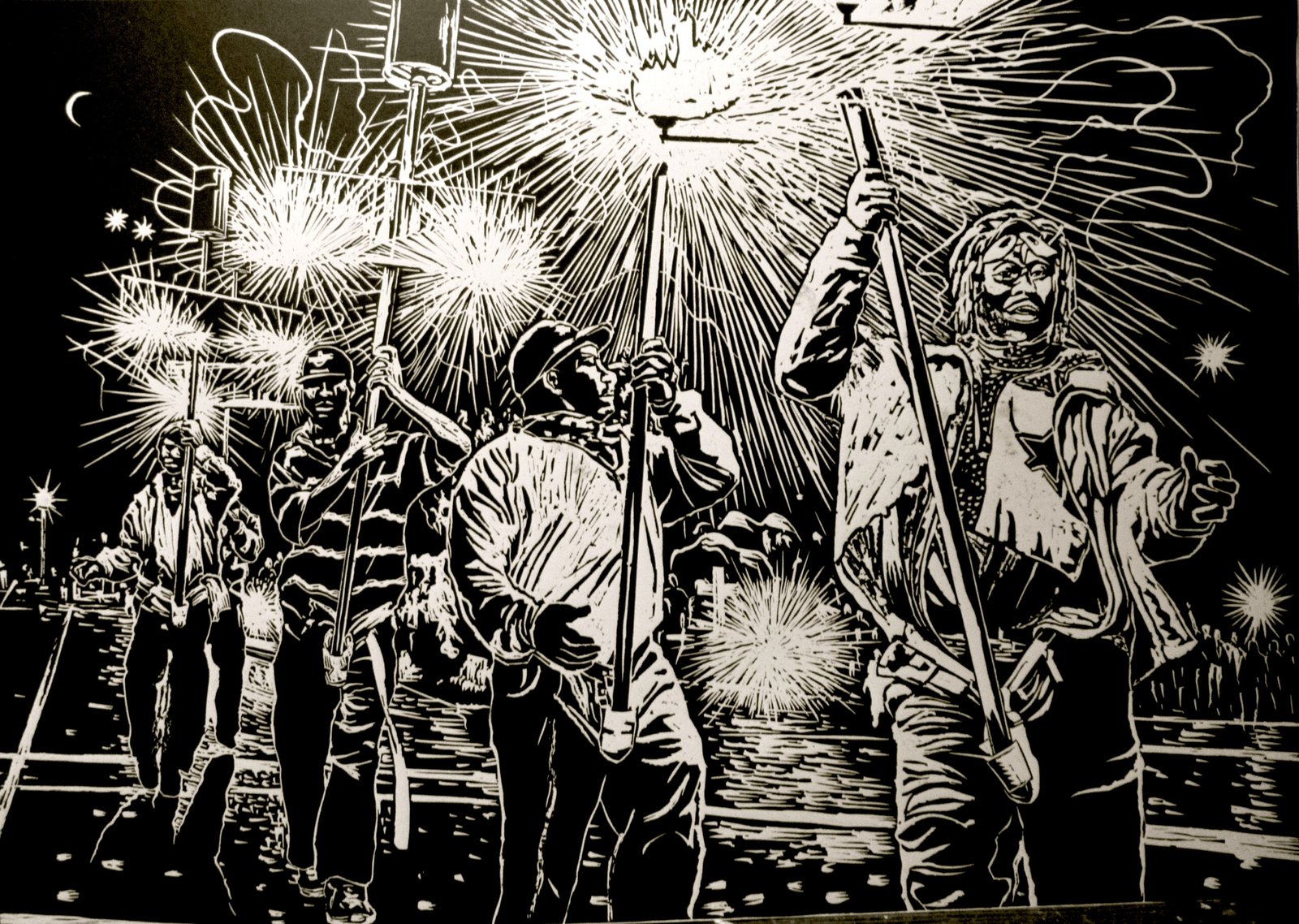
FLAMBEAUX CARRIERS
Leave a Reply