
Late afternoon in Santa Fe has a way of revealing what a wall is really asking for. The light slides low across plaster, catches the grain of wood, and turns a room into a set of measurements you can feel rather than just read: the span over a sofa, the narrow rise beside a doorway, the quiet corner that needs one strong vertical instead of a cluster of small things. A painting that looked generous in a gallery can feel flimsy at home; a bronze that seemed restrained can suddenly anchor everything. Scale, surface, and the way a frame throws a shadow matter as much as color.
Choosing art that lasts is less about falling for the first beautiful piece and more about making a clean buying judgment. In this market, that means asking who made it, what carries the image, how the surface has aged, whether the condition report matches what your eye sees, and whether the dimensions actually suit the room you have. Provenance and authenticity protect the story; medium, support, and framing tell you how well the work may hold up; placement and lighting decide whether it will still read well after the novelty fades. The useful question is not only “Do I like it?” but “Can I verify it, live with it, and still want it ten years from now?” As noted in our earlier notes, the strongest purchases usually survive both closer inspection and longer ownership.
The sections that follow break that judgment into practical steps: what to measure, what to compare, and what to ask before the work leaves the studio or gallery.
Table of Contents
- Evidence and paper trail: what to verify first
- Condition, medium, and conservation implications
- Scale, placement, and how the work lives in the room
- Authenticity, comparison, and when the story outruns the object
- How to use Santa Fe as context without outsourcing your judgment
Evidence and paper trail: what to verify first
The strongest offers usually arrive with something you can hold up to the light: a signed invoice, a dated certificate, exhibition history, or a clean chain of ownership. If the story is only spoken and never written, the story is still unfinished. A buyer in Santa Fe looking at a serious work should ask for the earliest document available, then compare the artist name, title, medium, dimensions, and date across every page so the object in front of you matches the record attached to it.
Thin proof changes the decision fast. A gap in provenance does not always kill a purchase, but it lowers the ceiling on confidence, resale, and insurance. Ask one direct question: “What document would a future appraiser use to identify this work without your help?” If the answer is a gallery receipt, prior-owner note, or exhibition label, request a copy. If the answer is only memory, the price should move with that weakness, not against it. For a reference point on method and studio practice, the artist’s background helps, but background is not proof of a specific object.
Here’s the part most people skip. Compare the paperwork to the object itself: measure the image area and the outer dimensions, note the support, and check whether the listed medium matches the surface you can see. A work described as oil on panel should not read like canvas at the edge; a framed size should not mysteriously expand once you unpack it. If the piece is being considered alongside other available work, the shop can help you compare scale and medium without relying on a memory test. When provenance reaches back through multiple owners or an exhibition, a useful next step is to ask for the most recent transfer document and, if needed, a provenance search through the Getty Proven.
For a collector, the real question is not whether the paper looks polished; it is whether the paper and the object tell the same story. If they do, you can move on to condition and medium with less doubt. If they do not, the offer has already told you something important, and the next decision becomes whether the work can still justify the claim being made for it.
Condition, medium, and conservation implications
Once the paperwork feels coherent, the object itself has to earn the price. A surface can look calm from across a room and still hide abrasion, overpainting, old moisture, or a later varnish that has shifted the color temperature. Ask for dimensions, medium, support, and date in writing, then compare those details with what you can actually see: canvas weave, panel edges, stretcher marks, craquelure, losses at the corners, or a paper sheet that has been trimmed close to the image. Those are the kinds of facts that tell you whether the work is stable, fragile, or already compromised.
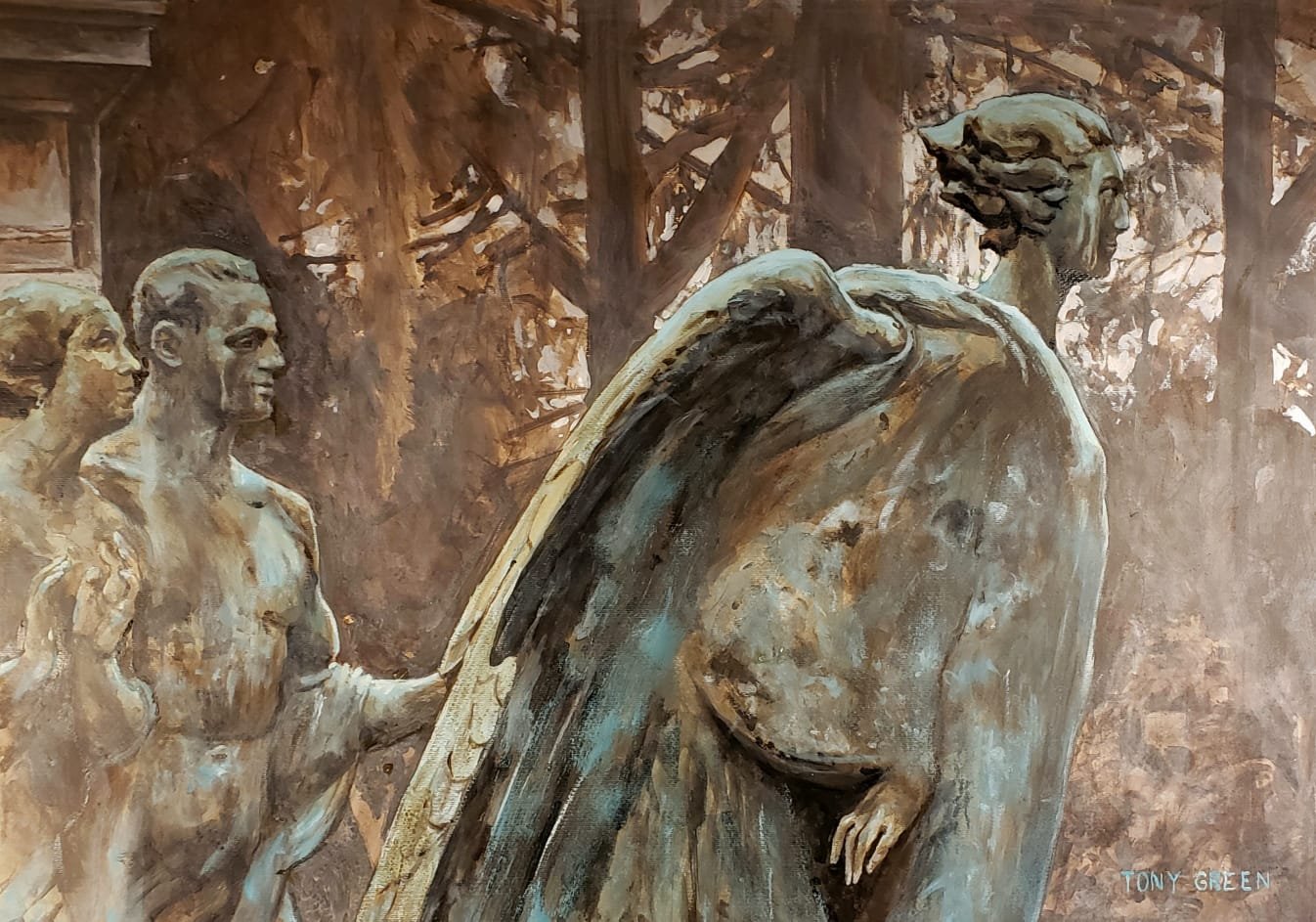
Medium changes the conversation fast. Oil on linen, oil on panel, tempera, watercolor, and mixed media age in different ways, and each one asks for different lighting, humidity, and framing. If you are looking at a classical method piece from Tony Green, or comparing similar work through the About page and the Shop, check whether the surface has the depth and finish you expect from the stated technique. A buyer should ask, “Has the work been cleaned, relined, restored, or revarnished?” and “Is there a conservator’s note for any prior treatment?” One clause about paperwork is enough; the rest is about what the material is doing today.
In Santa Fe, where collectors often place work in bright rooms with strong daylight and adobe-toned walls, conservation implications are part of the purchase, not an afterthought. A pastel or watercolor may need UV glazing and careful placement away from direct sun, while a large oil may be more forgiving but still sensitive to heat and reflective glare. If the scale is right but the medium is not, the room will expose that mismatch quickly. That is why a room-specific question matters: “What height, glazing, and lighting conditions does this piece need to stay stable and legible?” If the answer is vague, a custom conversation through Commission may be the cleaner path.
Pro tip: Before you pay, ask for three things in one message: a close photo of the signature and worst condition area, a written medium/support/dimensions line, and one sentence on any restoration history.
Scale, placement, and how the work lives in the room
The last section dealt with what the work is; this one asks what the work can do once it leaves the wall in the studio. A painting that reads beautifully at arm’s length can disappear over a sofa, while a smaller panel can feel almost architectural when it sits in the right niche. Before you buy, compare the listed dimensions against the wall width, the furniture below it, and the distance from the main seat. If the work is framed, measure the outer frame, not just the image, because that extra inch or two changes the whole rhythm of the room. Placement is where a Santa Fe buyer can be especially exacting. Warm plaster, deep shadow, and strong afternoon light expose weak framing and awkward scale fast, so ask for a photo of the work in a simple interior or mock it up on your own wall with painter’s tape. If the piece will face a bright opening, confirm whether the surface is matte enough to hold detail without glare; if it will sit in a dimmer corridor, check whether the contrast and edge work still carry from across the room. A recent conversation around Opening Reception | Lucid Perturbations underscored how much placement changes when material surface and light are part of the viewing experience, which is exactly why scale and finish should be tested together. Framing is not decoration after the fact; it is part of the object’s presence. Ask what the frame adds in depth, whether glazing is present, and whether the package is ready to hang without extra hardware. For works on paper, the mat width should protect the image without swallowing it, and for paintings on panel or canvas, the edge treatment should look intentional from the side, not improvised. If you are comparing pieces on the site, use the Shop listings to stack dimensions against your room notes, and if the fit is close but not exact, a room-specific conversation through Commission is often cleaner than forcing a near miss into a finished space.
Authenticity, comparison, and when the story outruns the object
Comparison is where weak stories usually give themselves away. Put the piece beside one or two credible examples from the same maker or period and look for consistency in brush handling, palette, ground, and scale; if you are considering Tony Green’s work, his method background and the available work in the Shop give you a clean reference for what the objects themselves are doing. If a sales pitch leans hard on rarity but the dimensions, medium, or finish look unlike the rest of the body of work, ask why. The best answer is specific: a commission, a study, a later revision, a special support. The worst answer is a cloud of adjectives.
Here’s the part most people skip: ask for one comparison that the seller would be willing to stand behind. “What other work should I place this beside, and what should I see that makes this one stronger?” is a better question than “Is it valuable?” It forces the conversation back onto observable differences instead of reputation. If the room is the real constraint, especially for a larger or more formal piece, that conversation can move into a commission instead of a compromise purchase, which is often the cleaner path when the story is larger than the wall.
How to use Santa Fe as context without outsourcing your judgment
In Santa Fe, the room is rarely neutral. Adobe walls, high light, deep shadows, and a mix of old plaster and newer interiors will make the same painting feel more intimate at one address and more declarative at another. That is useful context, not a verdict. A work that looks calm under gallery lighting may read sharper, warmer, or more physically present once it leaves the white cube and meets the texture of your own wall.
The local market also rewards a certain discipline. Around Canyon Road, presentation can be seductive, but the better purchase is the one that still feels right after the opening-hour glow fades. If you are looking at a classical work from Tony Green, the question is not whether the setting flatters the painting; it is whether the painting holds its authority once it is out of that setting. His Venice-based practice and classical methods matter here because they produce objects with enough structure to survive a move from one environment to another without losing coherence.
Leave a Reply