
By late afternoon, the room has done most of the work for you: a plaster wall warming in slant light, a linen sofa pulling the eye low, a single frame leaning against the baseboard while you decide whether it belongs there. In Santa Fe, where adobe textures and clear light can make even a modest painting feel charged, the wrong scale announces itself quickly. Too small, and it disappears into the wall. Too large, and the room starts resisting it.
That is the real question behind buying art meant to last: not whether you like the image today, but whether the object will still hold its place after the first season, the first move, the first change in light. The useful checklist is more exacting than taste alone: provenance, condition, medium, support, dimensions, framing, placement, authenticity, and how all of that fits the wall you actually have. A lasting purchase is usually the one you can verify, compare, and measure before it ever comes home.
If you want a practical way into that judgment, the sections below follow the same order collectors use in the room, building on earlier notes and moving from what you can see at a glance to what you should ask before money changes hands.
Table of Contents
- Evidence and paper trail: what to verify first
- Condition, medium, and conservation implications
- Scale, placement, and how the work lives in the room
- Authenticity, comparison, and when the story outruns the object
- How to use Santa Fe as context without outsourcing your judgment
Evidence and paper trail: what to verify first
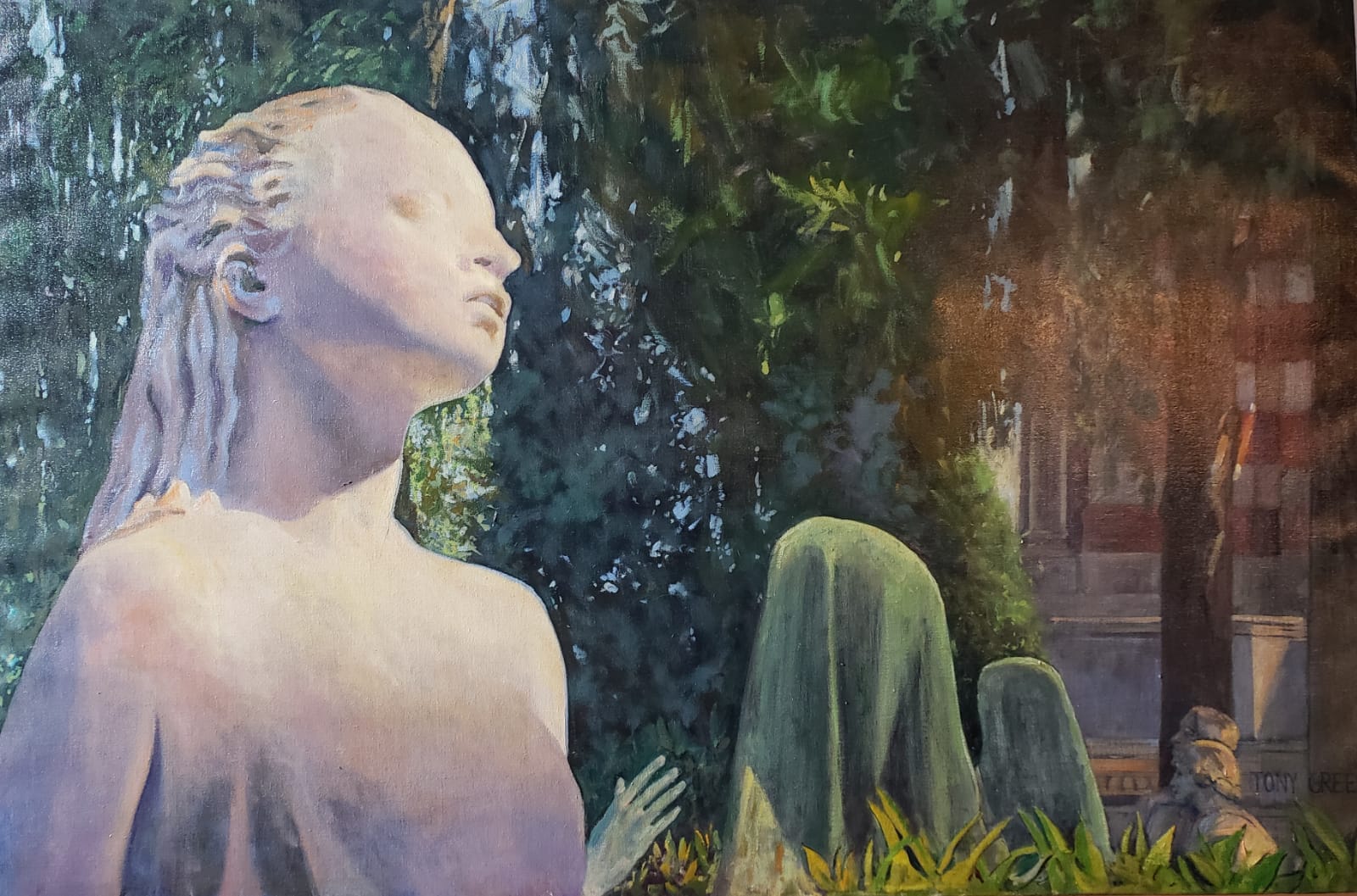
The first thing to ask for is not a price reduction; it is the paper that supports the object’s story. A serious seller should be able to produce a dated invoice, a certificate of authenticity or attribution, prior exhibition or publication notes if they exist, and a clear ownership history that does not jump from one vague name to another. If the work is being offered through a gallery on Canyon Road or through a private studio like Tony Green’s, the standard is the same: who made it, when it left the artist, and how it has been documented since.
Thin proof changes the decision fast. A painting with a strong surface presence but no invoice trail, no title history, and no signed documentation should be treated as a different class of purchase than one with a coherent chain of records. If the seller cannot answer a simple question like, “What document would you hand to an insurer or appraiser tomorrow?” the offer is not yet ready for serious consideration. At that point, the missing evidence matters more than the visible charm, even if the work seems close in feel to pieces you have compared at places such as the O’Keeffe Mus.
Measurements should match the paperwork exactly: image size, support size, framed size, and any notation about alterations, relining, or restoration. Ask for front and back photographs, detail shots of signatures, labels, stamps, and stretcher marks, then compare them against the written description. If the medium is claimed to be oil on panel, the reverse should look like a panel, not a canvas; if the scale is said to fit a specific wall, verify the framed dimensions, not just the image area. For collectors considering a work from Tony Green’s shop, that kind of comparison keeps the decision grounded in facts instead of presentation.
When the record is clean, the conversation can move to authorship, editioning, and whether the story is supported by evidence rather than atmosphere. Tony Green’s background and classical method are outlined on his About page, which helps a buyer compare the work in front of them with the maker’s stated practice before asking about a custom size or room-specific commission.
Condition, medium, and conservation implications
The first decision is usually not the price. It’s the surface. In Santa Fe, where light can be relentless and walls often carry strong textures of their own, a painting’s medium tells you how it will hold up in real rooms, not just in a gallery. Oil on panel behaves differently from oil on canvas; a gilded ground asks for different care than a matte tempera surface. If the work is framed under glazing, ask whether that glazing is UV-filtering and whether the spacers prevent the image from touching the glass. A seller should be able to state the support, the medium, the dimensions, and any restoration history without hedging.
Condition is where the object either earns its asking price or starts to wobble. Look closely for craquelure that is stable versus lifting paint, darkened varnish, abrasion at the edges, and any warp in the support. If the piece has been lined, relined, cleaned, or inpainted, ask for the dates and the conservator’s notes. One useful question is simple: “Has any part of the original surface been replaced or retouched, and can you identify where?” That answer matters more than a flattering description, especially if you are comparing it with a work from the artist’s current practice on the shop page or a future room-specific fit through a commission.
Medium also shapes the long view. Classical methods can age beautifully, but only when the materials are compatible and the surface has been built for stability. Ask what ground was used, whether the support is archival, and whether the pigments or leaf elements are sensitive to light. If a work is intended for a sunlit room, request the maximum recommended light exposure in lux and confirm whether the frame can buffer dust and moisture. A collector in Santa Fe may be comparing this to other works seen locally, perhaps alongside the context of Canyon Road or the standards implied by the Getty Proven. archive, but the practical test remains the same: can this object keep its appearance without constant intervention?
Pro tip: Ask how the medium and support have aged before you judge the surface.
- Request close photos in normal and raking light.
- Separate material facts from the seller’s description.
- Treat restoration history as value context, not trivia.
Scale, placement, and how the work lives in the room
The first decision is usually not the purchase. It’s the standard. A work can be beautifully made and still fail the room if the dimensions fight the wall, the seating distance, or the light. Measure the wall in inches, then mark the actual footprint with painter’s tape: height, width, and, if it is framed, the outer frame size as well. That quick outline tells you more than a gallery thumbnail ever will. If you are comparing pieces for a Santa Fe home with deep portals, adobe surfaces, or low-slung furniture, ask for the exact dimensions and a photo of the work beside a door or chair so you can judge scale without guessing. Santa Fe Literary Review Annual Reading and Reception gives you a public counterpoint here: it shows how much presentation can shape first impressions before the work has to stand on its own.
Framing changes the decision as much as image size. A narrow panel in a heavy gilt frame can read formal and commanding; the same panel float-mounted in a simple wood frame can feel quieter and more contemporary. Ask what the frame adds in depth, not just width, because a piece that projects too far can crowd a hallway or sit awkwardly over a mantel. Lighting matters just as much: north light is forgiving, direct sun is not, and a varnished surface can throw glare where a matte surface will not. That is where a buyer should compare medium, support, and placement together, then decide whether the work needs a different wall, a different frame, or a different size altogether. Tony Green’s method is rooted in classical construction, which makes those physical questions especially legible when you are evaluating how a painting will perform in real light.
Here’s the part most people skip. Stand where you will actually live with the piece and check the sightline from the sofa, the dining table, and the entry. A painting that looks balanced head-on can feel too low when viewed from a chair or too busy when seen from a doorway. If the work is on paper, confirm glazing, UV protection, and reflection at the intended height; if it is on canvas or panel, ask whether the edges are finished and whether the piece can hang unframed. For collectors who want a room-specific fit without forcing the wrong object into place, a commission can solve the scale problem cleanly, which is why the commission option belongs in the conversation before you finalize a purchase.
Authenticity, comparison, and when the story outruns the object
Here’s the part most people skip. Put the work beside two or three credible examples from the same maker or period and compare the quiet facts: proportion, handling, palette restraint, and how the finish catches light. If the story leans hard on rarity, ask what exactly is rare here—the format, the scale, the subject, or the provenance. A piece can be fully authentic and still be a weaker example if the composition feels compressed, the condition report shows restoration in the focal area, or the dimensions make it fight the wall you have in mind. Tony Green’s method is built around classical discipline, so the comparison should be as exacting as the work itself.
When the narrative begins to outrun the object, the mismatch is usually visible before it is verbalized. Maybe the sales copy names an important lineage, but the object lacks the physical cues that support that claim. Maybe the price assumes museum-scale significance while the actual piece is modest in execution or awkward in scale. In that case, ask for a written provenance summary, a condition statement, and one direct comparison to another work of similar medium and size—preferably from the same studio or market tier. If you are weighing a purchase for a specific wall or collection direction, the available work at the shop can help you compare medium and scale without guesswork.
When the comparison still feels unresolved, the next question is not whether the story is beautiful; it is whether the object can carry it in your space, under your light, among the other pieces you already own.
How to use Santa Fe as context without outsourcing your judgment
Here’s the part most people skip. Walk out of the gallery and picture the painting or drawing in the exact place it will live: above a low sofa, in a narrow hall, beside a kiva fireplace, or in a room that already carries strong pattern. Measure the wall space, then compare that to the object’s outer dimensions and frame depth, not just the image area. A work that feels generous in a white room can tighten up fast once it meets furniture, trim, and the other objects around it. If you are weighing a finished piece against a room-specific option, Tony Green’s commission page is the right place to think through fit before the wall becomes the problem.
The change from gallery to home is often about light and distance. In a gallery, viewers stand closer, linger longer, and accept controlled illumination; at home, the piece may be seen across a room, under warmer bulbs, with reflections from glass or varnish that were less obvious before. Ask what the work looks like in raking light, whether the frame is conservation-minded, and whether glazing will create glare in your room. If you want to compare available works by medium and scale, the shop makes that easier, while Tony Green’s about page gives useful background on the classical method behind the work.
Santa Fe also rewards a buyer who can separate local atmosphere from lasting placement. A painting that feels perfect near the energy of Canyon Road may still need a quieter wall to breathe once it leaves town, and a work that reads richly beside one collection can disappear beside another.
Pro tip: Use Santa Fe as context, not as permission to skip judgment.
- Let local galleries sharpen your eye without outsourcing the decision.
- Bring the same standard back to the work, the wall, and the documentation.
- End with one action the buyer can actually take.
Leave a Reply