
Late afternoon in Scottsdale can flatten a room into angles: a white wall, a low sofa, a wash of light sliding across a frame, the shadow line of a canvas pulling your eye before the color does. In that kind of light, the work either settles into the space or starts fighting it. You notice the weave of linen, the depth of varnish, the way a gilded edge catches heat from the window, and suddenly the decision is no longer abstract.
That is the real test: not whether a piece feels impressive for a minute, but whether it holds up when you ask the practical questions buyers often skip. Who owned it, and is that documented? What is the condition under close inspection, not just from across the room? Is the medium stable, is the support sound, does the scale suit the wall you actually have, and will the framing and placement protect the work from glare, dust, and harsh light? Authenticity matters, but so does fit; a painting can be genuine and still be the wrong size, the wrong surface, or the wrong choice for the room. For readers who want the fuller context, earlier notes covered the broader buyer’s frame, and this guide narrows in on what lasts.
The sections ahead move from surface to substance: what to inspect, what to compare, and what to ask before a purchase feels final.
Table of Contents
- Evidence and paper trail: what to verify first
- Condition, medium, and conservation implications
- Scale, placement, and how the work lives in the room
- Authenticity, comparison, and when the story outruns the object
- How to use Scottsdale as context without outsourcing your judgment
Evidence and paper trail: what to verify first
The first thing worth asking for is not a sales pitch but a clean chain of evidence: invoice, artist statement, dated images, prior exhibition history, and any conservation or framing record that travels with the work. If the seller cannot show where the piece has been, who handled it, and when it changed hands, the story is carrying more weight than the object. That is the moment to slow down, especially with higher-value work or anything presented as rare.
A buyer in Scottsdale will often see strong presentation before strong documentation, and those are not the same thing. Ask for the title, date, medium, support, and exact dimensions written out in one place, then compare those details against the back of the work, the certificate, and the listing. A mismatch in size, medium, or signature placement is not a minor clerical issue; it changes how you value the piece and whether the offer is even speaking about the same object.
Thin proof usually changes the decision in a very practical way. An unsigned invoice with no provenance may still be acceptable for a decorative purchase, but it is weak if the price assumes market credibility or future resale. When the paper trail is sparse, ask one direct question: “What document would another buyer use to verify this in five years?” If the answer is vague, request a comparison with a documented work by the same hand, or review the artist’s background on About before treating the piece as established.
For work with a more formal market history, one careful check can save a lot of uncertainty: compare the stated provenance against exhibition records or archive references, and note whether the seller can supply dimensions measured unframed as well as framed. That level of detail matters because the next decision is not taste but credibility—whether the object’s condition and medium can carry the value being claimed.
Condition, medium, and conservation implications
Once the paper trail looks credible, the object has to earn the rest of the price at a material level. A linen canvas with an intact stretch and clean tacking margins is a different proposition from a panel that has cupped, a print with mat burn, or a mixed-media surface that has already begun to shed. Ask for the exact medium, support, and finish: oil on linen, acrylic on panel, pigment print on rag paper, bronze with a wax patina. Those words are not decoration; they tell you how the work will age, how it should be handled, and whether the surface can survive Scottsdale light without constant intervention.
Condition should be described in measurable terms, not a shrug. Request close-up images of corners, edges, verso, signatures, and any restoration. If the work is framed, ask for the framed and unframed dimensions, plus the depth of the support and whether UV glazing is already in place. A buyer comparing two similar pieces can learn a lot from one direct question: “Has this work been cleaned, relined, varnished, or inpainted, and if so, by whom?” Even at an Opening Reception for “UNLOVABLE”, that kind of question separates a casual admirer from someone thinking like a collector.
The medium also changes the conservation budget you are really accepting. Works on paper need stable humidity, careful framing, and distance from direct sun; oil paintings can tolerate more, but textured surfaces and dark varnishes still reveal heat and dust; sculpture brings its own concerns about oxidation, patina stability, and base integrity. If you are considering Tony Green’s work, his background and classical methods matter because they shape the surface behavior you are buying, while the available work and a room-specific commission can be compared by scale, support, and finish before a piece ever reaches the wall. The question to keep asking is simple: what will this look like after five summers, and what maintenance does that answer imply?
Scale, placement, and how the work lives in the room
The piece can be beautifully made and still fail the room if the proportions are wrong. In Scottsdale homes, where walls often run long and sightlines open from one space to another, a work needs to hold its own from the distance where you first see it and the closer range where you actually live with it. Ask for exact dimensions, framed dimensions if framing is part of the object, and a photo of the work held beside a known reference so you can judge scale without guessing. A 30-by-40-inch painting can feel intimate over a console and underwhelming on a two-story wall.
Framing changes more than appearance; it changes how the work sits in light, how much wall it claims, and whether it reads finished or provisional. If the surface is delicate or the edges are intended to be seen, confirm whether the frame covers any part of the image field. If the work arrives ready to hang, ask what hardware is included and how much weight the hanging system must carry. A buyer comparing a finished panel in the Shop to a room-specific commission should measure the wall, then tape out the footprint at full size and stand back from the actual viewing point, not from arm’s length.
Light is the other test that decides whether the object can really live there. North light, recessed cans, and afternoon sun will each change how gilding, varnish, and darker passages read across the day; a surface that glows in one corner can flatten in another. Before purchase, ask for one image in daylight and one under interior lighting, then compare them to the intended wall. If the room has strong sun or a reflective finish nearby, a matte surface or a different placement may be wiser than forcing the work into the brightest spot. That is where the conversation shifts from selection to fit, and where a custom solution through Commission can solve the problem more cleanly than compromise.
For collectors who want the object to feel integrated rather than merely installed, the last question is practical: where will the eye land first?
Authenticity, comparison, and when the story outruns the object
Comparison is the fastest way to separate confidence from drift. Put the piece beside other credible examples of the same medium or period and ask three blunt questions: are the proportions consistent, does the surface handling make sense for the stated process, and do the dimensions support the claimed role in the room? A large canvas with thin visual weight can feel impressive online and timid on a wall; a smaller panel with dense modeling can carry far more presence than the sales copy suggests. If a gallery references a known standard or context, even a visit to O’Keeffe Mus. or a provenance resource like Getty Proven. can help you measure seriousness against evidence, not against adjectives.
The story outruns the object when the language becomes more specific than the facts. That is the moment to slow down and ask for one clean comparison set: a condition note, a signed inventory entry, a photograph of the reverse, and exact measurements with frame. If the work is meant to solve a space rather than merely fill one, compare it to the wall width, sightline, and neighboring furnishings; if the seller cannot explain why the scale works, the claim is carrying more weight than the piece. When that happens, a custom route through Commission may be the more honest answer than forcing a near miss into an expensive compromise.
How to use Scottsdale as context without outsourcing your judgment
Scottsdale’s gallery scene can make a room feel more resolved than it really is. Bright walls, polished floors, and careful spotlighting flatten hesitation; a painting that feels commanding under exhibition light can behave differently once it faces afternoon sun, a textured wall, or a competing lamp at home. That is why the local context matters as atmosphere, not authority. Use it to sharpen your eye, then ask what the work will do in your own light and at your own distance.
Pro tip: Before you commit, ask for one image of the work in the gallery light and one in a plain room or shaded corner. The shift between those two views often tells you more than the label does.
- Compare glare, shadow depth, and color temperature.
- Check whether the edges still feel resolved away from the spotlight.
- If the piece is meant to anchor a specific wall, keep the
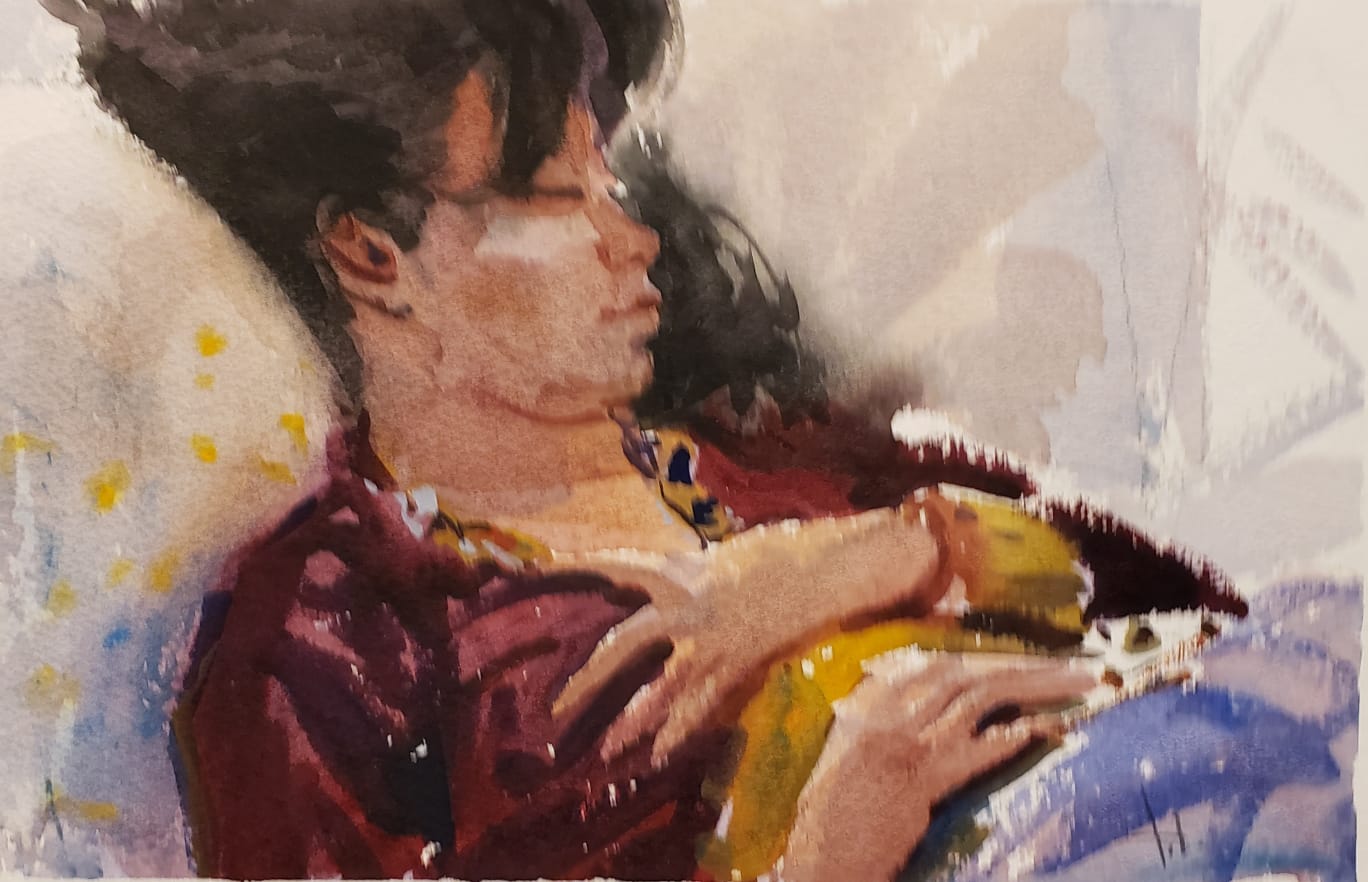
THAI BEAUTY For context, see Learn more about the artist.
Leave a Reply